
Nagaland Scientists Discover New Cascade Frog Species Amolops kamal
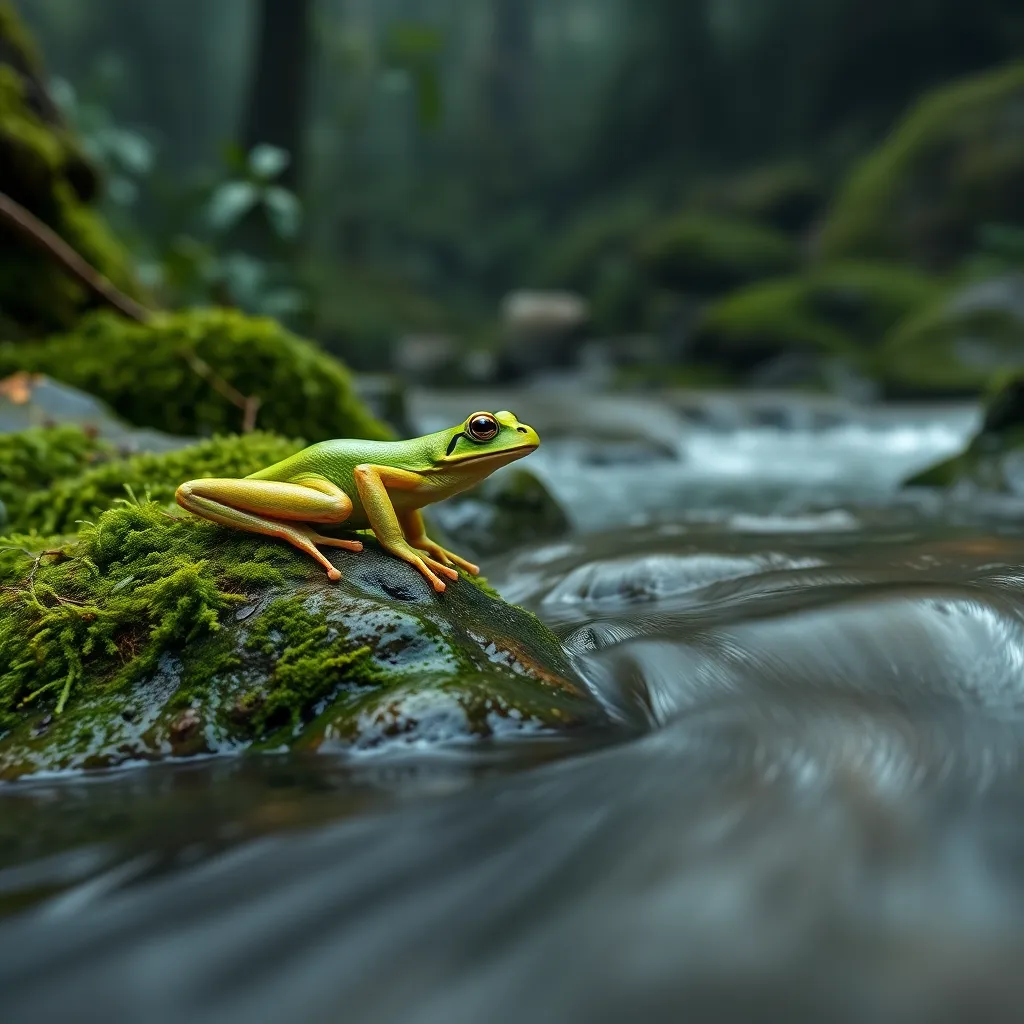
On 29 May 2026, a new cascade-dwelling frog species named Amolops kamal was formally described from Nagaland's Kiphire district near Singrep village. This discovery followed a field survey conducted in August 2024 by scientists from the Zoological Survey of India (ZSI), Shillong. The genus Amolops comprises frogs adapted to live in fast-flowing hill streams and waterfalls, belonging to the family Ranidae. Integrative taxonomy, combining morphological characteristics and molecular phylogenetic analysis, confirmed Amolops kamal as a distinct evolutionary lineage within the Amolops indoburmanensis species complex. The species is named in honor of the late Dr. Kamal Choudhury, mentor to the lead researcher. This addition enhances the known amphibian biodiversity in northeast India, a recognized biodiversity hotspot with many endemic species, emphasizing the ecological significance of forested and mountainous southwestern Nagaland habitats.
On this page
Key Facts
- Species Name: Amolops kamal
- Date of Description: 29 May 2026
- Discovery Location: Vicinity of Singrep village, Kiphire district, Nagaland
- Discovering Authority: Zoological Survey of India (ZSI), Shillong
- Genus: Amolops (cascade or torrent frogs)
- Family: Ranidae (true frogs)
- Research Techniques: Integrative taxonomy utilizing morphological and molecular phylogenetic studies
- Etymology: Named to honor the late Dr. Kamal Choudhury, a mentor of the lead author Bhaskar Saikia
- Publication: Records of the Zoological Survey of India scientific journal
Background & Context
The genus Amolops is known for species adapted to life in fast-flowing hill streams and waterfalls, commonly called cascade or torrent frogs. They possess biological adaptations such as abdominal suckers in tadpoles to maintain attachment in turbulent waters. Northeast India, including Nagaland, is recognized as a biodiversity hotspot with a high diversity of amphibians and many endemic taxa due to its varied mountainous and forested terrain. The new species discovery was part of continued efforts by ZSI to document amphibian diversity using modern integrative taxonomy involving morphology and molecular genetics, addressing taxonomic challenges within species complexes.
Why This Matters for Exams / Exam Relevance
This discovery is pertinent to competitive exams covering Indian biodiversity, environment, zoology, and conservation biology. It highlights the role of the Zoological Survey of India as India's premier zoological research institution and underscores northeast India's ecological significance as a biodiversity hotspot. The naming and taxonomic details, geographic location, discovery timeline, and research approaches exemplify topics frequently tested, with emphasis on new species description, taxonomy, and conservation relevance.
Points to Remember
- Amolops kamal is a newly described species of cascade-dwelling frog (May 2026) from Nagaland.
- It belongs to the genus Amolops within the family Ranidae, known for species inhabiting rapid hill streams.
- Discovered by ZSI, Shillong, during a 2024 field survey in Kiphire district.
- The species name honors Dr. Kamal Choudhury, mentor of the lead researcher.
- Integrative taxonomy (morphology plus molecular data) confirmed its distinctness within the Amolops indoburmanensis complex.
- Northeast India’s rich amphibian diversity includes many endemic species, highlighting the conservation importance of its forested hill-stream ecosystems.
Sources & Further Reading
| Document / Website | Link |
|---|---|
| Nagaland scientists discover new cascade frog species | Open Nagaland scientists discover new cascade frog species ↗www.gktoday.in |
| Checklist of Endemic Amphibians of Northeast India | Records of the Zoological Survey of India | Open Checklist of Endemic Amphibians of Northeast India | Records of the Zoological Survey of India ↗recordsofzsi.com |
| Description of two new species of torrent frog from Nagaland | Open Description of two new species of torrent frog from Nagaland ↗www.academia.edu |