
Three New Cascade Frog Species Discovered in Northeast India and West Bengal
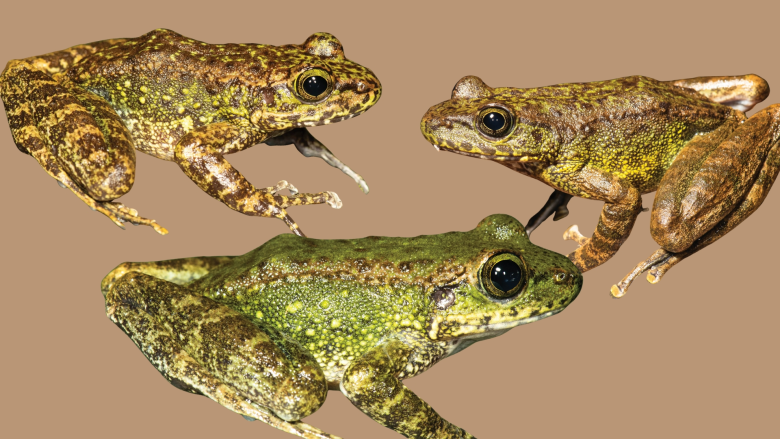
On 12 August 2026, a scientific study led by Prof. S. D. Biju from Delhi University revealed the discovery of three new cascade frog species in Northeast India and West Bengal. The species—Ammachi’s Cascade Frog (Amolops ammachi), Sendenyu Cascade Frog (Amolops sendenyu), and Beautiful Cascade Frog (Amolops bella)—belong to the genus Amolops, known for stream-dwelling frogs adapted to fast-flowing forest streams. These findings were based on extensive DNA analysis, morphological studies, and surveys of over 300 populations, significantly expanding knowledge of amphibian biodiversity in the Eastern Himalayas region.
On this page
Key Facts
- The discovery publication date is 12 August 2026.
- The research was led by Prof. S. D. Biju of Delhi University.
- Three new cascade frog species were identified: Amolops ammachi, Amolops sendenyu, and Amolops bella.
- The species were found in the Jampui Hills of Tripura, Nagaland, and West Bengal respectively.
- Identification methods included DNA analysis, morphological comparison, and field surveys across more than 300 geographic populations.
Background & Context
Cascade frogs belong to the genus Amolops, which comprises frogs specialized for life in fast-flowing hill streams and rocky watercourses predominantly in the Eastern Himalayas and adjoining regions. The genus is noted for species that have evolved adaptations to such aquatic environments, including tadpoles equipped with abdominal suckers. The newly described species were distinguished through integrative taxonomy combining genetic data and morphological characteristics.
Amolops ammachi is named in honor of Padmini Varkey, a noted social worker from Kerala affectionately called 'Ammachi.' Amolops sendenyu was named after Sendenyu Village in Nagaland where it was discovered, and Amolops bella was characterized by a green body with yellowish-green or reddish-brown mosaic-like color patterns from specimens collected in West Bengal.
Why This Matters for Exams / Exam Relevance
This discovery underscores the rich biodiversity of Northeast India and the Eastern Himalayas, which are crucial biodiversity hotspots. The effective use of DNA barcoding and morphological studies for species identification exemplifies modern taxonomic methods. Competitive exams may test students on newly discovered species, their scientific nomenclature, habitat significance, and biogeographical distribution. Understanding the importance of biodiversity conservation and advances in taxonomy is vital for environmental science and biology syllabus.
Points to Remember
- Amolops ammachi is named after Kerala social worker Padmini Varkey ('Ammachi').
- Amolops ammachi was found in the Jampui Hills, Tripura.
- Amolops sendenyu was discovered in Nagaland and named after Sendenyu Village.
- Amolops bella was found in West Bengal, notable for its distinctive body coloration with mosaic patterns.
- The discoveries were made using integrated taxonomic methods involving DNA analysis, morphological data, and broad geographic sampling of more than 300 populations.
- The genus Amolops is distributed mainly across the Eastern Himalayas, northern India, Nepal, China, and Southeast Asia.
Sources & Further Reading
| Document / Website | Link |
|---|---|
| Three new cascade frog species discovered in northeast India; one named in honour of Kerala social worker Padmini Varkey - The Hindu | Open Three new cascade frog species discovered in northeast India; one named in honour of Kerala social worker Padmini Varkey - The Hindu ↗www.thehindu.com |
| Three new cascade frog species discovered in Northeast India and West Bengal - GKToday | Open Three new cascade frog species discovered in Northeast India and West Bengal - GKToday ↗www.gktoday.in |
| New frog species discovered near human habitation in Northeast India - Nature inFocus | Open New frog species discovered near human habitation in Northeast India - Nature inFocus ↗www.natureinfocus.in |
| Prof. S. D. Biju profile at University of Delhi | Open Prof. S. D. Biju profile at University of Delhi ↗people.samarth.edu.in |