
NASA Astronauts Conduct Advanced Cancer and Cartilage Research on ISS in 2026
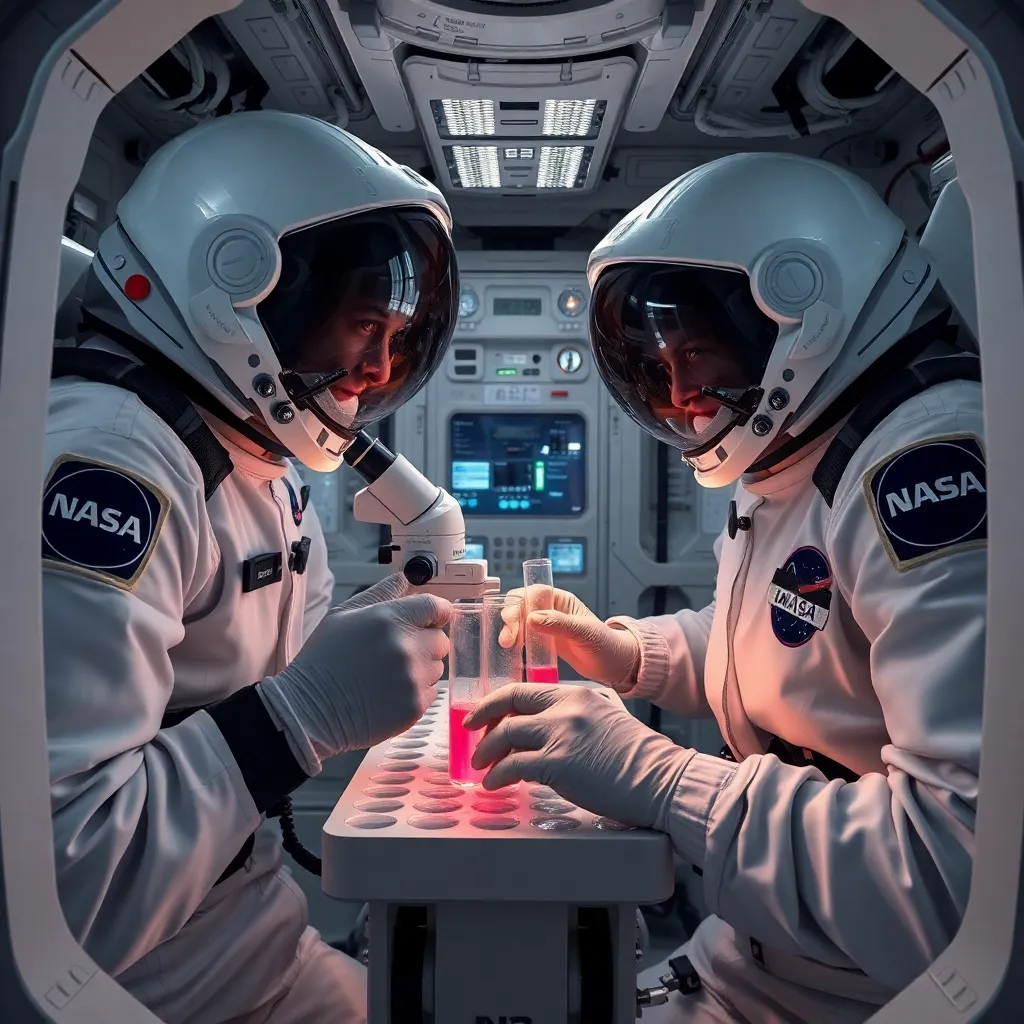
In May 2026, NASA astronauts aboard the International Space Station's Expedition 74 conducted key biomedical experiments focusing on cancer therapeutics, cartilage tissue growth, heart stem cells, and DNA-inspired nanomaterials. Using the Japanese Kibo laboratory module and its Life Science Glovebox, researchers studied the effects of microgravity on anti-cancer drugs, particularly for pancreatic cancer, and explored innovative cartilage tissue engineering methods. These experiments aimed to improve therapies both in space and on Earth and enhance understanding of drug behavior in microgravity environments.
On this page
Key Facts
- Experiments were conducted in May 2026 during Expedition 74 on the International Space Station (ISS).
- Research focused on cancer therapeutics, cartilage tissue engineering, heart stem cells, and DNA-inspired nanomaterials.
- NASA Flight Engineer Chris Williams set up Space Cancer Therapeutics hardware in the Japanese Kibo laboratory module to study microgravity's effect on an anti-cancer drug targeting pancreatic cancer.
- Flight Engineer Jessica Meir investigated cartilage tissue growth using specialized hardware in Kibo’s Life Science Glovebox, processing both Earth-grown and space-grown cartilage samples.
- On April 23, 2026, Meir also processed heart stem cells and pneumonia-causing bacteria to study heart conditions.
- NASA Flight Engineer Jack Hathaway and ESA astronaut Sophie Adenot worked on synthesizing DNA-inspired nanomaterials in Kibo for potential cancer and chronic disease treatments including immunotherapies and chemotherapies.
- The Space Automated Bioproduct Laboratory was used to incubate cartilage tissue samples to improve tissue engineering methods under microgravity.
Background & Context
The ISS is a unique low Earth orbit laboratory providing microgravity conditions that allow biological and medical experiments impossible on Earth. The Japanese Kibo module supports advanced life science research, including facilities like the Life Science Glovebox, which permits safe manipulation of biological samples. Microgravity alters cellular behavior and molecular mechanisms, facilitating the growth of three-dimensional tumor models (such as spheroids and organoids) and tissues, enhancing drug testing and regenerative medicine research.
Why This Matters for Exams / Exam Relevance
Knowledge of NASA’s biomedical investigations aboard the ISS, especially using the Kibo module’s specialized facilities, is relevant for competitive exams covering space science and biotechnology. Understanding how microgravity impacts drug efficacy, cancer research, and tissue engineering highlights ongoing advancements in space science intersecting with medical innovation.
Points to Remember
- Expedition 74 crew conducted biomedical experiments in May 2026 aboard the ISS.
- Kibo is the Japanese Experiment Module aboard the ISS, equipped with facilities like the Life Science Glovebox.
- NASA astronaut Chris Williams studied pancreatic cancer drug behavior in microgravity.
- Jessica Meir explored cartilage tissue growth and processed heart stem cells.
- Jack Hathaway and ESA's Sophie Adenot worked on DNA-inspired nanomaterials production for cancer treatments.
- Microgravity enables better formation and testing of 3D tumor models like spheroids and organoids.
- The research aims to improve medical treatments on Earth and in space environments.
Sources & Further Reading
| Document / Website | Link |
|---|---|
| NASA: Astronauts Work Cancer, Cartilage Treatments, Cosmonauts Prep for Spacewalk | Open NASA: Astronauts Work Cancer, Cartilage Treatments, Cosmonauts Prep for Spacewalk ↗www.nasa.gov |
| Recent studies of the effects of microgravity on cancer cells and the development of 3D multicellular cancer spheroids | Open Recent studies of the effects of microgravity on cancer cells and the development of 3D multicellular cancer spheroids ↗www.ncbi.nlm.nih.gov |