
National Technology Day: Commemorating India's Pokhran-II Nuclear Tests
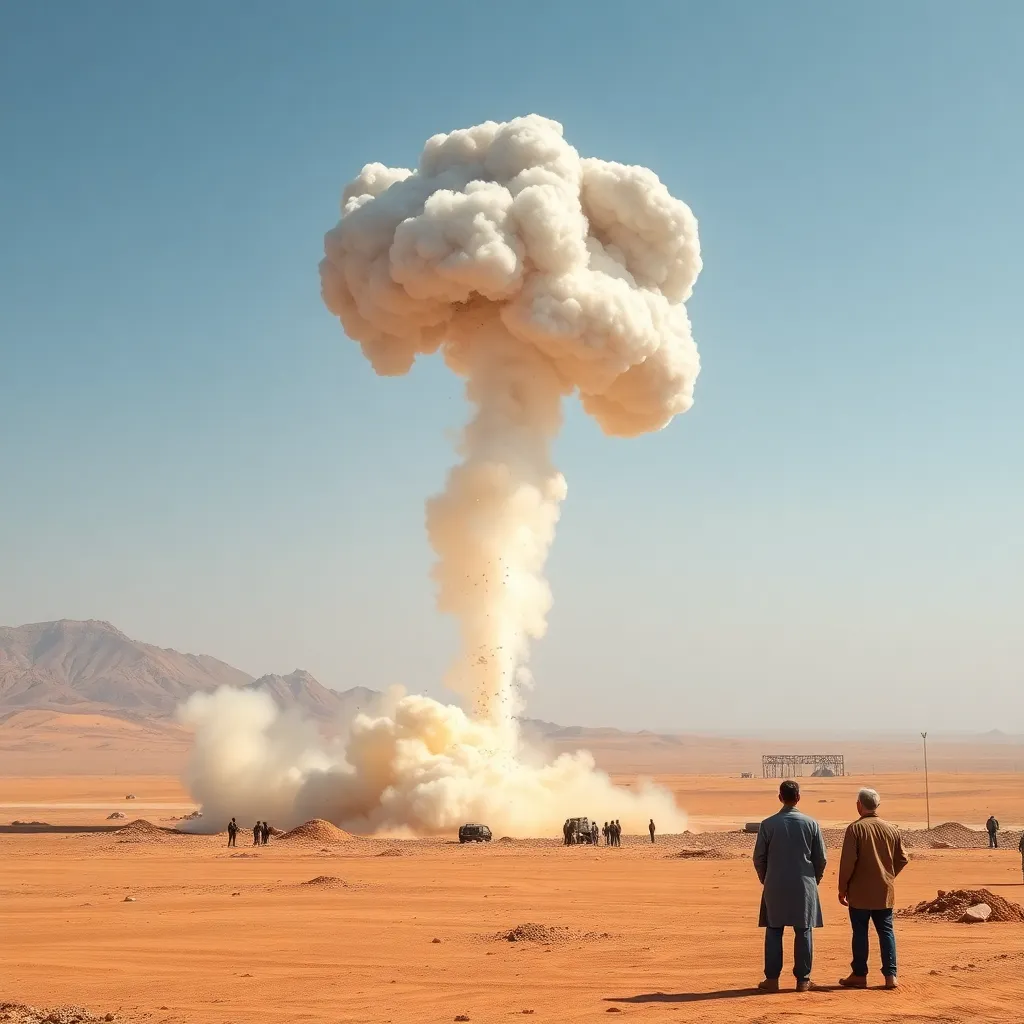
National Technology Day is observed annually on 11 May to commemorate India's successful series of nuclear tests conducted at the Pokhran Test Range, Rajasthan, in 1998. Known as Operation Shakti, these tests established India as the sixth nuclear-armed state. The day also honours the indigenous technological advancements made, including the first test flight of the Hansa-3 aircraft and the test-firing of the Trishul missile. Declared by Prime Minister Atal Bihari Vajpayee in 1999, the day celebrates indigenous innovation, scientific achievement and India's journey towards self-reliance in technology.
On this page
Key Facts
- National Technology Day is observed every year on 11 May.
- It commemorates the Pokhran-II nuclear tests conducted on 11 and 13 May 1998 at Pokhran Test Range, Rajasthan.
- Pokhran-II, codenamed Operation Shakti, was a series of five underground nuclear detonations.
- The tests included a 45-kiloton thermonuclear device, a 15-kiloton fission device, and a 0.2-kiloton sub-kiloton device.
- Dr. A.P.J. Abdul Kalam was a key scientific figure involved in the operation, and Atal Bihari Vajpayee was the Prime Minister who declared the day in 1999.
- On 11 May 1998, India also achieved the first test flight of the indigenous Hansa-3 aircraft in Bengaluru and test-fired the Trishul surface-to-air missile.
- The theme for National Technology Day 2026 is “Responsible Innovation for Inclusive Growth.”
Background & Context
India's Pokhran-II nuclear tests were a significant milestone in the nation's technological and strategic history. Conducted after India's first test in 1974, these tests openly demonstrated India’s nuclear weapons capability and positioned India as the sixth nuclear-armed state globally. The tests were conducted underground at the Indian Army's Pokhran Test Range in Rajasthan over two days: three devices on 11 May 1998 and two on 13 May 1998. Operation Shakti also demonstrated indigenous capabilities in aerospace and missile technology.
National Technology Day was declared in 1999 by Prime Minister Atal Bihari Vajpayee to commemorate these achievements and inspire progress in science and technology in India.
Why This Matters for Exams / Exam Relevance
National Technology Day and the Pokhran-II nuclear tests are key topics frequently asked in Indian competitive exams, especially in sections dealing with Indian polity, science and technology, and contemporary history. Important facts such as the date of the tests, name of operations, key scientific and political figures, and concurrent technological achievements like the maiden flight of Hansa-3 and Trishul missile test are often tested. The day's themes of indigenous innovation and technological self-reliance are also relevant for understanding India's scientific progress.
Points to Remember
- National Technology Day is observed every year on 11 May.
- The day commemorates the Pokhran-II nuclear tests conducted on 11 and 13 May 1998.
- Operation Shakti consisted of five underground nuclear detonations.
- The tests included a 45-kiloton thermonuclear device, a 15-kiloton fission device, and a 0.2-kiloton sub-kiloton device.
- Dr. A.P.J. Abdul Kalam was a leading scientist involved in the tests; Atal Bihari Vajpayee was the Prime Minister who declared the day.
- On 11 May 1998, the indigenous Hansa-3 aircraft had its first test flight, and the Trishul surface-to-air missile was test-fired successfully.
- National Technology Day was officially declared in 1999.
- The theme for National Technology Day 2026 is “Responsible Innovation for Inclusive Growth.”
Sources & Further Reading
| Document / Website | Link |
|---|---|
| National Technology Day marks Pokhran-II tests | Open National Technology Day marks Pokhran-II tests ↗www.gktoday.in |
| National Technology Day | Department Of Science & Technology | Open National Technology Day | Department Of Science & Technology ↗dst.gov.in |
| India celebrates 28th National Technology Day: Why it matters | Open India celebrates 28th National Technology Day: Why it matters ↗www.theweek.in |
| Pokhran-II Nuclear Tests On May 11, 1998 Showed India’s ‘Shakti’ To World | Open Pokhran-II Nuclear Tests On May 11, 1998 Showed India’s ‘Shakti’ To World ↗www.news18.com |