
Smiling Buddha: India’s First Nuclear Test in 1974
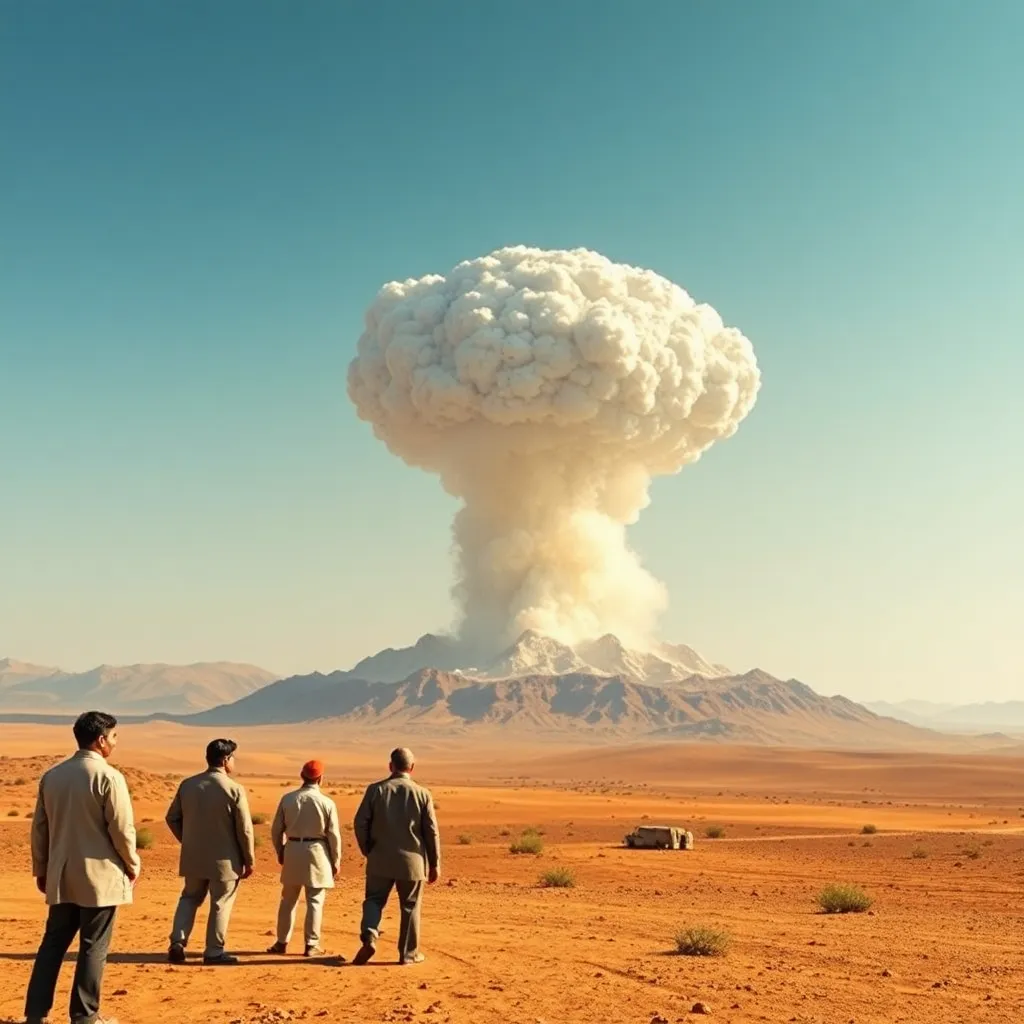
On 18 May 1974, India successfully conducted its first nuclear test, codenamed Smiling Buddha, at the Pokhran Test Range in Rajasthan. The test was led by Raja Ramanna under Prime Minister Indira Gandhi's leadership, using a plutonium implosion-type device. India became the sixth nation to achieve nuclear capability and the first outside the five permanent UN Security Council members to demonstrate such power. Officially described as a Peaceful Nuclear Explosion, this test led to the formation of the Nuclear Suppliers Group globally and marked India's strategic and technological advancement.
On this page
Key Facts
- Date: 18 May 1974
- Location: Pokhran Test Range, Rajasthan
- Prime Minister: Indira Gandhi
- Test Codenames: Smiling Buddha (India's Ministry of External Affairs), Happy Krishna (US Intelligence)
- Device Type: Plutonium-based implosion-type nuclear fission bomb
- Yield: Estimated between 6 to 10 kilotons of TNT
- Scientific Team Lead: Raja Ramanna
- Significance: Sixth country to conduct a nuclear test and first outside UNSC permanent members
Background & Context
India's nuclear program began post-independence, aiming for technological self-reliance and strategic security. Key developments took place at the Bhabha Atomic Research Centre (BARC) under the Atomic Energy Commission. The test used plutonium produced from reactors originally supplied by Canada (CIRUS) and heavy water from the United States. The project was kept secret and tightly controlled by Prime Minister Indira Gandhi to maintain confidentiality.
Why This Matters for Exams / Exam Relevance
Smiling Buddha is a pivotal moment in India's scientific and strategic history. Competitive exams often question candidates on the date, location, and significance of this test due to its role in establishing India as a nuclear power and its geopolitical consequences, including triggering the Nuclear Suppliers Group's formation.
Points to Remember
- The nuclear test was conducted on 18 May 1974 at 8:05 IST.
- Pokhran, Rajasthan, hosted the test at an underground shaft.
- Prime Minister Indira Gandhi personally oversaw the operation.
- Raja Ramanna was the chief scientist leading the test development.
- The bomb was a plutonium-based implosion device similar to the 'Fat Man' design.
- The test yield was approximately 6 to 10 kilotons of TNT.
- This test marked India as the first nuclear-armed country outside the five permanent members of the UN Security Council.
- International response included the establishment of the Nuclear Suppliers Group (NSG) to prevent nuclear proliferation.
Sources & Further Reading
| Document / Website | Link |
|---|---|
| Pokhran Nuclear Tests and Operation Smiling Buddha - GKToday | Open Pokhran Nuclear Tests and Operation Smiling Buddha - GKToday ↗www.gktoday.in |
| When Buddha finally smiled: 51 years since India's first nuclear test - India Today | Open When Buddha finally smiled: 51 years since India's first nuclear test - India Today ↗www.indiatoday.in |
| Smiling Buddha - Wikipedia | Open Smiling Buddha - Wikipedia ↗en.wikipedia.org |