
Netherlands Partners with Indian Spice Industry for Sustainable Spice Value Chains
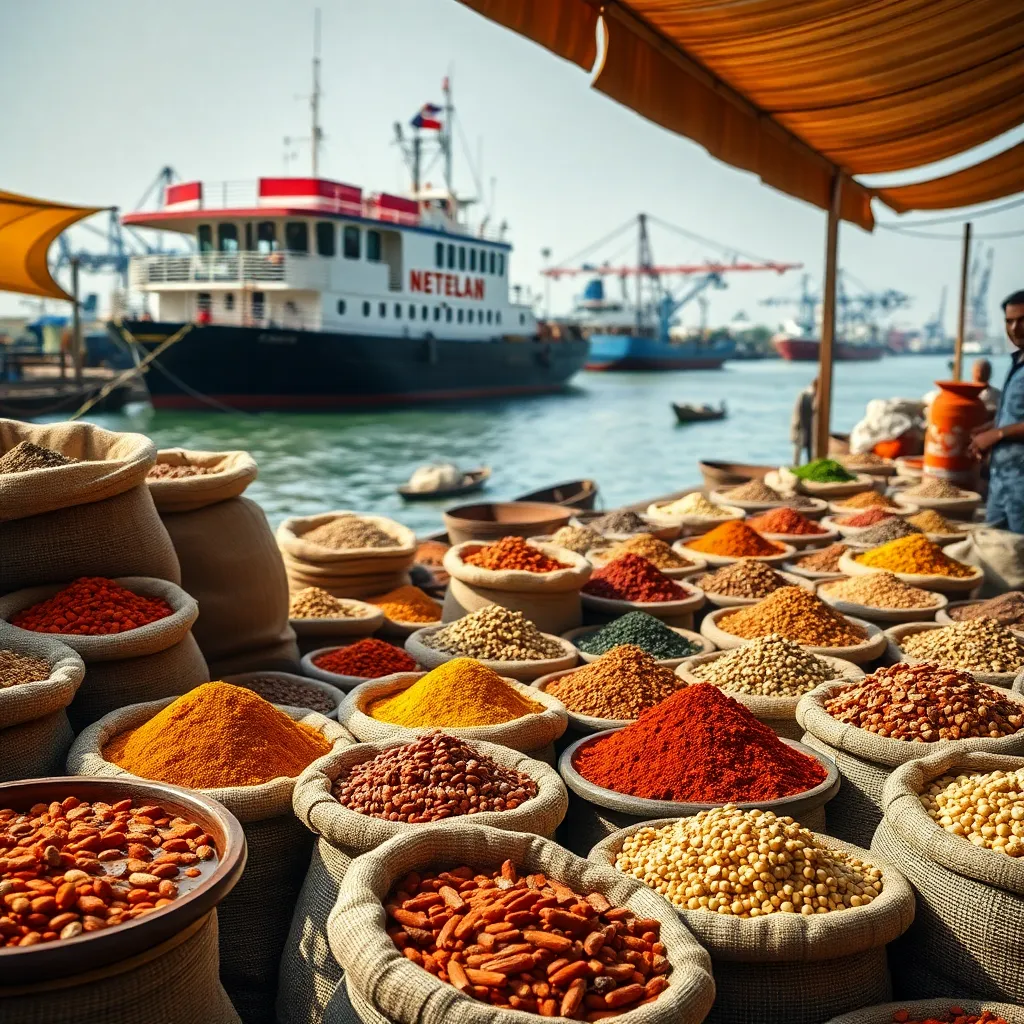
The Netherlands has partnered with the Indian spice industry to promote sustainability in spice production and trade. This cooperation emphasizes traceability, certification, fair wages, and environmental stewardship to meet evolving European regulatory standards and consumers' demand for sustainably sourced spices. India, a leading global producer and exporter of over 250 spice varieties, works with the Netherlands — whose Rotterdam Port serves as a principal European trade and logistics hub — to enhance the competitiveness of Indian spice exports worldwide.
On this page
Key Facts
- In 2026, the Kingdom of the Netherlands initiated sustainability-related cooperation with the Indian spice industry.
- India exports over 250 varieties of spices and value-added products to more than 180 countries.
- Rotterdam Port functions as one of Europe's largest hubs for the import and re-export of agricultural commodities, including spices.
- Sustainability emphasis in the spice sector includes soil health, water efficiency, traceability, residue control, fair wages, inclusion of women, and empowerment of small-holder farmers.
- The Spices Board of India promotes Good Agricultural Practices, Scientific Crop-Management, Integrated Pest Management, Hygienic Processing, and Farmer Capacity Building to ensure sustainability and compliance with sanitary and phytosanitary standards.
Background & Context
India is among the world's top producers, consumers, and exporters of spices such as black pepper, cardamom, cumin, coriander, turmeric, chilli, and ginger. The Netherlands, with Rotterdam as a central port, acts as a crucial European gateway facilitating trade and logistics for spices and other agricultural products.
Stakeholders from government bodies, private sectors, research institutions, and international organizations convened in a seminar organized by the Consulate General of the Kingdom of the Netherlands for South India and the World Spice Organisation to address sustainability challenges and opportunities in the spice value chain.
With the European Union's evolving regulatory landscape emphasizing sustainability, traceability, and food safety, Indian spice exporters are aligning with these standards to retain and expand their market footprint.
Why This Matters for Exams / Exam Relevance
This partnership exemplifies India's strategic engagement with international trade partners to strengthen agricultural export sectors in line with sustainability principles. It highlights the role of the Spices Board of India as a regulatory and promotional body, the importance of Rotterdam Port in global spice trade logistics, and emerging global standards affecting international trade.
Topics related to agricultural exports, sustainability initiatives, India-Europe trade relations, and international regulatory compliance are commonly featured in competitive exams under Economy, Agriculture, International Relations, and Trade Policy sections.
Points to Remember
- Year of partnership announcement: 2026.
- India exports over 250 spice varieties to 180+ countries.
- Key spices: turmeric, black pepper, cardamom, ginger, cumin, coriander, chilli.
- The Spices Board of India implements programs to ensure sustainability and export quality compliance.
- Rotterdam Port is a vital European spice trade and logistics hub.
- Sustainability dimensions include traceability, certification, fair wages, environmental impact reduction, and inclusive farmer empowerment.
- Shifts in EU regulations and consumer preferences are driving global spice trade towards sustainability and food safety.
Sources & Further Reading
| Document / Website | Link |
|---|---|
| Netherlands join hands with Indian spice industry on sustainability - The Hindu BusinessLine | Open Netherlands join hands with Indian spice industry on sustainability - The Hindu BusinessLine ↗www.thehindubusinessline.com |
| Spices Board of India - Official Website | Open Spices Board of India - Official Website ↗www.indianspices.com |
| Sustainable Spices Initiative | Open Sustainable Spices Initiative ↗sustainablespicesinitiative.org |