
ONGC to Develop New Strategic Petroleum Reserve Facility in Mangaluru
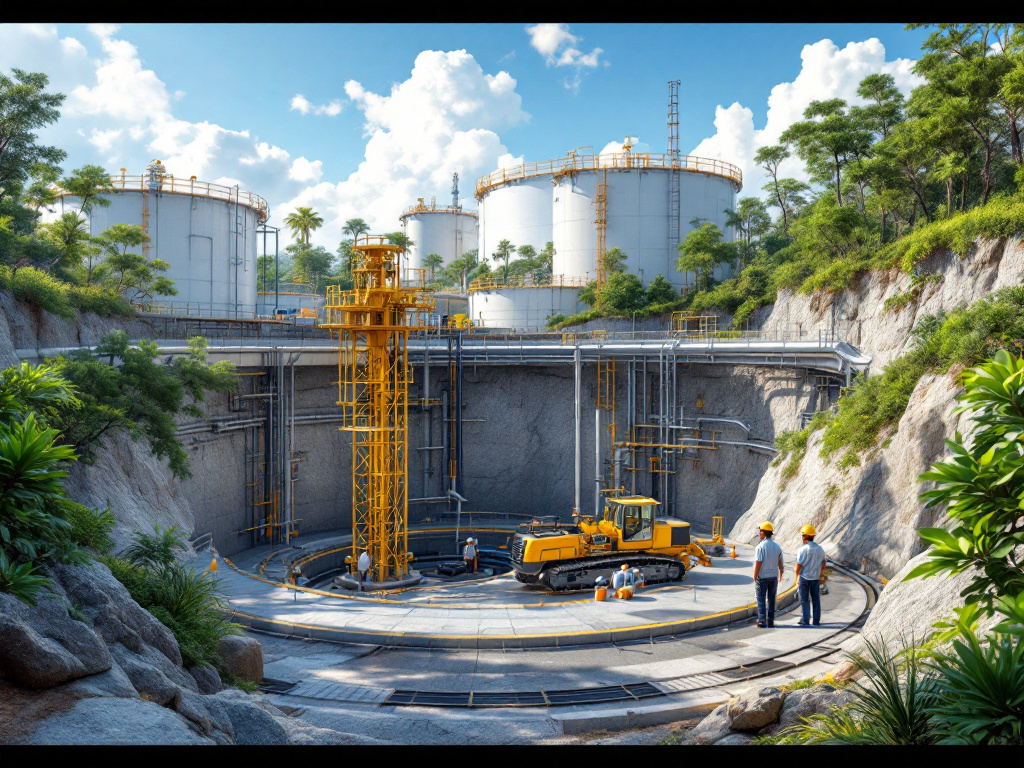
India's Ministry of Petroleum and Natural Gas has mandated the Oil and Natural Gas Corporation (ONGC) to construct a new Strategic Petroleum Reserve (SPR) facility at Mangaluru, Karnataka. This underground crude oil storage project, costing approximately ₹15,000 crore, will enhance India's emergency crude storage capacity by 1.75 million metric tonnes (MMT), increasing the nation's strategic crude reserves significantly. Unlike prior reserves managed by Indian Strategic Petroleum Reserves Limited (ISPRL), ONGC will finance and build this reserve independently. The initiative boosts India's capability to mitigate supply disruptions amid its import dependence, reinforcing national energy security.
On this page
Key Facts
- ONGC has been assigned to develop a new Strategic Petroleum Reserve (SPR) facility in Mangaluru, Karnataka, with an estimated storage capacity of 1.75 million metric tonnes (MMT) of crude oil.
- The estimated project cost is about ₹15,000 crore, comprising approximately ₹5,000 crore for constructing the underground cavern and ₹10,000 crore for filling it with crude oil at current prices.
- India’s existing SPR system includes underground facility locations at Visakhapatnam (1.33 MMT), Mangaluru (existing 1.5 MMT), and Padur (2.5 MMT), totaling 5.33 MMT.
- The new Mangaluru SPR project will increase India's total strategic crude oil storage capacity by roughly one-third upon completion.
- ONGC already owns the land earmarked for this project and will finance construction and filling from its own balance sheet, differing from prior SPR projects managed and funded via the Indian Strategic Petroleum Reserves Limited (ISPRL).
- India currently imports around 88% of its crude oil demand, emphasizing the importance of SPRs to secure supply stability during global or geopolitical disruptions.
Background & Context
Strategic Petroleum Reserves (SPRs) serve as emergency stockpiles of crude oil to ensure supply security against disruptions in imports or global supply chains. India’s initial SPR infrastructure was established under the aegis of ISPRL, a special purpose vehicle created by the government under the Ministry of Petroleum and Natural Gas. Existing SPR caverns are located underground near coastal refineries to facilitate efficient crude reception. The Mangaluru project signifies a shift as ONGC, a state-owned enterprise primarily known for upstream exploration and production, is now directly involved in financing and constructing the facility, reflecting a diversification of roles within India's energy sector institutions.
Why This Matters for Exams / Exam Relevance
The development and augmentation of India's Strategic Petroleum Reserves are critical aspects for understanding the country's energy security strategies, especially for aspirants of Indian civil services and related competitive examinations. Knowledge about SPR locations, capacities, the operational roles of entities such as ONGC and ISPRL, and government policies towards import dependence and supply disruption mitigation is frequently covered in current affairs and economy sections. Additionally, understanding how India balances commercial, strategic, and geopolitical aspects of crude oil imports is vital for comprehensive answers on energy and economic security topics.
Points to Remember
- ONGC has been tasked with building a new SPR facility of 1.75 MMT capacity in Mangaluru, adding to the existing 5.33 MMT nationwide.
- Project expenditure involves construction cost (~₹5,000 crore) and crude filling cost (~₹10,000 crore).
- Existing SPR locations: Visakhapatnam (1.33 MMT), Mangaluru (1.5 MMT), and Padur (2.5 MMT).
- ONGL financing via own balance sheet is a departure from earlier ISPRL-managed funding arrangements.
- Strategic Petroleum Reserves help India manage supply disruptions due to heavy import reliance (~88% crude import dependence).
- SPR storage is in underground caverns, suited to long-term secure crude storage.
- Expansion initiatives reflect India's commitment to energy security amid global market volatility and geopolitical risks.
Sources & Further Reading
| Document / Website | Link |
|---|---|
| ONGC to Build New Strategic Oil Reserve in Mangaluru | Open ONGC to Build New Strategic Oil Reserve in Mangaluru ↗www.gktoday.in |
| Government steps to Strengthen Strategic Petroleum Reserves | Open Government steps to Strengthen Strategic Petroleum Reserves ↗www.pib.gov.in |
| India's Strategic Petroleum Reserves (SPRs) Capacity and Importance | Open India's Strategic Petroleum Reserves (SPRs) Capacity and Importance ↗www.drishtiias.com |