
Perseid Meteor Shower 2026 Peaks with Exceptional Viewing Conditions
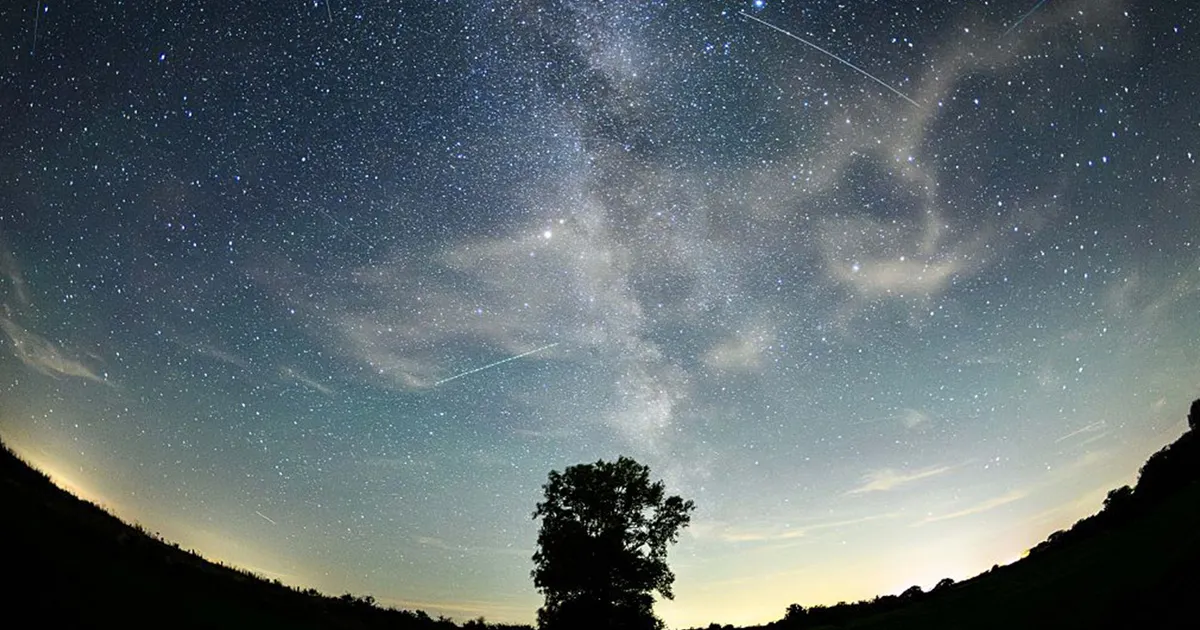
The annual Perseid meteor shower, associated with debris from Comet 109P/Swift-Tuttle, reaches its peak on the night of August 12–13, 2026. Thanks to a New Moon phase on August 12, 2026, the skies will be exceptionally dark, enhancing visibility. Observers in the Northern Hemisphere can expect to see between 30 and 100 meteors per hour under optimal conditions, with the radiant point located in the constellation Perseus. The shower remains active from mid-July to August 24, 2026. The 2026 peak coincides with notable astronomical events, including a total solar eclipse visible in parts of Greenland, Iceland, Portugal, and Spain, as well as a rare six-planet alignment.
On this page
Key Facts
- Peak dates: Night of August 12 into early morning of August 13, 2026
- Parent comet: 109P/Swift-Tuttle, a periodic comet with a 133-year orbit
- Visibility: Best viewed from the Northern Hemisphere; visible in the US, India, and much of northern latitudes
- Expected meteor rates: Approximately 30 to 50 meteors per hour in rural areas of the US; up to 100 meteors per hour under ideal dark-sky conditions
- Moon phase: New Moon on August 12, 2026, results in minimal moonlight interference
- Active period: From mid-July to August 24, 2026
- Radiant point: Constellation Perseus, located in the northeastern sky
- Peak viewing times: Between midnight and local dawn, with the strongest activity occurring between 2:00 am and dawn; in India, the best window is roughly 2:00 am to 4:30 am IST on August 13
- Concurrent astronomical events in 2026: A total solar eclipse visible in parts of Greenland, Iceland, Portugal, and Spain, and a six-planet alignment
Background & Context
The Perseid meteor shower is a yearly celestial event resulting from Earth passing through the trail of dust and debris left by Comet 109P/Swift-Tuttle. This large comet, approximately 16 miles (26 kilometers) in diameter, takes about 133 years to orbit the Sun and was last near perihelion in 1992. As Earth moves through the comet's debris stream, small particles enter the atmosphere at high speeds and burn up, creating bright, fast meteors. The meteors appear to radiate from the constellation Perseus, hence the name Perseids.
The Perseids are among the most reliable and prolific meteor showers, favored by astronomers and the general public due to their frequency, brightness, and occurrence during warm summer nights in the Northern Hemisphere. The shower is active roughly from mid-July through late August each year, peaking in mid-August.
Why This Matters for Exams / Exam Relevance
The Perseid meteor shower is often covered in general awareness and science sections of examinations due to its cultural and scientific significance. Key points such as its association with Comet 109P/Swift-Tuttle, timing, visibility, and astronomical importance are relevant for exam questions. The 2026 peak is notable for coinciding with a New Moon, enhancing viewing conditions—a detail that can be a specific focus. Additionally, its concurrence with a total solar eclipse and a rare six-planet alignment adds to its uniqueness, making it a notable event in astronomy-related current affairs.
Points to Remember
- Perseid meteor shower originates from debris of Comet 109P/Swift-Tuttle, discovered independently by Lewis Swift and Horace Parnell Tuttle in 1862.
- The comet’s nucleus is about 16 miles (26 km) wide and orbits the Sun every 133 years.
- The meteor shower annually occurs from mid-July to late August, with a peak around August 12–13.
- In 2026, the peak coincides with a New Moon, providing optimal darkness for viewing.
- The radiant lies in the constellation Perseus, visible mainly in the Northern Hemisphere.
- During peak, meteor rates can reach up to 100 meteors per hour under dark rural skies.
- Best viewing times are usually between midnight and dawn, especially when the radiant is higher in the sky (commonly after 2 am local time).
- The 2026 peak occurs alongside other astronomical phenomena, including a total solar eclipse visible in select northern hemisphere regions and a rare alignment of six planets.
Sources & Further Reading
| Document / Website | Link |
|---|---|
| Perseid Meteor Shower Peaks Across Northern Hemisphere - GKToday | Open Perseid Meteor Shower Peaks Across Northern Hemisphere - GKToday ↗www.gktoday.in |
| The Perseid Meteor Shower 2026: Peak Time and Viewing Guide - Svbony | Open The Perseid Meteor Shower 2026: Peak Time and Viewing Guide - Svbony ↗www.svbony.com |
| 109P/Swift-Tuttle - NASA Science | Open 109P/Swift-Tuttle - NASA Science ↗science.nasa.gov |
| How to Watch the Perseid Meteor Shower - NASA | Open How to Watch the Perseid Meteor Shower - NASA ↗science.nasa.gov |
| Perseid Meteor Shower 2026 Peak Dates and Viewing Tips - TimeandDate | Open Perseid Meteor Shower 2026 Peak Dates and Viewing Tips - TimeandDate ↗www.timeanddate.com |