
Plastic Waste Converted into Hydrogen Fuel Using Sunlight and Battery Acid
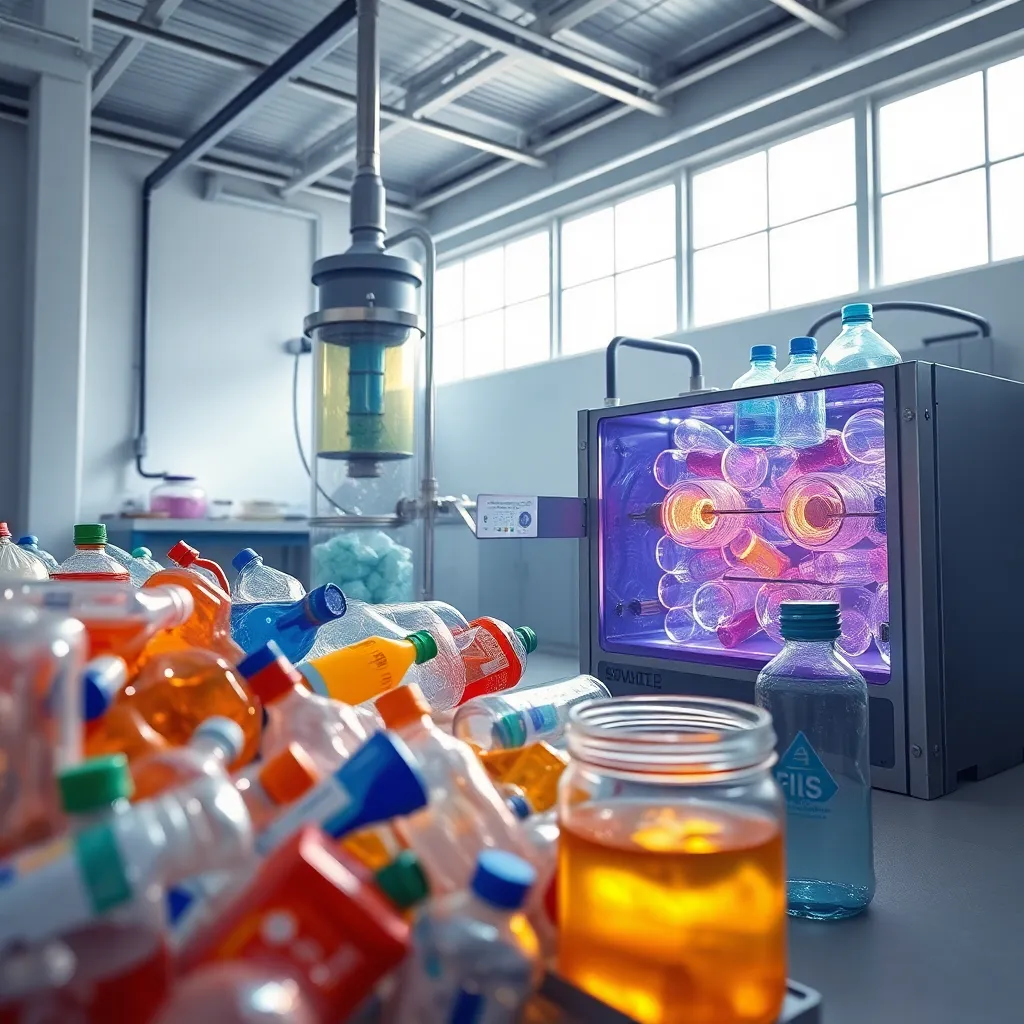
Scientists have developed a solar-driven photoreforming process that uses sunlight and recovered battery acid to convert hard-to-recycle plastic waste into clean hydrogen fuel and valuable industrial chemicals. Photoreforming employs light-sensitive photocatalysts to break down common polymers like polyethylene and polypropylene at ambient temperature, generating hydrogen, syngas, acetic acid, and hydrocarbons efficiently. This innovation addresses global plastic pollution and energy challenges simultaneously, offering a sustainable circular upcycling method. Key research from the University of Cambridge and University of Adelaide in 2026 demonstrated effective use of car battery acid and metal-free catalysts to achieve this at laboratory scale, promising potential for scalable, low-emission hydrogen production.
On this page
Key Facts
- Plastic photoreforming converts common polymers such as polyethylene and polypropylene into hydrogen and valuable chemicals including syngas, acetic acid, and hydrocarbon fuels.
- The process is solar-driven; it relies on light-sensitive photocatalysts and uses recovered sulfuric acid from old car batteries as a reaction medium.
- Operations occur at ambient temperature and pressure, making it less energy-intensive than conventional water-splitting methods for hydrogen production.
- University of Cambridge researchers developed a robust photocatalyst that operated continuously for over 260 hours without performance loss, demonstrating system stability.
- Research by the University of Adelaide published in the peer-reviewed journal Chem Catalysis in April 2026 examined solar-powered systems converting plastic waste into hydrogen, syngas, and liquid fuels using both metal-based and metal-free catalysts.
- Global plastic production exceeds 400 million tonnes annually, but only about 10–18% of plastic waste is recycled, with many plastics being hard-to-recycle mixed or contaminated materials.
- Circular upcycling involves converting plastic waste into higher-value products like clean hydrogen fuel and industrial chemicals, promoting sustainability and resource reuse.
Background & Context
Plastic pollution is a major environmental issue due to low recycling rates and accumulation in terrestrial and marine ecosystems. Simultaneously, the global energy sector is transitioning towards cleaner fuels. Hydrogen is considered a clean fuel due to its high energy content and zero emissions upon use. Traditional hydrogen production methods often rely on fossil fuels or energy-intensive water electrolysis.
Photoreforming is a light-driven photocatalytic process that decomposes organic materials using sunlight or artificial light, generating hydrogen and other useful chemicals. Plastics such as polyethylene and polypropylene, rich in carbon and hydrogen, serve as feedstock. Because plastics are more readily oxidized than water, photoreforming consumes less energy for hydrogen generation compared to water-splitting.
Integrating recovered sulfuric acid from spent car batteries as the reaction medium links hazardous waste remediation with clean energy production, enhancing circularity. The photocatalysts developed demonstrated extended operational stability, making this approach promising for future scale-up and industrial application.
Why This Matters for Exams / Exam Relevance
This subject bridges key topics such as environmental chemistry, renewable energy technologies, and sustainable waste management, which are often included in advanced secondary education and undergraduate curricula. Understanding photoreforming as a novel hydrogen production technology showcases the application of photocatalysis and circular economy principles.
Examinable points include the photoreforming process mechanism, the photocatalysts used, the role and reuse of battery acid, advantages over traditional hydrogen generation (e.g., lower energy input, ambient conditions), and the importance of upcycling hard-to-recycle plastics. Knowledge of plastic production volumes and recycling challenges is also relevant.
Points to Remember
- Photoreforming uses sunlight and photocatalysts to convert plastic waste into hydrogen and industrial chemicals.
- Polyethylene and polypropylene are key plastics targeted in this process.
- Recovered sulfuric acid from old car batteries is repurposed in the reaction, adding environmental benefit.
- University of Cambridge and University of Adelaide led significant 2026 research demonstrating efficiency and catalyst durability.
- Global plastic production exceeds 400 million tonnes yearly, but recycling rates remain below 20%, highlighting the need for innovative waste valorization.
- Hydrogen produced by this method is classified as clean fuel, given renewable energy inputs.
- Circular upcycling offers a pathway for sustainable resource management by transforming waste into higher-value products.
Sources & Further Reading
| Document / Website | Link |
|---|---|
| Plastic waste converted into hydrogen fuel using sunlight | Open Plastic waste converted into hydrogen fuel using sunlight ↗www.gktoday.in |
| Scientists turn plastic waste into clean hydrogen fuel using sunlight | ScienceDaily | Open Scientists turn plastic waste into clean hydrogen fuel using sunlight | ScienceDaily ↗www.sciencedaily.com |
| Photocatalyst turns plastic waste into hydrogen using sunlight and battery acid | Chemistry World | Open Photocatalyst turns plastic waste into hydrogen using sunlight and battery acid | Chemistry World ↗www.chemistryworld.com |
| Researchers turn recovered car battery acid and plastic waste into clean hydrogen | University of Cambridge | Open Researchers turn recovered car battery acid and plastic waste into clean hydrogen | University of Cambridge ↗www.cam.ac.uk |