
Scientists Confirm Carnivory in Saxifraga candelabrum, Validating Darwin's 1875 Hypothesis
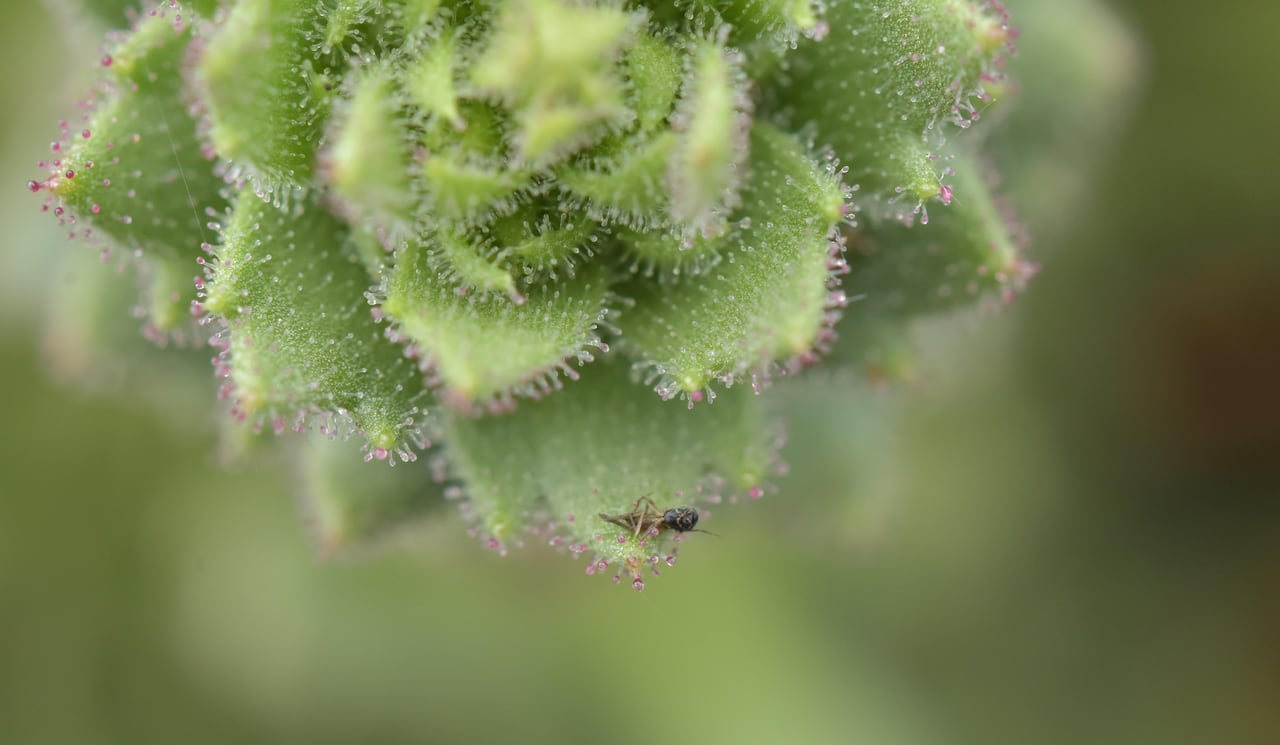
A recent 2026 study has confirmed that Saxifraga candelabrum, an alpine plant native to China's Qinghai-Tibet Plateau and Hengduan Mountains, is carnivorous. This discovery verifies Charles Darwin’s 1875 hypothesis that some Saxifraga species trap and digest insects. The plant uses sticky glandular hairs to capture insects and absorbs nitrogen from them, marking the first proven carnivorous species in the Saxifragaceae family and providing evidence of convergent evolution among flowering plants.
On this page
Key Facts
- Species: Saxifraga candelabrum, an alpine flowering plant.
- Habitat: Native to Qinghai-Tibet Plateau and Hengduan Mountains in China, growing at elevations above 2,500 metres.
- Carnivory mechanism: Uses reddish sticky glandular hairs on stems and branches to trap small insects, mainly gnats; larger pollinating flies are generally not trapped.
- Insect capture rate: Mature plants trap on average approximately 70 small insects.
- Research methods: Fluorescence tagging of phosphatase activity and nitrogen isotope (N-15) tracking were utilized to confirm digestion and nitrogen absorption from prey.
- Significance: First confirmed carnivorous plant in the Saxifragaceae family.
- Genomic findings: Shared genes detected between Saxifraga candelabrum and other independently evolved carnivorous plants; supporting convergent evolution in carnivorous flowering plants.
- Publication: Findings published on 4 August 2026 in Nature Communications by researchers from the Kunming Institute of Botany (Chinese Academy of Sciences) and Florida Museum of Natural History.
Background & Context
In 1875, Charles Darwin published "Insectivorous Plants," where he hypothesized that some Saxifraga species might trap and digest insects, though he could not provide conclusive evidence. Carnivorous plants are adapted to nutrient-poor environments with limited nitrogen and phosphorus availability in soil, supplementing these nutrients by capturing and digesting animals, primarily insects. Before this study, carnivorous plants were documented mainly in families such as Droseraceae, Nepenthaceae, and Lentibulariaceae. The confirmation of carnivory in Saxifraga candelabrum expands the known diversity of carnivorous plants and their evolutionary pathways.
Why This Matters for Exams / Exam Relevance
This discovery bridges classical botanical hypotheses and contemporary molecular methods, a critical theme in biology and botany examination syllabi. Students should be familiar with Darwin’s contributions to understanding carnivory in plants, the adaptive strategies carnivorous plants employ in nutrient-poor habitats, and modern techniques such as fluorescence tagging and isotope analysis used to study nutrient uptake. The case of Saxifraga candelabrum also exemplifies convergent evolution, an important concept in evolutionary biology, highlighting how unrelated species develop similar adaptations independently.
Points to Remember
- Study published: 4 August 2026 in Nature Communications.
- Plant species: Saxifraga candelabrum.
- Geographical location: Qinghai-Tibet Plateau and Hengduan Mountains, China.
- Elevation: Above 2,500 metres.
- Confirmed Darwin's 1875 hypothesis regarding Saxifraga carnivory.
- Research methods: Fluorescence tagging for phosphatase activity and nitrogen isotope (N-15) tracing.
- First verified carnivorous species within Saxifragaceae family.
- Genomic evidence supports convergent evolution among carnivorous plants.
- Prior carnivorous plant families include Droseraceae, Nepenthaceae, and Lentibulariaceae.
Sources & Further Reading
| Document / Website | Link |
|---|---|
| Scientists validate Darwin's theory in Saxifraga candelabrum - GKToday | Open Scientists validate Darwin's theory in Saxifraga candelabrum - GKToday ↗www.gktoday.in |
| Charles Darwin’s Insectivorous Plants (1875) | Open Charles Darwin’s Insectivorous Plants (1875) ↗www.gutenberg.org |
| Carnivorous Plants Overview - Botanical Society | Open Carnivorous Plants Overview - Botanical Society ↗botany.org |
| Nature Communications Journal | Open Nature Communications Journal ↗www.nature.com |