
Shekha Jheel Declared India’s 99th Ramsar Site, Uttar Pradesh’s 12th
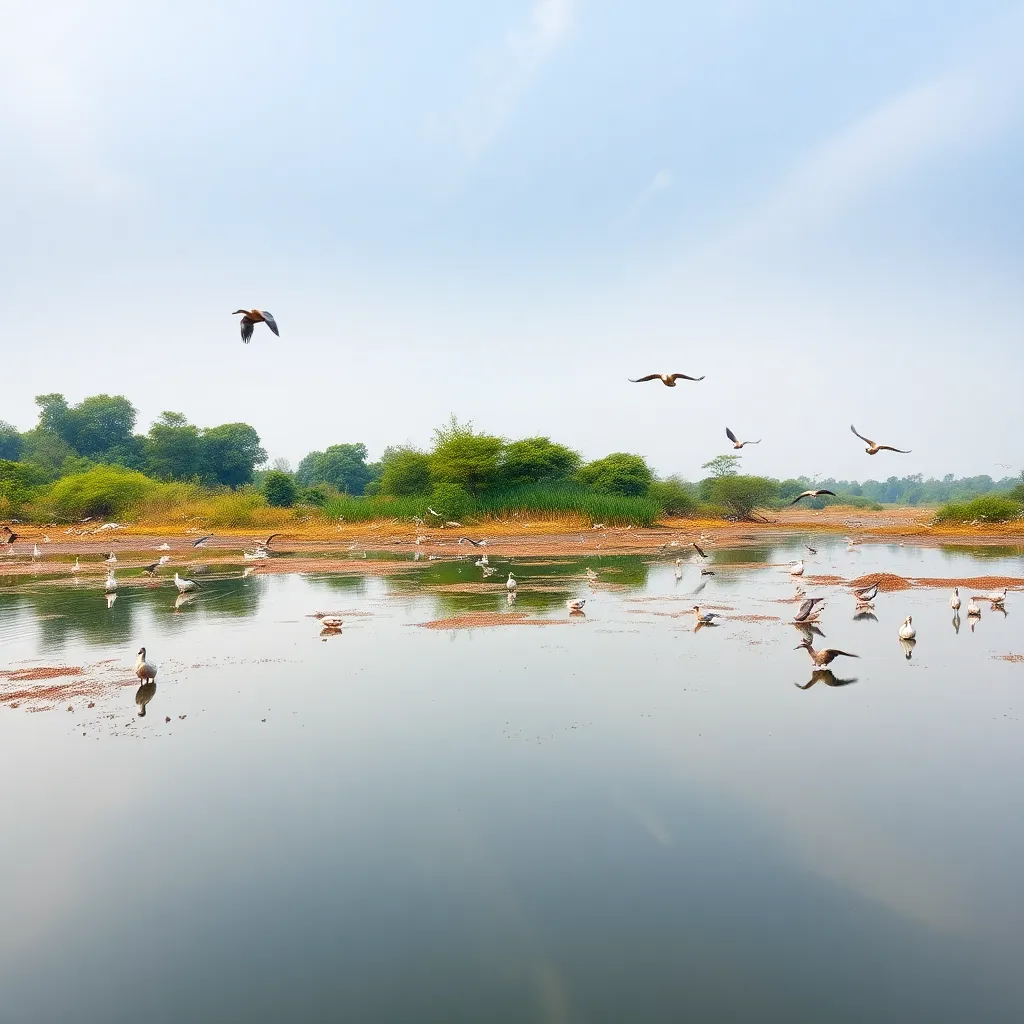
On April 22, 2026, Shekha Jheel Bird Sanctuary in Aligarh, Uttar Pradesh, was designated as India’s 99th Ramsar site. This marks a significant milestone in India’s commitment to wetland conservation. Uttar Pradesh leads among Indian states with 12 Ramsar sites, underscoring its ecological importance. Shekha Jheel supports 249 bird species, including 62 wetland-dependent species, and serves as a critical stopover on the Central Asian Flyway for migratory birds such as the Bar-headed Goose and Painted Stork. Ramsar designation promotes biodiversity conservation, climate resilience, water security, and sustainable livelihoods through eco-tourism opportunities.
On this page
Key Facts
- Shekha Jheel Bird Sanctuary is located in Aligarh district, Uttar Pradesh.
- It was declared India’s 99th Ramsar site on April 22, 2026.
- Uttar Pradesh now has 12 Ramsar sites, the highest number among Indian states.
- The sanctuary hosts 249 bird species, including 62 species dependent on wetlands.
- Shekha Jheel serves as a significant stopover point on the Central Asian Flyway migratory bird route.
- Notable bird species include Bar-headed Goose, Painted Stork, and various species of ducks.
- Union Environment Minister Bhupender Yadav officially announced the designation.
- The Ramsar Convention, adopted in 1971 in Ramsar, Iran, is an international treaty for wetland conservation.
- Ramsar site status enhances conservation efforts, climate security, water conservation, and local livelihoods.
Background & Context
The Ramsar Convention on Wetlands is a global treaty adopted in 1971 to conserve wetlands of international importance based on ecological, hydrological, and biological criteria. India has been progressively adding wetlands to the Ramsar list, recognizing their vital role in biodiversity conservation, groundwater recharge, flood control, and carbon sequestration. Shekha Jheel, situated in western Uttar Pradesh, is a key wetland on the Central Asian Flyway, supporting migratory and resident bird species and providing local ecological services. This designation reflects India’s growing emphasis on wetland restoration and sustainable environmental management in line with its global commitments.
Why This Matters for Exams / Exam Relevance
The addition of Shekha Jheel as the 99th Ramsar site in India, and Uttar Pradesh's leadership with 12 Ramsar sites, are important contemporary facts frequently examined in environment and ecology sections of competitive exams. The ecosystem's role in migration via the Central Asian Flyway, species diversity, and the international Ramsar framework are key topics. Understanding wetland conservation's link to biodiversity, climate change mitigation, and sustainable development aligns with syllabus areas on international environmental treaties, Indian biodiversity hotspots, and government conservation initiatives.
Points to Remember
- Shekha Jheel Bird Sanctuary was designated India’s 99th Ramsar site on April 22, 2026.
- Located in Aligarh district, Uttar Pradesh, which now has the highest number (12) of Ramsar sites in India.
- The sanctuary hosts 249 bird species, including 62 species reliant on wetland habitats.
- It forms a crucial stopover on the Central Asian Flyway migratory bird route.
- Bird species such as Bar-headed Goose and Painted Stork are commonly found here.
- Ramsar Convention was signed in 1971 in Ramsar, Iran; India is a signatory and actively participates.
- Ramsar designation advances biodiversity protection, water conservation, climate resilience, and supports eco-tourism-based livelihoods.
- Union Environment Minister Bhupender Yadav announced the designations, underscoring government commitment.
Sources & Further Reading
| Document / Website | Link |
|---|---|
| Shekha Jheel becomes India’s 99th Ramsar Site | Open Shekha Jheel becomes India’s 99th Ramsar Site ↗www.gktoday.in |
| Green carpet for winged visitors: Aligarh’s Shekha Jheel is UP’s 12th Ramsar site | Open Green carpet for winged visitors: Aligarh’s Shekha Jheel is UP’s 12th Ramsar site ↗www.hindustantimes.com |
| Ramsar Convention on Wetlands | Open Ramsar Convention on Wetlands ↗www.ramsar.org |