
Rusty-spotted Cat Documented for First Time in Uttar Pradesh's National Chambal Sanctuary
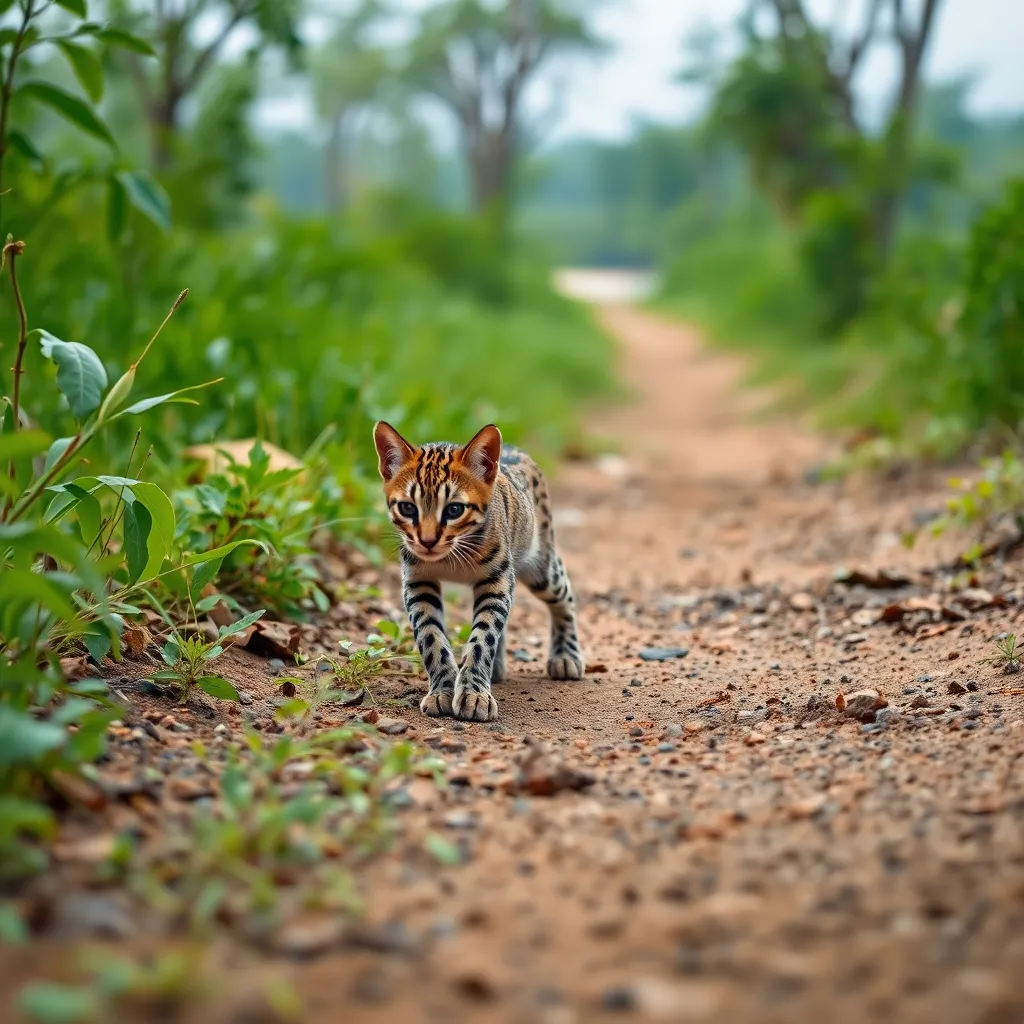
In May 2026, researchers from the Wildlife Institute of India documented the Rusty-spotted Cat (Prionailurus rubiginosus) for the first time in the National Chambal Sanctuary, located in southern Uttar Pradesh. This sighting marks the first confirmed presence of this species in southern Uttar Pradesh, extending its known range within the state. The Rusty-spotted Cat is known as one of Asia's smallest wild cats, identified by rusty-brown spots and a small body size. The National Chambal Sanctuary, which spans three states (Uttar Pradesh, Madhya Pradesh, and Rajasthan), is known for its riverine ecosystem supporting diverse fauna including gharials, mugger crocodiles, and Gangetic river dolphins. The documentation was carried out as part of field surveys by Wildlife Institute of India researchers, involving photographic evidence, measurements, and GPS locations. Road collisions are recognized as a significant threat to small mammals in fragmented habitats such as this sanctuary.
On this page
Key Facts
- The Rusty-spotted Cat (Prionailurus rubiginosus) was recorded in May 2026 in the National Chambal Sanctuary, Uttar Pradesh.
- This is the first confirmed record of the species in southern Uttar Pradesh, extending its known distribution within the state.
- The species is among Asia's smallest wild cats and is identifiable by its rusty-brown spots, short coat, and small body size.
- The National Chambal Sanctuary is a protected area spanning Uttar Pradesh, Madhya Pradesh, and Rajasthan along the Chambal River.
- Researchers from the Wildlife Institute of India, Dehradun, documented this species during field surveys utilising photographic evidence and GPS tagging.
- Road collisions are a known cause of mortality for small mammals in fragmented habitats like the sanctuary.
Background & Context
The Rusty-spotted Cat is a small wild feline species native to the Indian subcontinent. Prior to this record, its presence was not confirmed in southern Uttar Pradesh. The National Chambal Sanctuary is a significant tri-state protected area known for its riverine habitats and populations of gharials, mugger crocodiles, Gangetic river dolphins, and several avian species associated with alluvial plains and ravines. This new record enriches the documented biodiversity of the sanctuary, highlighting its role in conserving lesser-known small carnivore species alongside larger flagship species.
Why This Matters for Exams / Exam Relevance
The discovery is important for competitive examinations under environment and biodiversity topics. It encompasses elements such as species conservation, wildlife sanctuaries, and state-wise biodiversity records. Awareness of the Rusty-spotted Cat's scientific name, its habitat, the significance of the National Chambal Sanctuary, and the governmental research institute involved (Wildlife Institute of India) is crucial. This case exemplifies the expansion of known species distribution, conservation challenges such as habitat fragmentation and road-kill risks, and multidisciplinary wildlife research efforts in India.
Points to Remember
- Species species name: Prionailurus rubiginosus.
- First confirmed sighting in southern Uttar Pradesh in 2026.
- Documented in National Chambal Sanctuary, spanning Uttar Pradesh, Madhya Pradesh, and Rajasthan.
- Research conducted by Wildlife Institute of India (WII), headquartered in Dehradun.
- National Chambal Sanctuary is notable for gharials, mugger crocodiles, and Gangetic river dolphins among others.
- Conservation threats include road collisions and habitat fragmentation in small mammal populations.
Sources & Further Reading
| Document / Website | Link |
|---|---|
| Rusty Spotted Cat Recorded in Uttar Pradesh's National Chambal Sanctuary - GKToday | Open Rusty Spotted Cat Recorded in Uttar Pradesh's National Chambal Sanctuary - GKToday ↗www.gktoday.in |
| First record of Rusty-spotted cat in UP’s National Chambal sanctuary - Hindustan Times | Open First record of Rusty-spotted cat in UP’s National Chambal sanctuary - Hindustan Times ↗www.hindustantimes.com |
| National Chambal Sanctuary - Wikipedia | Open National Chambal Sanctuary - Wikipedia ↗en.wikipedia.org |
| Wildlife Institute of India, Uttar Pradesh Research | Open Wildlife Institute of India, Uttar Pradesh Research ↗wii.gov.in |