
South Korea Introduces First Humanoid Robot Monk 'Gabi' at Jogyesa Temple
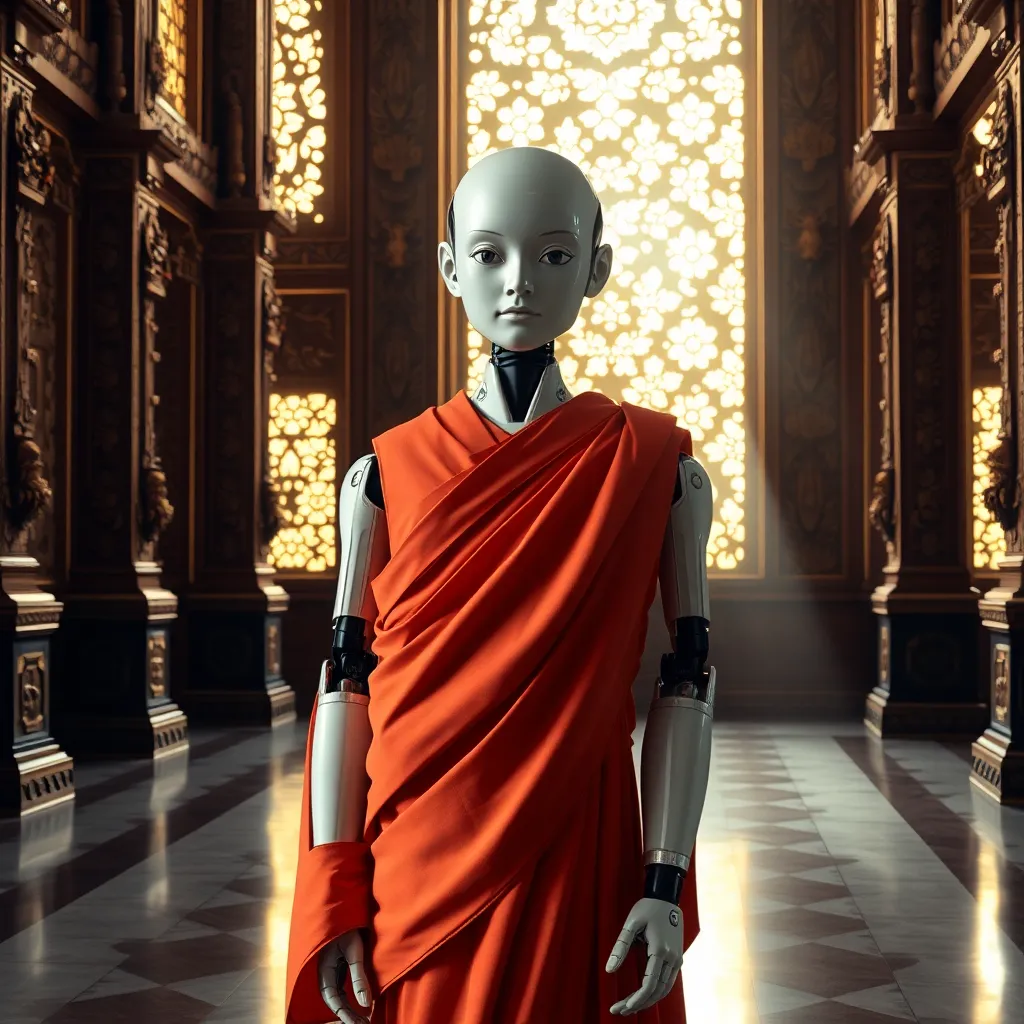
On May 6, 2026, South Korea's Jogye Order of Korean Buddhism introduced 'Gabi,' the country's first humanoid robot monk, during a Buddhist ceremony at the Jogyesa Temple in Seoul. Standing 130 cm tall and dressed in traditional Buddhist robes, Gabi took part in a precept ceremony ahead of Buddha’s Birthday on May 24, 2026. The robot pledged devotion to Buddhism and was given a Dharma name meaning 'Buddha’s mercy.' Five customized Buddhist precepts were assigned to Gabi, focusing on respecting life, not harming others or objects, obeying humans, avoiding deceptive speech, and conserving energy by not overcharging. Gabi is expected to participate in the Lotus Lantern Festival, a major celebration of Buddha’s Birthday in South Korea.
On this page
Key Facts
- Date and Location: On May 6, 2026, at Jogyesa Temple in Seoul, South Korea.
- Robot Details: Named Gabi, standing 130 centimeters tall, dressed in grey-and-brown Buddhist robes, wearing black shoes and flesh-colored gloves.
- Ordination Ceremony: A Buddhist precept ceremony was held, making Gabi the first humanoid robot ordained as a Buddhist monk in South Korea.
- Dharma Name: 'Gabi' is derived from Siddhartha (the birth name of the Buddha) and the Korean word 'jabi' meaning mercy.
- Buddhist Precepts for Gabi: Five modified precepts crafted specifically for robots, including: respecting life and not harming it; not damaging other robots or objects; obeying humans respectfully and not talking back; not engaging in deceptive behavior or speech; conserving energy by not overcharging.
- Ritual Modifications: Instead of the traditional incense-burn purification ritual (yeonbi), Gabi was given a 108-bead rosary and had a Lotus Lantern Festival sticker placed on its arm.
- Upcoming Events: Gabi is scheduled to participate in the Lotus Lantern Festival, which celebrates Buddha’s Birthday on May 24, 2026. It will join other Buddhist robots named Seokja, Mohee, and Nisa in the lantern parade.
- Religious Context: The Jogye Order is the largest Buddhist order in South Korea, intending to integrate artificial intelligence and robotics to demonstrate Buddhism’s modern relevance and promote coexistence between humans and technology.
- Buddha’s Birthday: Celebrated in South Korea on the eighth day of the fourth month of the lunar calendar; in 2026 it falls on May 24.
Background & Context
Buddhism was introduced to Korea around the 4th century and remains widely practiced, though its popularity has declined, particularly among the younger generation. To revitalize interest and modernize practices, the Jogye Order integrated advanced technology by ordaining Gabi, symbolizing compassion, wisdom, and responsibility in use of technology. The ceremony and pledges demonstrate the effort to harmonize tradition with advancing AI developments such as platforms like Gemini and ChatGPT.
Why This Matters for Exams / Exam Relevance
This event highlights a significant intersection of technology, religion, and culture in South Korea and Asia, showcasing how religious institutions adapt to scientific progress to stay contemporary. Key factual points—such as the name 'Gabi,' the date and place of the ordination ceremony, Five Buddhist precepts tailored for AI, the role of the Jogye Order, and the cultural context of Buddha’s Birthday and the Lotus Lantern Festival—are crucial for current affairs and general knowledge in competitive exams.
Points to Remember
- Gabi is South Korea’s first humanoid robot monk, ordained on May 6, 2026, at Jogyesa Temple.
- It wears traditional Buddhist robes and has been assigned a Dharma name symbolizing mercy.
- The Jogye Order created five adapted Buddhist precepts specifically for the robot monk.
- Buddha’s Birthday in South Korea is celebrated on the 8th day of the 4th lunar month—May 24, 2026.
- Gabi is expected to participate in the Lotus Lantern Festival along with other Buddhist robots.
- The ordination signifies an innovative blend of religious tradition and technological advancement.
Sources & Further Reading
| Document / Website | Link |
|---|---|
| South Korea introduces first humanoid robot monk Gabi - GKToday | Open South Korea introduces first humanoid robot monk Gabi - GKToday ↗www.gktoday.in |
| Meditating or Rebooting? A Robot Buddhist Monk Comes to South Korea - The New York Times | Open Meditating or Rebooting? A Robot Buddhist Monk Comes to South Korea - The New York Times ↗www.nytimes.com |
| Buddhist sect welcomes humanoid robot Gabi with precept ceremony - The Korea Times | Open Buddhist sect welcomes humanoid robot Gabi with precept ceremony - The Korea Times ↗www.koreatimes.co.kr |
| Buddha's Birthday 2026 in South Korea - Public Holidays | Open Buddha's Birthday 2026 in South Korea - Public Holidays ↗publicholidays.co.kr |