
Sweden Joins India's Venus Orbiter Mission 'Shukrayaan'
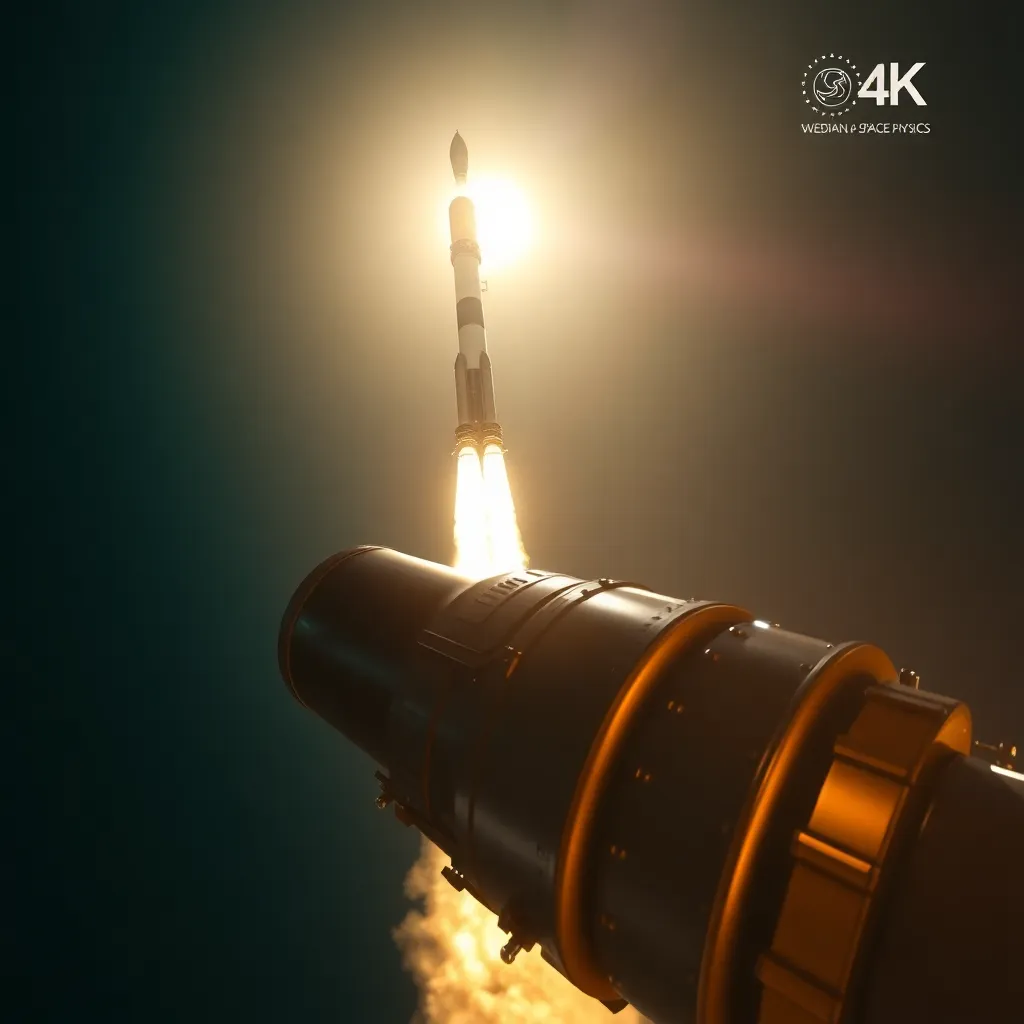
Sweden has joined India's planned Venus orbiter mission, Shukrayaan, through a scientific collaboration agreement. The mission, approved in 2024 with an outlay of ₹1,236 crore, is set to launch in March 2028 aboard ISRO's LVM-3 rocket and study Venus’ atmosphere, surface, weather systems, and super-rotating clouds. The Swedish Institute of Space Physics will develop the Venusian Neutrals Analyser (VNA) instrument to investigate interactions between solar charged particles and Venus's atmosphere and exosphere.
On this page
Key Facts
- Mission Name: Shukrayaan (Venus Orbiter Mission)
- Launch Date: 29 March 2028 (planned)
- Launch Vehicle: LVM-3 rocket
- Budget: ₹1,236 crore approved in 2024
- Swedish Collaboration: Swedish Institute of Space Physics developing the Venusian Neutrals Analyser (VNA)
- Objectives: Study Venus's atmosphere, exosphere, surface characteristics, weather systems, and super-rotating clouds
Background & Context
Venus is the second planet from the Sun and is often called Earth’s twin because of its similar size and mass. However, it has a dense carbon dioxide atmosphere and surface temperatures exceeding 460°C, making it a hostile environment. The Shukrayaan mission is designed to study the planet’s dense atmosphere, volcanic surface, cloud dynamics, and the interaction of solar wind with Venus' atmosphere and exosphere. The mission also aims to investigate whether Venus once had conditions suitable for liquid water before it evolved into a greenhouse planet.
Sweden's participation involves developing the VNA instrument to analyze neutral particles in Venus's upper atmosphere, helping to elucidate the interactions with solar charged particles.
Why This Matters for Exams / Exam Relevance
Shukrayaan represents India's first dedicated mission to Venus and highlights international scientific cooperation, important for understanding planetary science advancements. Exam questions may focus on mission objectives, international collaborations in space exploration, and the significance of studying Venus to understand planetary atmospheres and climate evolution. Knowledge of launch vehicle details, mission timeline, and payload instruments is also crucial.
Points to Remember
- 'Shukrayaan' combines the Sanskrit words 'Shukra' (Venus) and 'Yaan' (craft or vehicle).
- The mission will carry 19 scientific payloads.
- Sweden's VNA will study the interaction between solar charged particles and Venus's atmosphere and exosphere.
- The mission journey will last approximately 112 days, reaching Venus orbit around 19 July 2028.
- Initial orbit around Venus will be highly elliptical, with periapsis around 500 km and apoapsis about 60,000 km.
- Mission approved by India's Union Cabinet in 2024 with ₹1,236 crore allocated.
Sources & Further Reading
| Document / Website | Link |
|---|---|
| Sweden joins India's Shukrayaan mission to Venus during PM Modi's visit | Open Sweden joins India's Shukrayaan mission to Venus during PM Modi's visit ↗www.indiatoday.in |
| India to launch Shukrayaan Venus mission in 2024 after pandemic delays: Reports | Space | Open India to launch Shukrayaan Venus mission in 2024 after pandemic delays: Reports | Space ↗www.space.com |
| ISRO Venus Orbiter Mission (Shukrayaan) Overview - Wikipedia | Open ISRO Venus Orbiter Mission (Shukrayaan) Overview - Wikipedia ↗en.wikipedia.org |