
Tamil Nadu Launches Vetri Vaanmagal Drone Training Scheme for Women Farmers
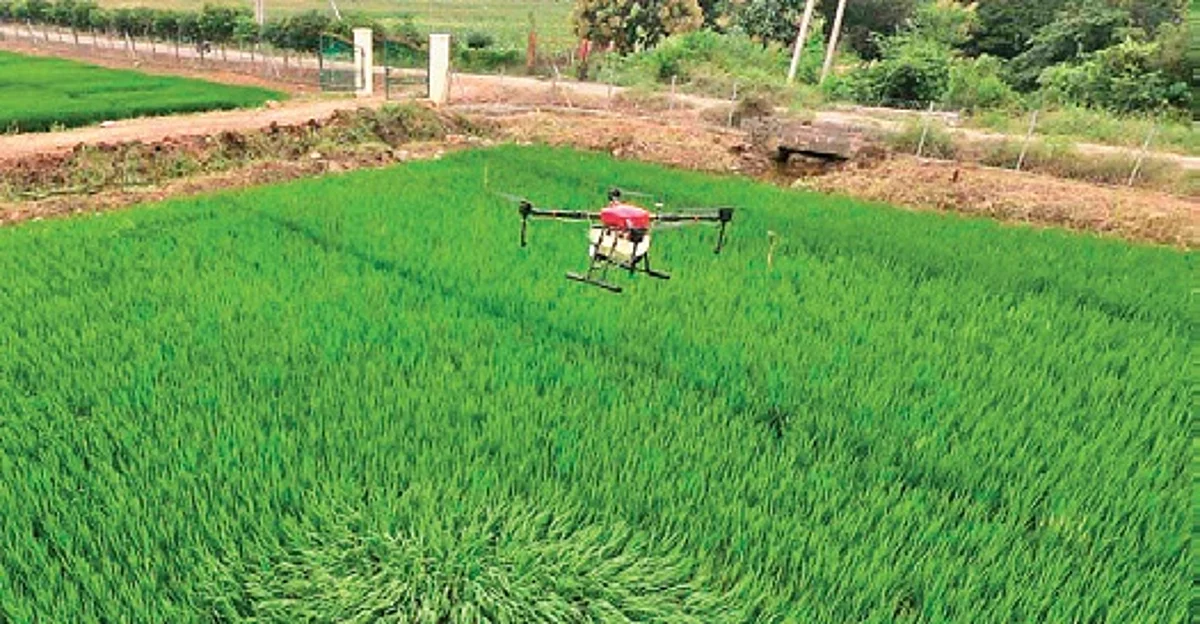
On 6 August 2026, Tamil Nadu announced the Vetri Vaanmagal scheme aimed at training women farmers and other eligible participants in agricultural drone operation, along with support for obtaining drone pilot licenses. The program targets 500 trainees including 100 women farmers. Rs 1.50 crore has been allocated for training and an additional Rs 2.50 crore to provide drones at a 50% subsidy to 50 trained women. Training is conducted by the Remote Pilot Training Organisation of Tamil Nadu Agricultural University, Coimbatore. The scheme promotes the use of technology in precision farming and supports increased participation of women in modern agriculture, aligning with the UN's International Year of the Woman Farmer 2026.
On this page
Key Facts
- Scheme announcement date: 6 August 2026
- Location: Tamil Nadu, India
- Scheme name: Vetri Vaanmagal
- Objective: To train women farmers and other eligible participants in agricultural drone operation and to assist in obtaining drone pilot licences
- Target participants: 500 individuals including 100 women farmers
- Budget allocation: Rs 1.50 crore for training; Rs 2.50 crore for subsidised drone purchase (50% subsidy for 50 women)
- Training provided by: Remote Pilot Training Organisation of Tamil Nadu Agricultural University (Coimbatore)
- Uses of agricultural drones: Spraying, monitoring, mapping, precision farming
- Context: Linked with the United Nations' declaration of 2026 as the International Year of the Woman Farmer
Background & Context
Tamil Nadu, a southern Indian state with Chennai as its capital, has launched the Vetri Vaanmagal scheme emphasizing the empowerment of women farmers through skill development in modern agricultural technology. The initiative underscores the state's efforts to modernize agriculture by introducing technology-driven precision farming practices. Training and licensing facilitation are conducted via the Remote Pilot Training Organisation under Tamil Nadu Agricultural University, a key agricultural education institution located in Coimbatore. Agricultural drones represent technological advancement in farming by enabling efficient spraying, field monitoring, mapping, and data-driven crop management. The scheme also correlates with the international focus on women farmers, following the UN's designation of 2026 as the International Year of the Woman Farmer. The "Vetri" prefix is commonly associated with welfare schemes in Tamil Nadu, indicating success and progress.
Why This Matters for Exams / Exam Relevance
- Highlights Tamil Nadu's strategic initiatives in agricultural modernization (announced in the 2026-27 budget).
- Demonstrates state-level efforts towards women empowerment in rural and agricultural sectors.
- Connects regional policy with global observances focusing on women farmers.
- Illustrates integration of skill development, licensing support, and financial subsidy to boost technology adoption in agriculture.
- Relevant to understanding developments in precision agriculture and drone technology regulation in India.
Points to Remember
- Vetri Vaanmagal scheme was announced on 6 August 2026 as part of Tamil Nadu's Agriculture Budget for 2026-27.
- It targets training 500 persons including 100 women farmers.
- The scheme allocates Rs 1.50 crore for training and Rs 2.50 crore for supplying agricultural drones at 50% subsidy to 50 trained women.
- The Remote Pilot Training Organisation at Tamil Nadu Agricultural University (Coimbatore) conducts the training program.
- Agricultural drones are used for spraying, field monitoring, mapping, and precision farming tasks.
- Tamil Nadu’s capital city is Chennai.
- Drone pilot licenses are issued in accordance with civil aviation regulations applicable to remote aircraft operations.
- The scheme aligns with the United Nations’ International Year of the Woman Farmer 2026.
Sources & Further Reading
| Document / Website | Link |
|---|---|
| Tamil Nadu Launches Vetri Vaanmagal Drone Training Scheme | Open Tamil Nadu Launches Vetri Vaanmagal Drone Training Scheme ↗www.gktoday.in |
| Tamil Nadu Agricultural University | Open Tamil Nadu Agricultural University ↗tanuvas.ac.in |
| International Year of the Woman Farmer 2026 | Open International Year of the Woman Farmer 2026 ↗www.un.org |