
Legislative Assembly Elections and Role of the Election Commission of India
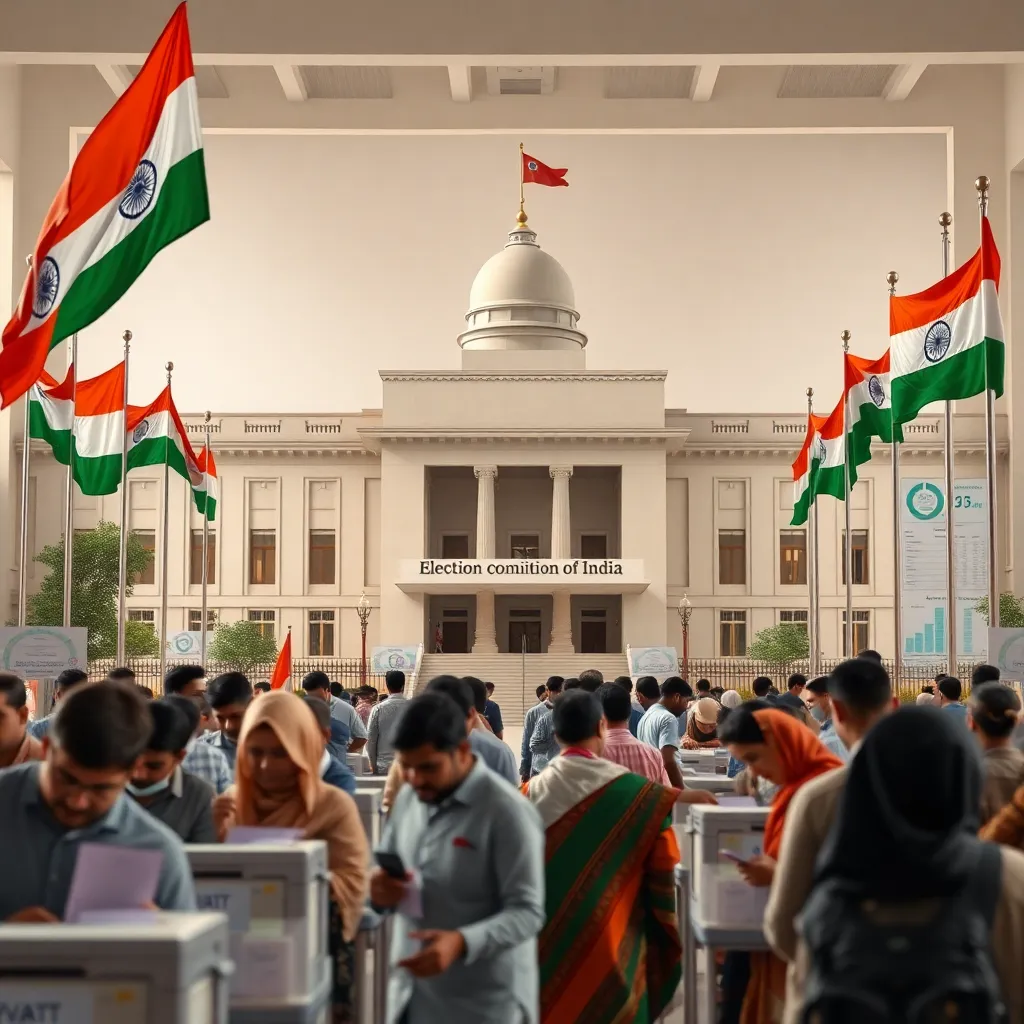
The Election Commission of India (ECI) is a constitutional body responsible for conducting free and fair elections to the Parliament, State Legislative Assemblies, and offices of the President and Vice-President. The ECI supervises election schedules, nomination scrutiny, polling logistics, vote counting, and enforcement of the Model Code of Conduct (MCC). Recent reforms proposed by the ECI include mandatory use of VVPAT machines for all elections, facilitation of online voter registration especially for young and overseas voters, transparency in political funding, and new social media regulations. Legislative Assembly strengths vary with population and are determined by the Delimitation Commission, which redraws constituency boundaries to equalize voter distribution. Some states have bicameral legislatures while most have unicameral systems.
On this page
Key Facts
The Election Commission of India (ECI) is a permanent constitutional authority established under Article 324 of the Constitution in 1950, vested with superintendence, direction, and control of elections to Parliament, State Legislative Assemblies, and offices of the President and Vice-President.
ECI consists of the Chief Election Commissioner and two Election Commissioners appointed by the President for six-year tenure or until age 65.
For upcoming elections in states like Rajasthan, Madhya Pradesh, Chhattisgarh, Telangana, and Mizoram involving over 16 crore voters, ECI has proposed reforms including mandatory use of Voter Verifiable Paper Audit Trail (VVPAT) machines, use of Remote Electronic Voting Machines (R-EVMs) to facilitate voting in remote areas, easier online voter registration, transparency of political funding, strict enforcement of the Model Code of Conduct (MCC), increased number of polling booths, and new social media regulations.
The Legislative Assembly strengths are constitutionally specified with a maximum of 500 and minimum of 60 members for most states, with exceptions such as Arunachal Pradesh (30) and Mizoram (40) due to their population; the exact number is population-dependent.
The Delimitation Commission, a quasi-judicial body appointed by the Government of India, determines the strength and boundaries of constituencies by considering population, geography, and representation of Scheduled Castes and Tribes to ensure roughly equal voter distribution.
Six states — Andhra Pradesh, Bihar, Telangana, Karnataka, Maharashtra, and Uttar Pradesh — have bicameral legislatures; others have unicameral ones, reflecting states' autonomy and historical, cultural, and political factors.
The Model Code of Conduct comes into force from the announcement of the election schedule until results are declared; it prohibits hate speech, bribery, intimidation, use of places of worship for campaigning, and mandates peaceful conduct, transparency in finances, and equal opportunity for political parties and candidates.
Background & Context
The Election Commission has been essential to uphold free and fair elections in India since independence, managing the entire electoral process with transparency and impartiality. The introduction of VVPATs enhances the credibility of electronic voting machines by providing a verifiable paper trail. The Delimitation Commission ensures that electoral boundaries reflect demographic changes periodically, maintaining equitable representation. The bicameral legislative structure in some states aids in comprehensive law-making and checks and balances.
Why This Matters for Exams / Exam Relevance
Questions on the structure, powers, and role of the Election Commission, the Model Code of Conduct, legislative assembly composition, and delimitation are regularly featured in UPSC prelims and mains exams, particularly under Indian Polity and Governance. Understanding electoral reforms, voting processes, and constitutional provisions related to elections is key to answering analytical and factual questions.
Points to Remember
ECI’s Model Code of Conduct is enforced from the election schedule announcement until the declaration of results to ensure fair play.
Legislative Assembly sizes vary, constitutionally capped between 60 to 500 members based on population, with some states having special provisions.
Delimitation Commission redefines electoral boundaries considering population and demographic factors, helping maintain voter equality across constituencies.
India’s states may have unicameral or bicameral legislatures, with only six states having the latter, reflecting diversity in governance choices.
Reforms such as mandatory VVPAT usage and enhanced online registration processes are envisaged to improve electoral transparency and voter participation.
The Model Code of Conduct prohibits activities that might incite hatred or unfair influence, like caste or communal appeals, bribery, and misuse of government resources during elections.
Sources & Further Reading
| Document / Website | Link |
|---|---|
| Legislative Assembly Elections UPSC Notes | Open Legislative Assembly Elections UPSC Notes ↗upscexamnotes.com |
| About ECI | Election Commission of India | Open About ECI | Election Commission of India ↗www.eci.gov.in |
| Model Code of Conduct | Election Commission of India | Open Model Code of Conduct | Election Commission of India ↗www.eci.gov.in |
| ECI enforces Model Code of Conduct ahead of assembly polls | DD News | Open ECI enforces Model Code of Conduct ahead of assembly polls | DD News ↗ddnews.gov.in |