
AICTE Closes 58 Engineering Colleges in 2025-26 Academic Year
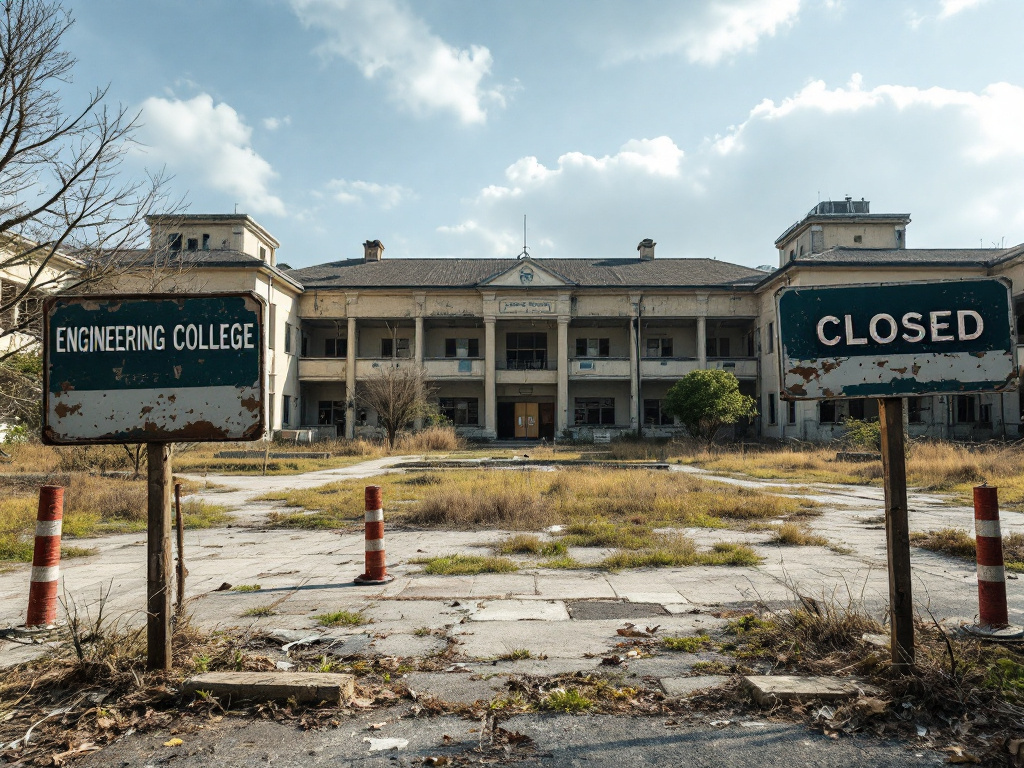
In the 2025-26 academic year, the All India Council for Technical Education (AICTE) ordered the progressive closure of 58 engineering and technical colleges across India due to low student enrolment, faculty shortages, and non-compliance with infrastructure norms. No new first-year admissions are allowed in these institutions, but current students can complete their courses. The closures spanned multiple states, with Uttar Pradesh and Maharashtra seeing the highest number of closures (12 each). AICTE also discontinued over 950 technical courses in the same period, aiming to improve technical education quality.
On this page
Key Facts
- AICTE closed 58 engineering and technical colleges during the 2025-26 academic year through a progressive closure process.
- Progressive closure means that no new first-year admissions are permitted in these institutions, but existing students are allowed to complete their degrees.
- State-wise distribution of closures: Uttar Pradesh and Maharashtra recorded 12 closures each; Madhya Pradesh had 8 closures; Telangana and Punjab had 4 each; Andhra Pradesh and Rajasthan had 3 each; Gujarat, Karnataka, and Tamil Nadu had 2 each; Haryana, Odisha, Uttarakhand, West Bengal, and Puducherry recorded 1 each.
- Reasons for closure included low student enrolment, shortage of required faculty strength, non-compliance with AICTE infrastructure norms, and administrative or financial issues.
- Out of the 58 colleges closed, 3 were government-aided, and the rest were privately financed.
- AICTE also discontinued over 950 technical courses during the same period, some records place this discontinuation in the 2026-27 academic year.
Background & Context
- The All India Council for Technical Education (AICTE) is a statutory body under the Ministry of Education, Government of India, responsible for proper planning and coordinated development of technical education system in India.
- AICTE regulates various technical education institutions including engineering, management, pharmacy, architecture, and applied arts and crafts through approval and compliance norms.
- The progressive closure policy allows AICTE to close institutions that do not meet required standards or have operational issues while safeguarding the academic interests of existing students.
Why This Matters for Exams / Exam Relevance
- AICTE's role, regulatory powers, and actions appear commonly in current affairs and general knowledge sections of competitive exams.
- Understanding the concept of progressive closure and its implications is important for questions related to higher education and regulatory frameworks.
- State-wise data about the number of closures, reasons, and the scale of course discontinuation can feature in exam questions testing knowledge of education policies and reforms.
Points to Remember
- AICTE stands for All India Council for Technical Education and operates under the Ministry of Education.
- Progressive closure implies a phase-out approach allowing current students to finish their courses but prohibiting fresh admissions.
- 58 engineering and technical colleges were closed in the 2025-26 academic year primarily due to low enrolment, faculty shortages, infrastructure non-compliance, and administrative or financial issues.
- Top states for closures: Uttar Pradesh and Maharashtra with 12 each, Madhya Pradesh with 8.
- 3 of the closed institutions were government-aided, the rest were private.
- Alongside closures, AICTE discontinued over 950 technical courses during this timeframe.
Sources & Further Reading
| Document / Website | Link |
|---|---|
| AICTE closes 58 engineering colleges due to low enrolment and non-compliance | Open AICTE closes 58 engineering colleges due to low enrolment and non-compliance ↗www.gktoday.in |
| AICTE official website | Open AICTE official website ↗www.aicte-india.org |
| Ministry of Education, India | Open Ministry of Education, India ↗www.education.gov.in |