
All-India Tiger Estimation 2026 Commences with Comprehensive Survey Across India
The sixth cycle of the All-India Tiger Estimation (AITE) began in January 2026 using multi-phase scientific methods across various tiger habitats in India. This nationwide exercise aims to assess the current tiger population and habitat health to support conservation efforts. The last count in 2022 estimated 3,682 tigers, representing about 75% of the world's wild tiger population. Preliminary results from reserves such as Amrabad in Telangana indicate an increase in tiger numbers. The final consolidated report is expected in 2027.
On this page
Key Facts
- The All-India Tiger Estimation (AITE) 2026 started in January 2026 to estimate tiger populations across India.
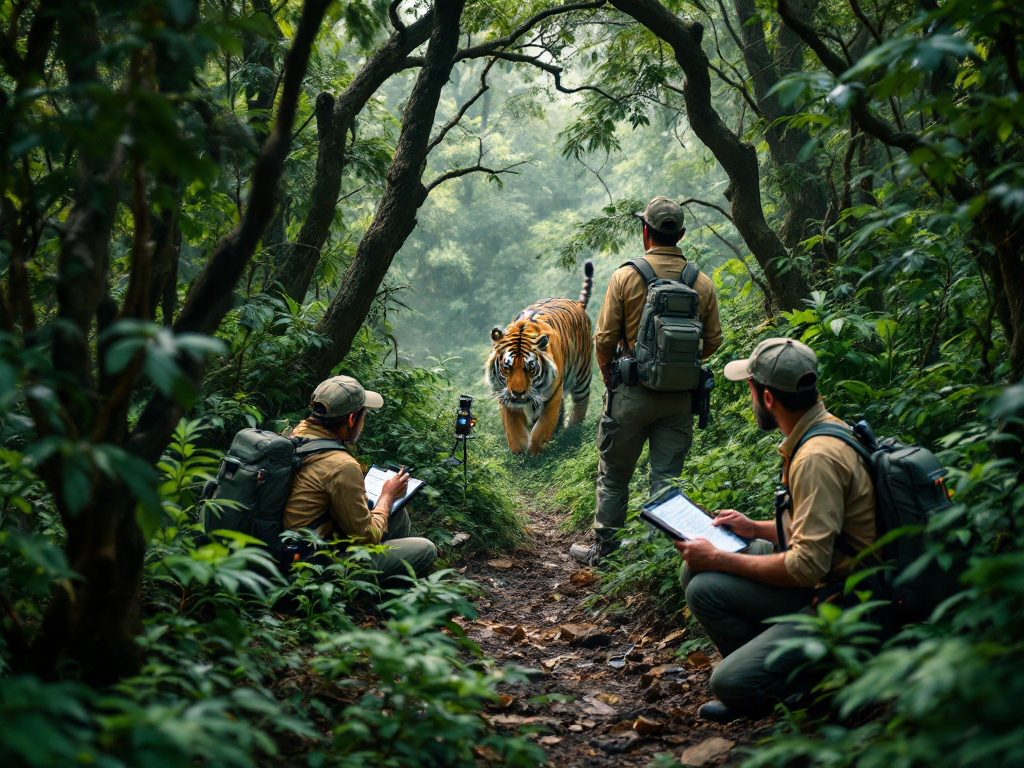
- The exercise employs a three-phase scientific methodology: Phase I involves sign surveys and habitat assessments conducted from January to February; Phase II consists of camera trapping over 40–60 days; Phase III includes genetic sampling for DNA-based identification of individual tigers.
- Extensive participation includes forest staff, volunteers, and wildlife experts; for example, Karnataka deployed 400 field staff and 550 camera traps across 54 forest divisions including Bandipur Tiger Reserve.
- Tamil Nadu and Telangana have also actively commenced fieldwork; Telangana’s Amrabad Tiger Reserve reported 42 individual tigers (18 females, 14 males, 2 sub-adults, 8 cubs), up from 36 in the prior census.
- Camera traps in Amrabad also recorded Indian Grey Wolf, a Schedule I species under the Wildlife (Protection) Act, 1972, which confers highest legal protection.
- The final, national-level report of the 2026 tiger estimation is anticipated in 2027, providing critical insights for conservation policy and tiger habitat management.
- India's previous tiger census in 2022 estimated 3,682 tigers, accounting for around 75% of the global wild tiger population.
Background & Context
The All-India Tiger Estimation is a nationwide wildlife census conducted roughly every four years under the oversight of the National Tiger Conservation Authority (NTCA) and guided by scientific methods developed by institutions like the Wildlife Institute of India. It aims to monitor tiger populations and habitat conditions comprehensively across India’s tiger landscapes to inform conservation planning and policy. The use of a standardized methodology—including sign surveys, camera trapping, and genetic analysis—ensures accurate, comparable data across diverse forest divisions and protected areas. This coordinated approach also supports assessment of prey base, habitat quality, and ecosystem health crucial for sustaining tiger populations.
Why This Matters for Exams / Exam Relevance
The All-India Tiger Estimation 2026 is highly relevant for competitive exams focusing on environment, biodiversity, governance, and current affairs. Candidates must understand the methodology of wildlife censuses (e.g., sign surveys, camera trapping, genetic sampling), the role and significance of tiger reserves (such as Bandipur, Amrabad, Thanthai Periyar), and legal frameworks like the Wildlife (Protection) Act, 1972—including Schedule I species protection—which underlines governmental conservation priorities. Additionally, knowledge about the National Tiger Conservation Authority’s role and the population trends of tigers in India forms an important part of environmental governance topics. Staying updated with the latest census findings and the nationwide conservation effort showcase India’s leadership in global tiger conservation.
Points to Remember
- The All-India Tiger Estimation 2026 employs a three-phase approach: sign surveys and habitat assessment, camera trapping, and genetic sampling.
- Camera traps help identify individual tigers via their unique stripe patterns and provide data on population and behavior.
- Schedule I species under the Wildlife (Protection) Act, 1972, like the Indian Grey Wolf, receive the highest level of protection.
- Major tiger reserves participating include Bandipur (Karnataka), Amrabad (Telangana), and Thanthai Periyar (Tamil Nadu), among others.
- The National Tiger Conservation Authority oversees and coordinates tiger estimation and conservation activities nationally.
- India's 2022 tiger population was estimated at 3,682, approximately 75% of the global wild tiger count.
- Preliminary data from Amrabad Tiger Reserve for 2026 shows population growth from 36 to 42 individual tigers.
- Final comprehensive tiger estimation report expected in 2027 will guide future conservation decisions.
Sources & Further Reading
| Document / Website | Link |
|---|---|
| All-India Tiger Estimation 2026 - GKToday | Open All-India Tiger Estimation 2026 - GKToday ↗www.gktoday.in |
| All-India Tiger Estimation 2026 Begins in Thanthai Periyar Sanctuary | Open All-India Tiger Estimation 2026 Begins in Thanthai Periyar Sanctuary ↗www.gktoday.in |
| India Prepares for 2026 Tiger Census | Open India Prepares for 2026 Tiger Census ↗www.devdiscourse.com |