
Andhra Pradesh Signs MoU with CSIR-NGRI for Lithium and Gallium Exploration in Kadapa Basin
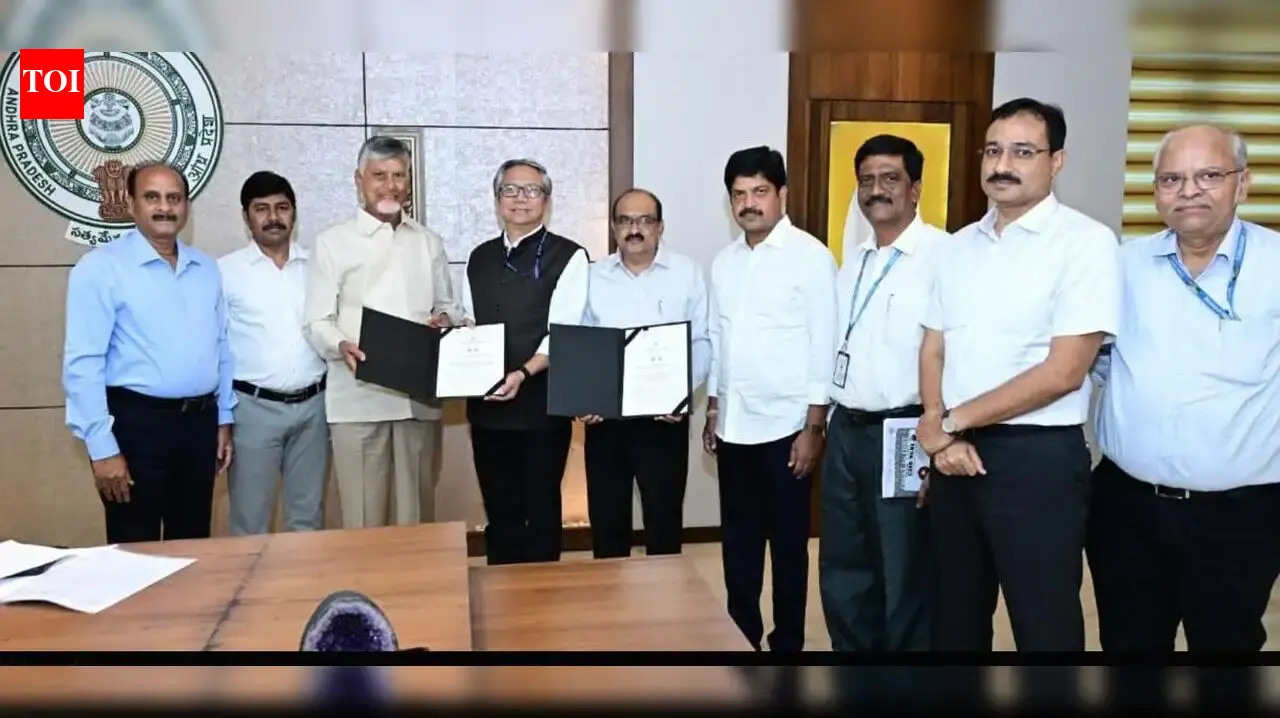
On 12 August 2026, Andhra Pradesh's Department of Mines and Geology signed a Memorandum of Understanding (MoU) with the Council of Scientific & Industrial Research-National Geophysical Research Institute (CSIR-NGRI) to explore lithium and gallium deposits in the Kadapa Basin. This initiative, funded by a ₹140 crore budget from the National Mineral Exploration Trust (NMET), aims to assess promising areas like Vempalle and Thummalapalle. Lithium and gallium are critical minerals vital for energy storage, electronics, and advanced manufacturing. Additionally, Andhra Pradesh partnered with IIT (ISM) Dhanbad’s TEXMiN for mining technology and skill development, establishing a Centre of Excellence for Mining in the state.
On this page
Key Facts
- On 12 August 2026, the Andhra Pradesh Department of Mines and Geology signed an MoU with CSIR-NGRI for detailed exploration of lithium and gallium in the Kadapa Basin.
- The geological survey focuses on the Vempalle and Thummalapalle areas in the Kadapa Basin, known for mineral-bearing sedimentary formations and preliminary lithium (up to 1,000 ppm) and gallium (up to 250 ppm) concentrations.
- The project has a budget of ₹140 crore, fully funded by the National Mineral Exploration Trust (NMET), a statutory body established under the Mines and Minerals (Development and Regulation) Amendment Act, 2015.
- Lithium (atomic number 3) is a light metal used in rechargeable batteries, ceramics, lubricants, and alloys.
- Gallium (atomic number 31) is a post-transition metal used in semiconductors, LED, integrated circuits, and solar technologies.
- Andhra Pradesh also signed an MoU with IIT (ISM) Dhanbad-TEXMiN for mining sector technology and skill development, including establishing a Centre of Excellence for Mining in the state.
Background & Context
Critical minerals such as lithium and gallium are essential for energy storage solutions and advanced electronics, making them strategically important for modern industrial applications and the energy transition. India aims to reduce dependency on imports by boosting domestic exploration and production of such minerals. The Kadapa Basin is geologically significant, lying in the southwestern and southern part of the basin named after the town 'Kadapa' and having known mineral deposits, including uranium at Thummalapalle.
Why This Matters for Exams / Exam Relevance
Knowledge of recent mineral exploration initiatives, especially those involving critical minerals and government partnerships with premier research institutions, is crucial for general studies and economy sections of competitive exams. The role of the National Mineral Exploration Trust as a funding mechanism, details on lithium and gallium applications, and regional focus on the Kadapa Basin are important content areas. Additionally, understanding the collaborative role of organizations like CSIR-NGRI and IIT (ISM) Dhanbad provides insights into research and technology development strategies in India.
Points to Remember
- MoU signing date: 12 August 2026, at Vijayawada, Andhra Pradesh.
- Focus areas: Vempalle and Thummalapalle in Kadapa Basin.
- Project budget: ₹140 crore, funded entirely by NMET.
- Critical Minerals: Lithium (atomic number 3) and Gallium (atomic number 31).
- Applications of lithium include batteries and alloys; gallium is used in semiconductors, LEDs, and solar tech.
- Establishment of Centre of Excellence for Mining with IIT (ISM) Dhanbad's TEXMiN partnership to develop mining technology and skills.
- NMET was established under the Mines and Minerals (Development and Regulation) Amendment Act, 2015, funded by contributions from mining lease holders to promote mineral exploration across India.
Sources & Further Reading
| Document / Website | Link |
|---|---|
| Andhra Pradesh signs lithium and gallium exploration pact | Open Andhra Pradesh signs lithium and gallium exploration pact ↗www.gktoday.in |
| AP signs MoU for lithium, gallium exploration | Open AP signs MoU for lithium, gallium exploration ↗timesofindia.indiatimes.com |
| Mines and Geology | District YSR(Kadapa), Government of Andhra Pradesh | Open Mines and Geology | District YSR(Kadapa), Government of Andhra Pradesh ↗kadapa.ap.gov.in |
| National Mineral Exploration Trust – GKToday | Open National Mineral Exploration Trust – GKToday ↗www.gktoday.in |
| IIT (ISM) Dhanbad launches Critical Minerals Centre under National Mission | Open IIT (ISM) Dhanbad launches Critical Minerals Centre under National Mission ↗www.saurenergy.com |