
Assam’s Dehing Patkai National Park Records 165 Butterfly Species Including 37 Endangered in 2026 Survey
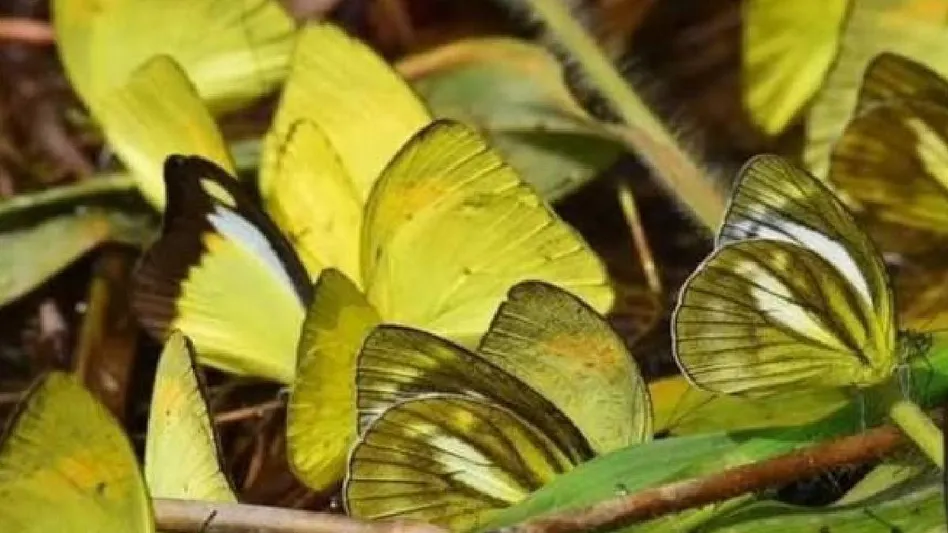
During a 2026 biodiversity survey, Dehing Patkai National Park in Assam recorded 165 butterfly species, including 37 endangered species, underscoring its rich biodiversity and ecological significance. Covering 234.26 square kilometres across the districts of Dibrugarh and Tinsukia, the park is part of the tropical wet evergreen rainforest ecosystem within the Indo-Burma biodiversity hotspot.
On this page
Key Facts
- Dehing Patkai National Park covers 234.26 square kilometres across Dibrugarh and Tinsukia districts in Assam.
- In 2026, a biodiversity survey documented 165 butterfly species within the park, including 37 species classified as endangered.
- Butterflies belong to the order Lepidoptera; India hosts over 1,500 butterfly species, with the northeastern region being a major biodiversity hotspot.
- The park is a tropical wet evergreen rainforest and a vital part of the Indo-Burma biodiversity hotspot.
- The fourth iteration of the Biodiversity and Butterfly Trail (28–31 July 2026) recorded over 260 butterfly species across multiple locations in Assam and Arunachal Pradesh.
Background & Context
Dehing Patkai National Park, often dubbed the "Amazon of the East," is Assam's only rainforest and one of the richest biodiversity reserves in the region. It was upgraded to national park status in June 2021. The park's tropical wet evergreen forests provide habitat to diverse flora and fauna, including many butterfly species which serve as ecological indicators due to their sensitivity to environmental changes. The 2026 biodiversity trail involved environmentalists and university students surveying multiple forest ranges within Assam and Arunachal Pradesh, documenting a remarkable spectrum of butterfly diversity and other wildlife.
Why This Matters for Exams
Dehing Patkai's butterfly diversity and ecological significance are relevant for competitive examinations focusing on environmental science, biodiversity conservation, Indian geography, and ecology. Key facts such as the park's area, location, species count, and status as Assam's only rainforest are commonly highlighted. Additionally, understanding the park’s role within the Indo-Burma biodiversity hotspot aligns with syllabus components related to biodiversity hotspots and conservation efforts in India.
Points to Remember
- Dehing Patkai National Park spans 234.26 square kilometres in Assam’s Dibrugarh and Tinsukia districts.
- A total of 165 butterfly species were recorded in the 2026 survey, with 37 considered endangered.
- Butterflies, of order Lepidoptera, are significant bioindicators; northeastern India is a key diversity zone.
- The park’s ecosystem is tropical wet evergreen rainforest within the Indo-Burma biodiversity hotspot.
- Continuing biodiversity surveys and trails help document and conserve this rich biodiversity.
Practice MCQs
Question 1
- In which year did Dehing Patkai National Park record 165 butterfly species including endangered ones?
- 2015
- 2020
- 2026
- 2018
Answer: 2026
Question 2
- Dehing Patkai National Park is located in which Indian state?
- Arunachal Pradesh
- Assam
- Meghalaya
- West Bengal
Answer: Assam
Question 3
- What is the approximate area of Dehing Patkai National Park?
- 150 square kilometres
- 234.26 square kilometres
- 320 square kilometres
- 400 square kilometres
Answer: 234.26 square kilometres
Sources & Further Reading
| Document / Website | Link |
|---|---|
| Dehing Patkai Records 165 Butterfly Species – GKToday | Open Dehing Patkai Records 165 Butterfly Species – GKToday ↗www.gktoday.in |
| (PDF) Diversity and species richness of butterfly in soraipung range of Dehing Patkai National Park, Assam, India | Open (PDF) Diversity and species richness of butterfly in soraipung range of Dehing Patkai National Park, Assam, India ↗www.academia.edu |
| Biodiversity | Assam State Portal | Open Biodiversity | Assam State Portal ↗assam.gov.in |
| Assam’s Wild Treasures: National Parks & Wildlife Sanctuaries | Open Assam’s Wild Treasures: National Parks & Wildlife Sanctuaries ↗chalohoppo.com |