
Buff-tip Moth (Phalera cf. bucephala) Threatens Agriculture in Ladakh
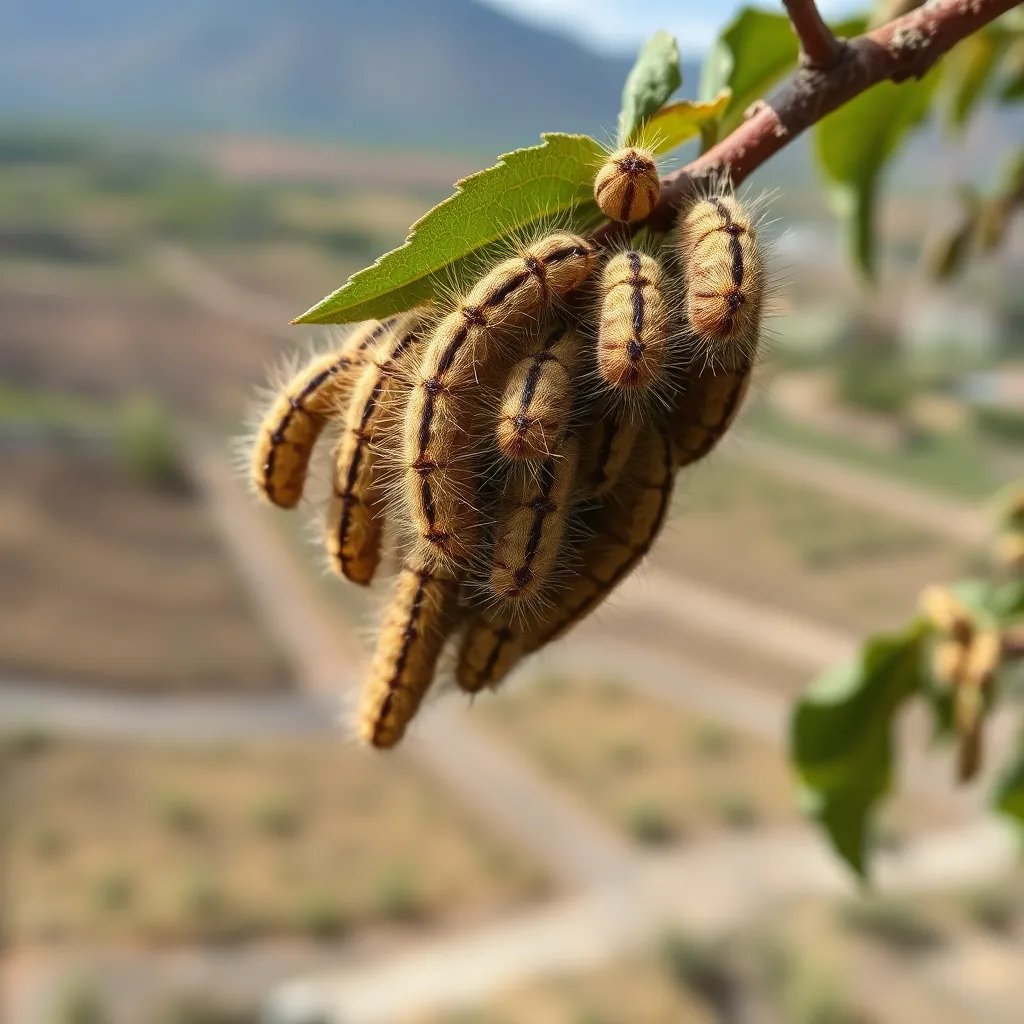
The buff-tip moth (Phalera cf. bucephala), an invasive moth recently detected in the Suru Valley of Ladakh's Kargil district, is posing a severe threat to the region's farm-based economy. The larvae are voracious feeders capable of complete defoliation of economically and ecologically important trees such as white willow (Salix alba) within approximately 30 days. The moth exhibits a one-generation-per-year life cycle, with adults emerging in mid-June, eggs laid in clusters up to 150, and larvae feeding in groups by July. Besides willow, host plants include poplar, sessile oak, apple, mountain ash, and walnut. Ladakh's gradual warming over the past two decades has facilitated the establishment and spread of this invasive species, raising concerns for broader ecological impacts and calling for urgent pest control measures.
On this page
Key Facts
- Species: Phalera cf. bucephala (buff-tip moth), family Notodontidae.
- Location: Suru Valley, Kargil district, Ladakh, India (Trans-Himalayan cold desert region).
- Host Plants: Primarily white willow (Salix alba), locally known as Kralboo; also poplar, sessile oak, apple, mountain ash, walnut.
- Lifecycle: Adults emerge mid-June, mate rapidly, lay up to 150 eggs in clusters; larvae hatch in July, feed gregariously, starting by scraping leaf undersides and progressing to full defoliation; by late summer larvae pupate underground to overwinter; one generation per year.
- Effectiveness as Pest: Larvae can defoliate entire host plants within 30 days, affecting traditional uses of willow for roofing and livestock fodder, endangering local livelihoods.
- Spread and Threat: Recorded infestation from Minjee to Parkachik valley; potential to spread to other areas including fruit-growing regions such as Kargil City, Shilikchey, and Hardas.
- Climate Change Link: Rising temperatures in Ladakh over the past two decades have created a more hospitable environment for this invasive moth and other pest species, facilitating ecological shifts.
Background & Context
Ladakh's agriculture is constrained by harsh climatic conditions, with short growing seasons and limited irrigation typically reliant on glacier melt and springs. The region’s economy depends on crops like barley, wheat, peas, and vegetables, and on natural vegetation like willow that provides critical construction and fodder resources. The buff-tip moth, native to parts of Africa, East Asia, and Europe, is new to Ladakh. Its appearance signals increasing vulnerability of high-altitude ecosystems to invasive pests due to climate change and ecosystem disturbance. The species' camouflage enables it to blend with bark, making detection difficult until damage is widespread.
Why This Matters for Exams
This species serves as a case study in climate change–induced invasive species spread and agricultural pest management in fragile ecosystems. Exam questions may focus on:
- Taxonomy and identification: Phalera cf. bucephala; Notodontidae family moth.
- Geographical context: Ladakh’s Trans-Himalayan cold desert, including Suru Valley.
- Host plants and economic importance: willow (Kralboo), poplar, apple, and others.
- Life cycle and pest behavior: one generation per year; defoliation patterns.
- Impacts on local agriculture and livelihoods.
- Role of climate change in enabling invasive species establishment.
Points to Remember
- Phalera cf. bucephala is an invasive buff-tip moth newly recorded in Ladakh's Suru Valley.
- Larvae cause rapid and complete defoliation of key trees within about 30 days.
- Life cycle includes adult emergence in mid-June, egg-laying clusters, larvae feeding in groups, and winter pupation underground.
- Host plants include economically important species used for construction and fodder.
- Climate warming has facilitated its establishment in this traditionally cold desert region.
- Potential to spread threatens broader agricultural and horticultural zones.
- Urgent monitoring and pest management are necessary to mitigate damage and prevent expansion.
Sources & Further Reading
| Document / Website | Link |
|---|---|
| New invasive moth threatens Ladakh’s farm-based economy - The Hindu | Open New invasive moth threatens Ladakh’s farm-based economy - The Hindu ↗www.thehindu.com |
| Buff-tip Moth Threatens Ladakh Farm Economy - GKToday | Open Buff-tip Moth Threatens Ladakh Farm Economy - GKToday ↗www.gktoday.in |
| Buff-tip Moth - Wikipedia | Open Buff-tip Moth - Wikipedia ↗en.wikipedia.org |
| Notodontidae family overview - ScienceDirect Topics | Open Notodontidae family overview - ScienceDirect Topics ↗www.sciencedirect.com |