
Discovery of New Monkey Species Colobus congoensis in Congo Rainforest
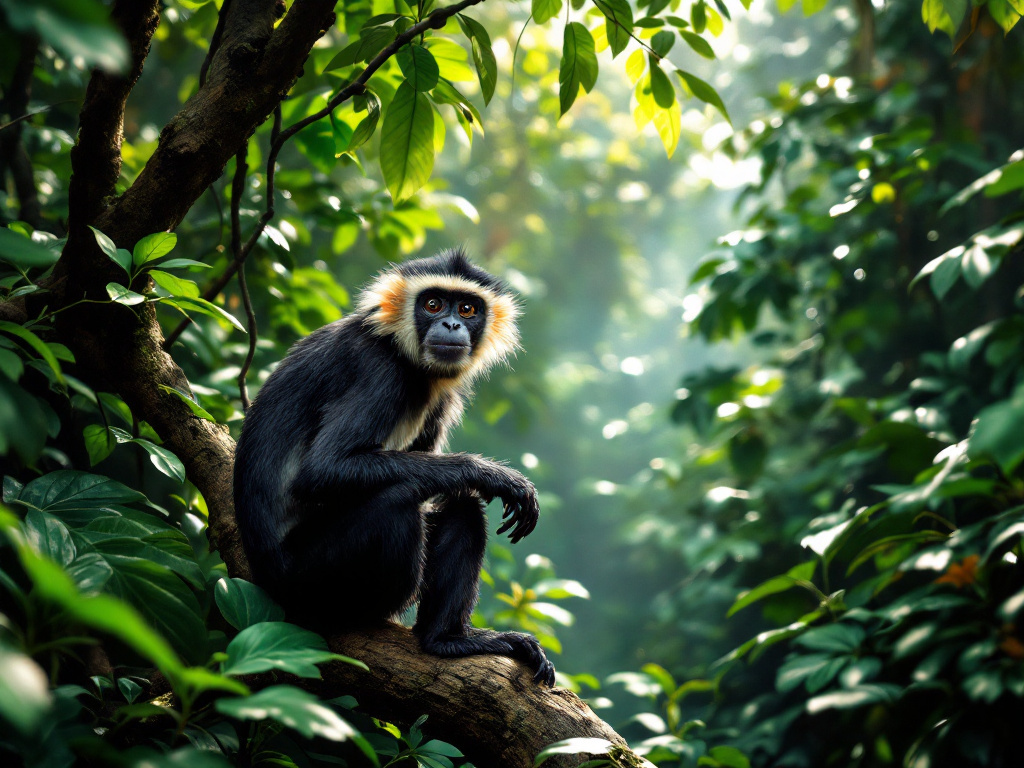
A new species of monkey named Colobus congoensis, locally called 'Likweli,' has been discovered in the Democratic Republic of Congo's Lomami National Park. Confirmed through genetic, anatomical, and acoustic analyses, this black colobus monkey with distinctive orange-cream facial markings occupies an estimated range of about 1,700 square kilometers between the Lomami and Lilo rivers. The species is recommended to be classified as Endangered due to its small population, limited habitat, and threats from hunting and habitat loss. This finding represents only the fifth new African monkey species identified in 75 years and highlights the biodiversity of the Congo Basin rainforest ecosystem.
On this page
Key Facts
- Species Name: Colobus congoensis, locally known as "Likweli"
- Location of Discovery: Lomami National Park, Democratic Republic of Congo
- Range and Habitat: Estimated range of about 1,700 square kilometers (650 to 660 square miles), primarily between the Lomami and Lilo rivers within the Congo Basin rainforest ecosystem
- Physical Characteristics: Primarily black fur; pinkish-orange lips or orange-cream patches around the mouth and nose; bare grey cheekbones; white patch of fur surrounding the anus
- Closest Known Relative: Colobus satanas, from which it diverged approximately 4 to 5 million years ago
- Scientific Validation: Confirmed through combined genetic, anatomical, and acoustic evidence
- Publication: Discovery published in the peer-reviewed journal PLOS One on 15 July 2026
- Conservation Status: Recommended for listing as Endangered on the IUCN Red List due to small population size, restricted range, habitat loss, and hunting pressure
- Collaborating Institutions: Florida Atlantic University, Lukuru Wildlife Research Foundation, Yale University, City University of New York, Lomami National Park authorities, and Frankfurt Zoological Society
Background & Context
The Congo Basin is the world's second-largest tropical rainforest after the Amazon, hosting a highly diverse range of flora and fauna. The colobus monkeys, including Colobus congoensis, belong to the Old World monkeys family Cercopithecidae, which is native to Africa and Asia. Lomami National Park, where this new species was found, is a protected area within the Congo Basin and has been a significant site for primate discoveries, including the Lesula monkey (Cercopithecus lomamiensis) in 2012. The species was first photographically recorded (albeit blurry) in 2008, followed by clearer sightings in 2018, which led to a targeted scientific expedition. Identification integrated genetic sequencing, vocalization (acoustic) analysis, and anatomical studies to differentiate Colobus congoensis from other colobus species in Central Africa.
Why This Matters for Exams / Exam Relevance
This discovery underscores Africa's rich biodiversity and highlights conservation challenges in tropical rainforests like habitat loss and hunting pressures. Key points relevant for exams include species taxonomy and names (Colobus congoensis, Colobus satanas), geography (Lomami National Park, Congo Basin), conservation concepts such as the IUCN Red List and Endangered status, and evolutionary timelines demonstrating speciation events 4 to 5 million years ago. Recognizing such species is crucial for understanding ecosystem dynamics, conservation priorities, and evolutionary biology, all common themes in competitive exams.
Points to Remember
- The new species is called Colobus congoensis and locally referred to as "Likweli."
- Its known range is very limited, confined mainly to Lomami National Park in the Congo Basin.
- The species was confirmed and described scientifically in 2026 using genetic, anatomical, and acoustic evidence.
- It is recommended for Endangered status on the IUCN Red List, considering its limited range, small population, habitat loss, and hunting threats.
- This is only the fifth new African monkey species to be discovered in the last 75 years, highlighting the still-untapped biodiversity of the Congo rainforest.
- The Congo Basin rainforest is the second-largest tropical rainforest globally, after the Amazon.
- Old World monkeys, including the colobus group, belong to the family Cercopithecidae, native to Africa and Asia.
Sources & Further Reading
| Document / Website | Link |
|---|---|
| New Monkey Species Discovered in Congo Rainforest | Open New Monkey Species Discovered in Congo Rainforest ↗www.gktoday.in |
| IUCN Red List of Threatened Species | Open IUCN Red List of Threatened Species ↗www.iucnredlist.org |
| Congo Basin Rainforest | Open Congo Basin Rainforest ↗www.worldwildlife.org |
| Old World Monkeys - National Geographic | Open Old World Monkeys - National Geographic ↗www.nationalgeographic.com |