
Malvi Camel Faces Extinction Threat in India
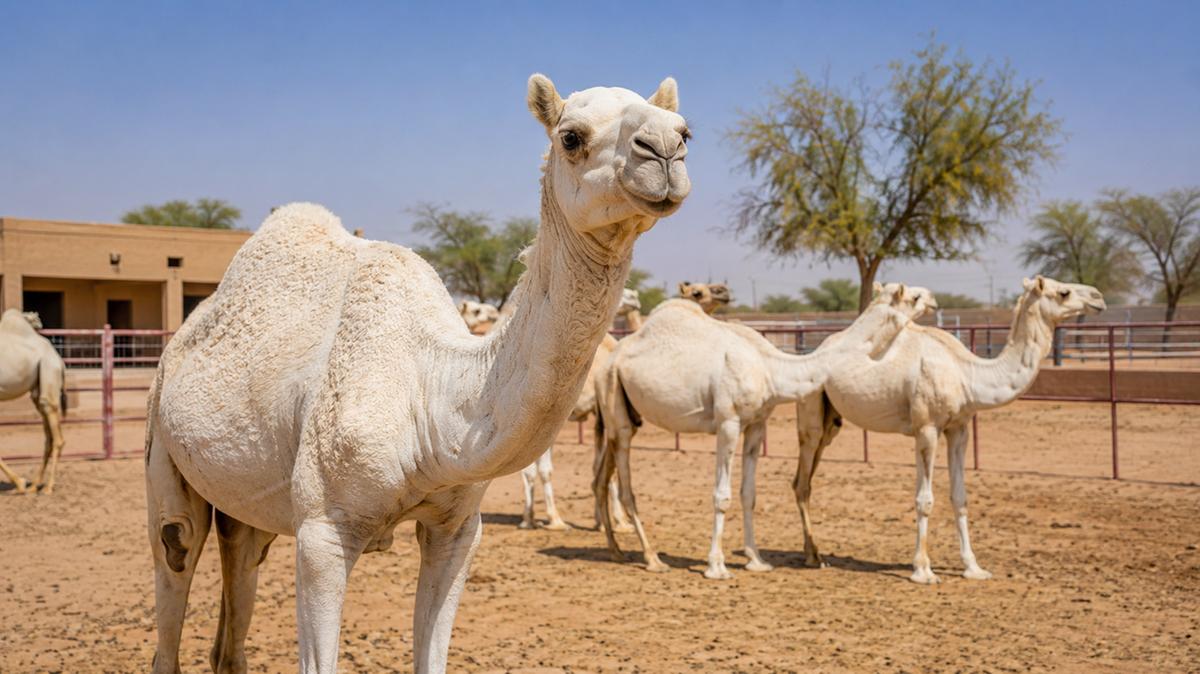
The Malvi camel, also known as the white camel, is one of nine recognised camel breeds in India and has been declared endangered following a sharp decline in its population as per the 2019 livestock census. As of July 27, 2026, only 102 Malvi camels remain, mainly found in Madhya Pradesh's Malwa region and parts of Rajasthan. Conservation efforts by the National Research Centre on Camel and the National Bureau of Animal Genetic Resources include scientific breeding programmes aimed at preserving this smallest Indian camel breed, famed for its milk production and distinctive white coat.
On this page
Key Facts
- The Malvi camel is the smallest camel breed in India, distinctively known for its white coat, hence also called the "white camel".
- As of 27 July 2026, only 102 individuals remain, leading to its classification as endangered due to having fewer than 300 breeding females.
- The breed is mainly distributed in the Malwa region of Madhya Pradesh — including districts like Mandsaur, Neemuch, Ratlam, and Gwalior — and in parts of Rajasthan such as Kota, Bundi, Jhalawar, and Baran.
- Females produce approximately 4 to 5 kilograms of milk per lactation cycle.
- Historically, the Malvi camel was used for transportation and carrying loads.
- Conservation efforts are led by the National Research Centre on Camel located in Rajasthan and the National Bureau of Animal Genetic Resources based in Karnal, Haryana.
- A scientific breeding programme has been initiated, involving the procurement of 12 Malvi camels (three males and nine females) to maintain genetic purity and increase population.
- Other endangered camel breeds in India include the Mewari and Mewati, each with breeding female populations below 300.
Background & Context
The Malvi camel is one of nine officially recognised camel breeds in India. Due to mechanisation, changes in agricultural practices, habitat degradation, and lack of focused breeding programmes, its population has drastically declined as recorded in the 2019 livestock census. Camel breeds with fewer than 300 breeding females are considered at risk or endangered. The National Research Centre on Camel and the National Bureau of Animal Genetic Resources have initiated conservation programmes that involve scientific breeding, genetic documentation, and close collaboration with livestock owners in the regions where these camels are found. These initiatives aim to preserve the breed’s genetic identity and promote population recovery.
Why This Matters for Exams / Exam Relevance
The Malvi camel case study is relevant for competitive examinations related to Indian agriculture, biodiversity, environment, animal husbandry, and conservation. Key details such as recognised Indian camel breeds, their status, distribution, and associated national conservation bodies frequently appear in current affairs sections and environmental studies. Understanding the dynamics behind endangered livestock breeds and conservation strategies is important for holistic knowledge of India's biological diversity and sustainable agricultural practices.
Points to Remember
- Malvi is the smallest Indian camel breed, also known as the white camel due to its coat colour.
- As of 2026, population is critically low at 102 individuals, qualifying it as endangered.
- The breed is primarily found in the Malwa region of Madhya Pradesh and in certain districts of Rajasthan.
- Milk productivity per female is about 4-5 kg per lactation cycle.
- Conservation efforts involve the National Research Centre on Camel in Rajasthan and the National Bureau of Animal Genetic Resources in Karnal, Haryana.
- Scientific breeding programmes have started with 12 camels procured to preserve breed purity.
- Other endangered camel breeds in India include the Mewari and Mewati breeds.
Sources & Further Reading
| Document / Website | Link |
|---|---|
| Malvi Camel Faces Extinction Threat | Open Malvi Camel Faces Extinction Threat ↗www.gktoday.in |
| Conservation Strategies for Indian Camel Breeds | Open Conservation Strategies for Indian Camel Breeds ↗www.ncbi.nlm.nih.gov |
| Camel Breeds of India and Their Characteristics | Open Camel Breeds of India and Their Characteristics ↗www.indiananimalstudies.in |