
Great Indian Bustard Chicks Enter Rewilding Tunnel in Rajasthan
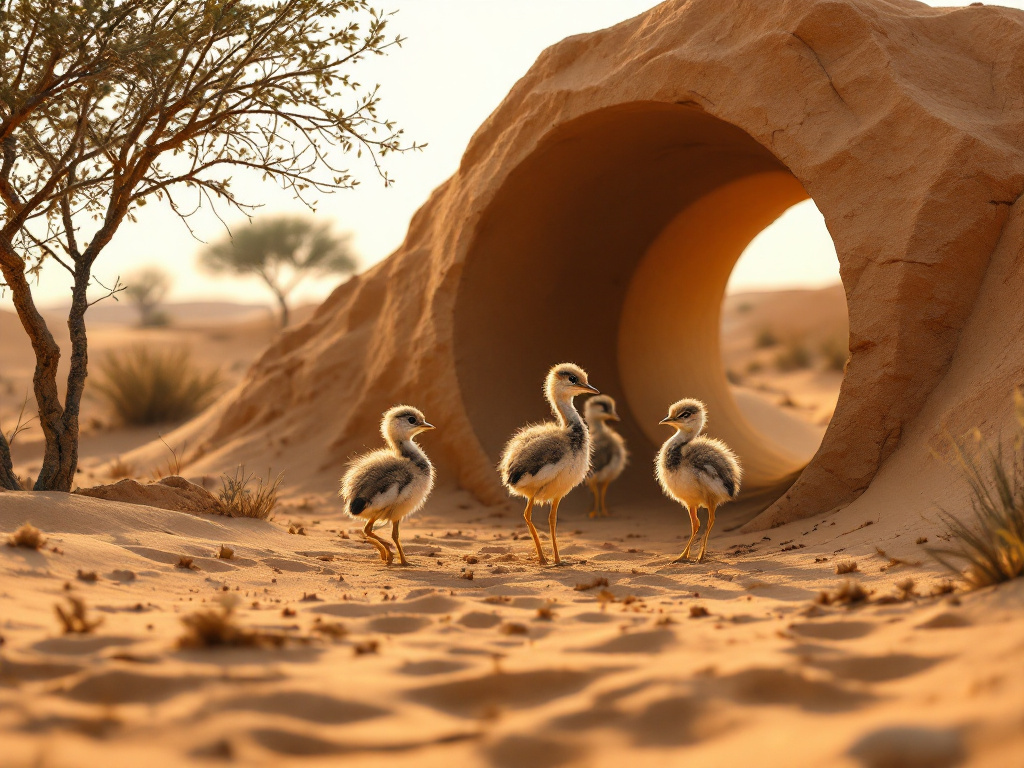
On 26 July 2026, three one-month-old chicks of the critically endangered Great Indian Bustard were released into a specially designed rewilding tunnel at the Godawan Conservation Centre in Ramdevra, Jaisalmer, Rajasthan. The facility, costing ₹9.25 crore, aims to prepare captive-bred birds for survival in the wild by simulating natural conditions with minimal human contact. After about four months under continuous CCTV surveillance and external feeding without direct human interaction, the chicks are expected to be released into Desert National Park, a major habitat for this species. This innovative rewilding initiative marks a crucial step in India's conservation efforts to protect the Great Indian Bustard, a flagship species of the Thar Desert ecosystem.
On this page
Key Facts
- Date of Event: 26 July 2026
- Location: Godawan Conservation Centre, Ramdevra, Jaisalmer, Rajasthan
- Species: Great Indian Bustard (Ardeotis nigriceps)
- Number of Chicks Released: Three (two males and one female), tagged R9, R10, R11
- Age of Chicks: Approximately one month old
- Cost of Rewilding Facility: ₹9.25 crore
- Facility Purpose: Reduce human contact, simulate natural habitat, and prepare birds for natural foraging and desert adaptation
- Duration Under Surveillance: Approximately four months with continuous CCTV monitoring
- Next Phase: Release into Desert National Park, Rajasthan
- Species Conservation Status: Critically Endangered (IUCN Red List)
- Legal Protection Status: Protected under the Wildlife (Protection) Act, 1972
Background & Context
The Great Indian Bustard is one of the heaviest flying birds in the world, endemic to the arid and semi-arid grasslands of India, particularly associated with the Thar Desert ecosystem. Due to habitat loss, hunting pressure, and other anthropogenic threats, its populations have drastically declined, earning it a Critically Endangered status on the IUCN Red List.
India’s conservation strategy for the Great Indian Bustard comprises captive breeding, habitat protection, and reintroduction into natural landscapes. The Godawan Conservation Centre at Ramdevra supports this by housing captive-bred chicks and employing a rewilding tunnel to minimize human imprinting. The tunnel allows chicks to develop natural foraging behaviors and adapt to desert conditions while being monitored without direct human interference.
The Desert National Park, spanning Jaisalmer and Barmer districts, serves as a vital natural habitat for the species and other desert fauna. Conservation efforts in the Thar desert focus on preserving grasslands, controlling habitat fragmentation, and managing threats to ground-nesting birds like the Great Indian Bustard.
Why This Matters for Exams
The Great Indian Bustard is a frequently referenced species in Indian biodiversity and conservation studies, particularly in the context of critically endangered species and wildlife protection laws. Rajasthan’s pivotal role as the stronghold of this species, the significance of Desert National Park, and innovative conservation techniques such as the rewilding tunnel are relevant topics in ecology and environment sections of competitive exams.
Important aspects such as the date and location of conservation milestones, legal protection frameworks, conservation costs, and strategies to counter species decline are commonly tested. Understanding such detailed case studies enhances conceptual clarity and exam readiness.
Points to Remember
- The Great Indian Bustard is critically endangered and a flagship species of the Thar Desert ecosystem.
- Rajasthan is the primary habitat and a focus for conservation initiatives.
- The rewilding tunnel at Godawan Conservation Centre (Ramdevra, Jaisalmer) was established at a cost of ₹9.25 crore to simulate natural habitat while minimizing human contact for young captive-bred chicks.
- The facility supports behavioral acclimatization, including natural foraging and desert adaptation.
- Chicks are monitored via 24/7 CCTV and fed externally without direct human interaction during their four-month stay in the tunnel.
- After rewilding, the birds are to be released into Desert National Park, a core habitat that spans Jaisalmer and Barmer districts.
- The species is legally protected under the Wildlife (Protection) Act, 1972.
- Conservation efforts integrate captive breeding, habitat protection, reintroduction, and innovative techniques like rewilding tunnels.
Sources & Further Reading
| Document / Website | Link |
|---|---|
| Great Indian Bustard Chicks Enter Rewilding Tunnel in Rajasthan - GKToday | Open Great Indian Bustard Chicks Enter Rewilding Tunnel in Rajasthan - GKToday ↗www.gktoday.in |
| IUCN Red List - Great Indian Bustard | Open IUCN Red List - Great Indian Bustard ↗www.iucnredlist.org |
| Wildlife (Protection) Act, 1972 | Open Wildlife (Protection) Act, 1972 ↗legislative.gov.in |
| Desert National Park - Rajasthan Forest Department | Open Desert National Park - Rajasthan Forest Department ↗forest.rajasthan.gov.in |