
India Approves Ahmedabad-Dholera Semi High-Speed Rail Project
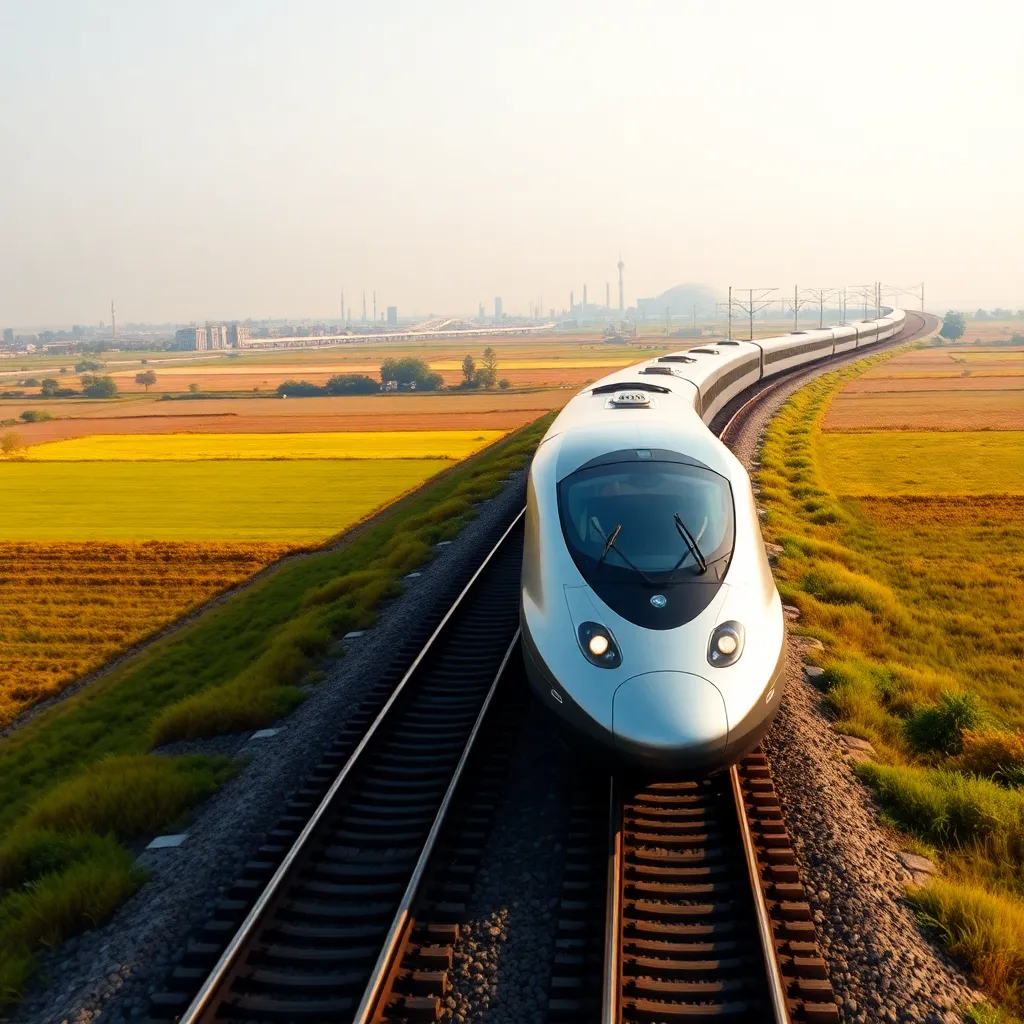
On 13 May 2026, the Cabinet Committee on Economic Affairs, chaired by the Prime Minister Narendra Modi, approved the Ahmedabad (Sarkhej)–Dholera Semi High-Speed Double Line railway project in Gujarat, with an estimated cost of approximately ₹20,667 crore. This project is India's first semi high-speed rail initiative developed with indigenous technology, aiming to enhance connectivity between Ahmedabad, Dholera Special Investment Region (SIR), the upcoming Dholera Airport, and the Lothal National Maritime Heritage Complex. The 134 km corridor is designed for trains operating at 200 kmph with a design speed of 220 kmph, reducing travel time between Sabarmati and Dholera to about 48 minutes. Completion is targeted for fiscal year 2030–31. The project aligns with the PM Gati Shakti National Master Plan to improve multimodal connectivity, contribute to regional development, and promote environmental sustainability by reducing oil imports and CO2 emissions.
On this page
Key Facts
- Approval Date: 13 May 2026 by Cabinet Committee on Economic Affairs chaired by Prime Minister Narendra Modi
- Estimated Cost: ₹20,667 crore
- Length: Approximately 134 km of new railway line in Gujarat
- Route: From Ahmedabad (Sarkhej) to Dholera Special Investment Region including connectivity to the upcoming Dholera Airport and the Lothal National Maritime Heritage Complex
- Design Speed: 220 kilometres per hour (kmph)
- Operational Speed: 200 kmph
- Travel Time Reduction: Sabarmati to Dholera in about 48 minutes
- Project Completion Target: Fiscal Year 2030–31
- Project Type: India’s first semi high-speed rail project using indigenous technology
- Connectivity Impact: Enhances connectivity to nearly 284 villages with a combined population of approximately 5 lakh people
- Environmental Benefits: Expected reduction in oil import by 0.48 crore litres and decrease in CO2 emissions by 2 crore kilograms, equivalent to planting 10 lakh trees
- Aligned With: PM Gati Shakti National Master Plan focusing on multimodal connectivity and logistics efficiency
Background & Context
The Ahmedabad-Dholera corridor serves Gujarat’s industrial and infrastructure network, connecting a key Special Investment Region (Dholera SIR), an upcoming airport, and a notable maritime heritage site at Lothal which is part of the ancient Harappan civilization. This semi high-speed rail aims to foster regional development, improve mobility and operational efficiency of Indian Railways, and act as a model project for future expansion of semi high-speed rail services across India. The project supports the Prime Minister’s vision of an Atmanirbhar Bharat by promoting local development and employment opportunities.
Why This Matters for Exams / Exam Relevance
This project marks a significant milestone in India’s transportation infrastructure as the country’s first semi high-speed rail developed indigenously. The initiative exemplifies integration of infrastructure projects under the PM Gati Shakti National Master Plan, emphasizing multimodal connectivity and sustainable development—topics frequently asked in general studies and current affairs sections. Key data like approval date, project cost, technological aspects, regional connectivity, and environmental benefits are vital for exam preparation.
Points to Remember
- Approved on 13 May 2026 by the Cabinet Committee on Economic Affairs chaired by PM Narendra Modi
- Estimated cost is approximately ₹20,667 crore
- Length of new railway track is about 134 km in Gujarat
- Connects Ahmedabad (Sarkhej), Dholera SIR, upcoming Dholera Airport and Lothal National Maritime Heritage Complex
- Design speed of trains is 220 kmph; operational speed planned at 200 kmph
- Expected travel time between Sabarmati and Dholera is reduced to approximately 48 minutes
- Project completion is targeted for fiscal year 2030–31
- Project is India’s first semi high-speed rail developed with indigenous technology, setting a reference for future projects
- Enhances connectivity to approximately 284 villages with population around 5 lakh
- Contributes to environmental sustainability by reducing oil imports and CO2 emissions equivalent to planting 10 lakh trees
Sources & Further Reading
| Document / Website | Link |
|---|---|
| Press Information Bureau: Ahmedabad-Dholera Semi High-Speed Rail Project | Open Press Information Bureau: Ahmedabad-Dholera Semi High-Speed Rail Project ↗www.pib.gov.in |
| GKToday: India Approves Ahmedabad-Dholera Semi High-Speed Rail Project | Open GKToday: India Approves Ahmedabad-Dholera Semi High-Speed Rail Project ↗www.gktoday.in |
| PM Gati Shakti National Master Plan Overview | Open PM Gati Shakti National Master Plan Overview ↗pib.gov.in |