
ISRO's Semi-Cryogenic Engine Hot Test Achieves 88% Target Thrust
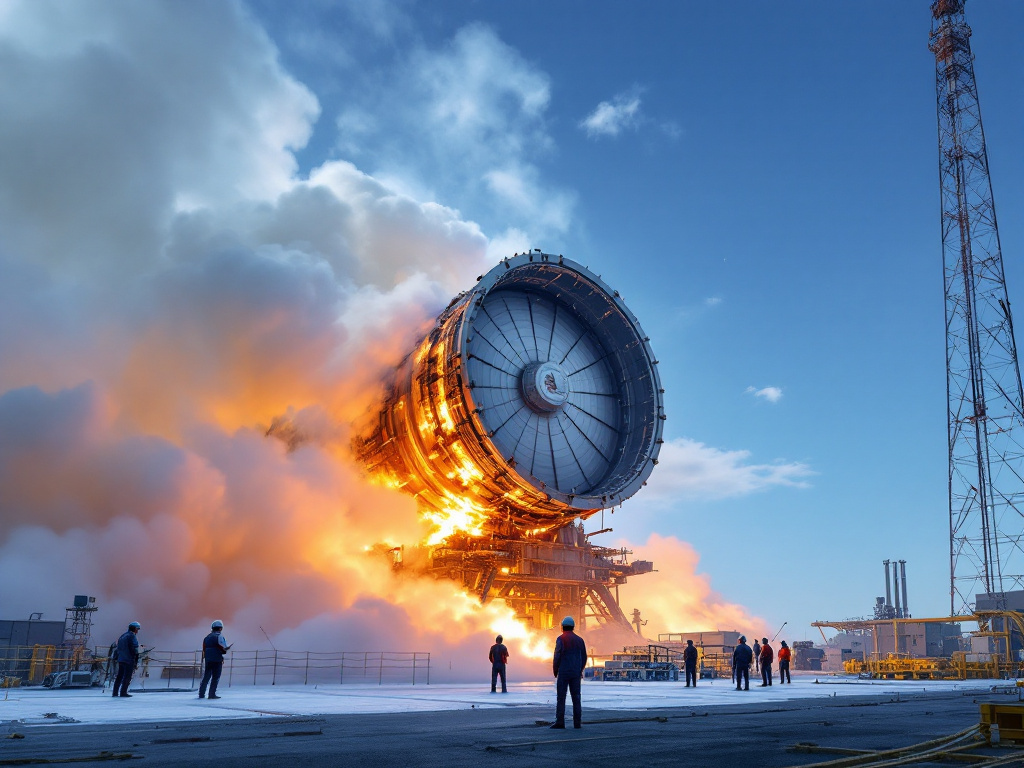
On June 24, 2026, ISRO successfully conducted a hot test of its semi-cryogenic engine power head (SE2000) at the ISRO Propulsion Complex, Mahendragiri, Tamil Nadu, achieving 175 tonnes of thrust, approximately 88% of the target 200 tonnes. This test marks the eighth in the Power Head Test Article series aimed at validating the engine’s integrated systems. The semi-cryogenic propulsion stage (SC120) using liquid oxygen and kerosene is designed to replace the current L110 core stage of India’s heavy-lift LVM3 launch vehicle, enhancing payload capability and operational efficiency, with full thrust testing and operational deployment targeted by 2027.
On this page
Key Facts
- Test date: 24 June 2026
- Location: ISRO Propulsion Complex, Mahendragiri, Tamil Nadu
- Engine: SE2000 semi-cryogenic engine with 2000 kN (200 tonnes) thrust rating
- Thrust achieved in test: 175 tonnes (88% of target)
- Test type: Eighth hot test of the Power Head Test Article validating integrated subsystems
- Stage: SC120 semi-cryogenic propulsion stage intended to replace L110 core stage in LVM3
- Propellants: Liquid Oxygen (LOX) as oxidizer and kerosene as fuel
- Planned full-thrust test at 200 tonnes thrust
- Scheduled operational use: Enhanced LVM3 with semi-cryogenic stage targeted for 2027
Background & Context
The current LVM3 heavy-lift launch vehicle uses the L110 core stage powered by liquid hydrogen and liquid oxygen cryogenic engines. ISRO is developing the SC120 semi-cryogenic stage powered by the SE2000 engine, which uses LOX and kerosene. This semi-cryogenic propulsion is expected to improve payload capacity and operational efficiency by replacing the L110 stage. Several progressive hot tests have been completed for validation of critical engine components and control systems before the full integrated engine tests. Testing is conducted at the ISRO Propulsion Complex in Mahendragiri, Tamil Nadu.
Why This Matters for Exams / Exam Relevance
- Reflects India's advances in rocket propulsion technology, a common topic in science and technology general knowledge sections.
- Demonstrates ISRO's development roadmap for enhanced heavy-lift launch vehicles, relevant to current affairs topics on India's space program.
- Key facts such as test dates, thrust values, engine names, and propellant types are commonly asked in competitive exams.
- Knowledge of ISRO’s engine development efforts and launch vehicle upgrades is pertinent for questions on space technology and indigenous development.
Points to Remember
- ISRO conducted the 8th hot test of SE2000 semi-cryogenic engine power head on 24 June 2026.
- The test achieved 175 tonnes thrust, 88% of the target 200 tonnes.
- The SC120 stage uses liquid oxygen (LOX) and kerosene as propellants.
- SC120 aims to replace the L110 core stage (which uses liquid hydrogen and oxygen) in the LVM3 launch vehicle.
- Operational deployment of the enhanced LVM3 with the semi-cryogenic stage is targeted for 2027.
- Testing takes place at ISRO Propulsion Complex, Mahendragiri, Tamil Nadu.
- Additive Manufacturing technology is being employed in engine development to accelerate production.
Sources & Further Reading
| Document / Website | Link |
|---|---|
| ISRO tests semi-cryogenic engine power head | Open ISRO tests semi-cryogenic engine power head ↗www.gktoday.in |
| Successful third Hot Test of Semi-Cryogenic Engine Power Head Test Article | Open Successful third Hot Test of Semi-Cryogenic Engine Power Head Test Article ↗www.isro.gov.in |
| First LVM3 launch vehicle equipped with semi-cryogenic stage slated to fly in 2027 - The Hindu | Open First LVM3 launch vehicle equipped with semi-cryogenic stage slated to fly in 2027 - The Hindu ↗www.thehindu.com |