
Italy Suspends Schengen Rules Amid Ceuta Migrant Influx in 2026
On 31 July 2026, Italy announced a temporary suspension of Schengen free-movement rules with Spain due to a sudden influx of irregular migrants into Ceuta, a Spanish enclave in North Africa. Effective from 1 August 2026 for one month, Italy closed its air and sea borders with Spain selectively targeting third-country nationals under provisions of the Schengen Borders Code. This action was taken to safeguard national security and manage migration pressures amid the summer tourist season. The event highlights the dynamics of European border management, migration challenges, and the mechanisms available to EU member states for internal border controls.
On this page
Key Facts
- On 31 July 2026, Italy announced the temporary suspension of Schengen free-movement rules with Spain.
- The suspension became effective from 1 August 2026 and was planned to last for one month.
- The suspension involved the closure of Italy’s air and sea borders to Spain, specifically targeting third-country nationals arriving from Spain.
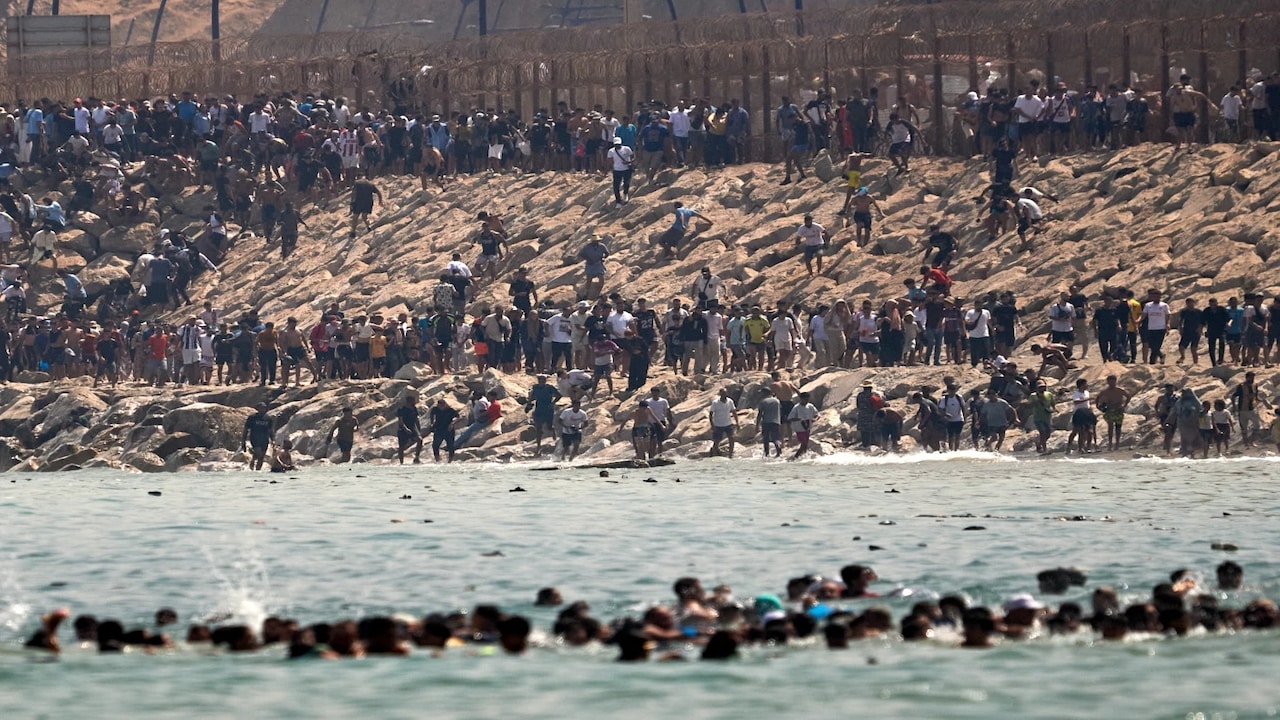
- Ceuta, a Spanish autonomous city on the North African coast bordering Morocco, experienced a sudden influx of approximately 50,000 to 60,000 irregular migrants between 30 and 31 July 2026.
- By 31 July 2026, more than 48,000 migrants had returned voluntarily to Morocco.
- The measure was taken under the Schengen Borders Code, which allows temporary reintroduction of internal border controls for reasons of public policy or internal security.
- Italian authorities applied targeted and selective border checks primarily at ports and airports on arrivals from Spain, excluding Spanish and other EU citizens from these restrictions.
- Prime Minister Giorgia Meloni described this as an extraordinary measure related to national security and managing summer tourism.
- Foreign Minister Antonio Tajani emphasized the suspension was treaty-based to safeguard citizens and European borders.
Background & Context
The Schengen Area is a European framework that allows passport-free movement across most participating states. The Schengen Agreement and the Schengen Borders Code set rules that allow temporary internal border controls under certain exceptional circumstances involving public policy or internal security threats.
Ceuta and Melilla are Spanish autonomous cities located on the North African coast, acting as European Union external borders and key transit points for migration movements from Africa to Europe.
The large irregular migrant influx into Ceuta in late July 2026 prompted Italy to temporarily suspend free movement with Spain as a preventive security measure. Italy’s action targeted third-country nationals arriving from Spain to address migration pressures and maintain public order, especially significant during the peak summer tourist season.
Why This Matters for Exams
This event illustrates the practical application of the Schengen Agreement and the Schengen Borders Code concerning temporary border controls within the EU.
Understanding the reasons for and procedures behind temporary suspensions of the Schengen rules is important for exams related to international affairs, European Union policies, and migration management.
Knowledge about key locations like Ceuta and Melilla, their geopolitical significance, and the role of EU member states in handling migration crises are often tested. The incident also highlights EU cooperation and challenges during migration surges.
Points to Remember
- Schengen free movement can be suspended temporarily for up to 30 days (or longer under specific conditions) for serious security or public policy reasons.
- Italy’s suspension applied selective checks only on third-country nationals arriving from Spain, exempting EU citizens.
- Ceuta is a strategic Spanish enclave on the North African coast and part of the EU’s external borders.
- The decision was made amid a significant irregular migrant influx into Ceuta from Morocco.
- Italian political leaders framed the measure as essential for national security and managing the impact on summer tourism.
- The Schengen Borders Code governs such temporary internal border control measures, ensuring they are treaty-based and justified.
- This event occurred in the summer of 2026, emphasizing border security amid increased migration and tourism dynamics.
Sources & Further Reading
| Document / Website | Link |
|---|---|
| Italy suspends Schengen rules after Ceuta migrant influx | Open Italy suspends Schengen rules after Ceuta migrant influx ↗www.gktoday.in |
| Schengen Agreement and Borders Code | Open Schengen Agreement and Borders Code ↗ec.europa.eu |
| Ceuta and Melilla: Europe’s Outposts in Africa | Open Ceuta and Melilla: Europe’s Outposts in Africa ↗www.bbc.com |