
Massive Wildfires Trigger Evacuations in France and Spain on 24 July 2026
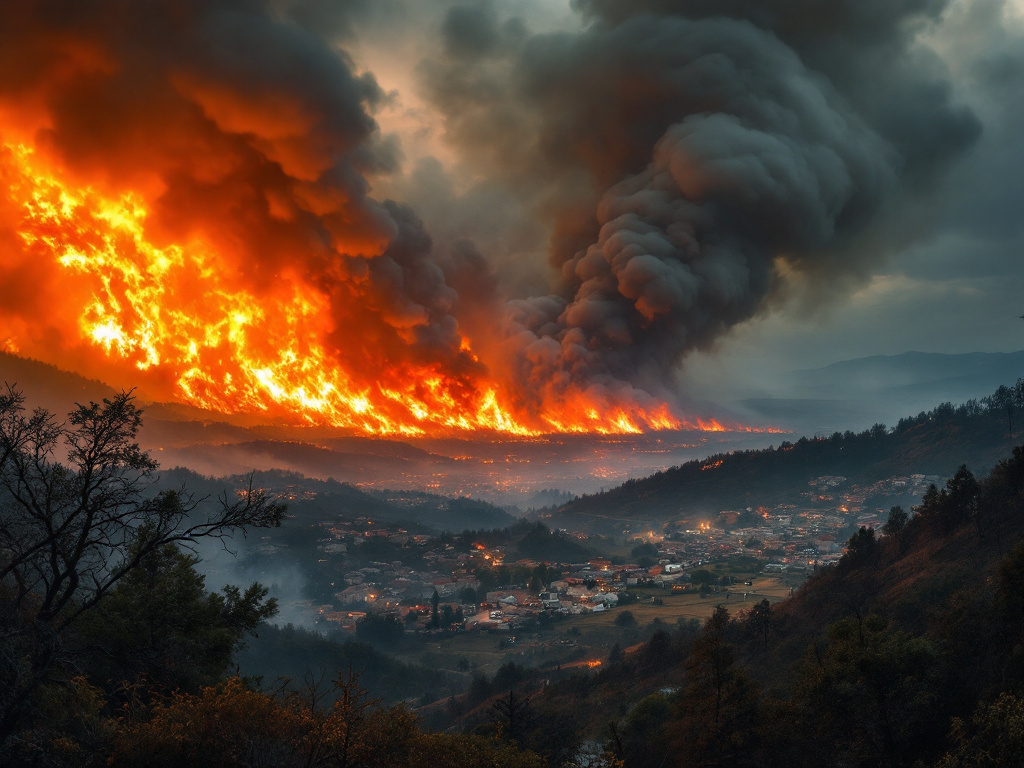
On 24 July 2026, severe wildfires struck southwestern France's Cap Ferret peninsula in Gironde and central Spain near Madrid and Ávila, forcing the evacuation of over 80,000 residents. France evacuated 44,000 people, including holidaymakers, as fires destroyed more than 12,500 hectares of forest. Spain declared its first national wildfire emergency, evacuating around 20,000 people from areas near Madrid. Both nations requested aid from the European Union Civil Protection Mechanism to manage this environmental crisis, which underscores the wildfire risks in Mediterranean climate regions during extreme weather conditions.
On this page
Key Facts
- Date of event: 24 July 2026
- Locations affected: Cap Ferret peninsula (Gironde prefecture, Nouvelle-Aquitaine region, France), areas near Madrid and province of Ávila, Spain
- Number of evacuees: Over 80,000 total (France: over 44,000; Spain: approximately 20,000)
- Area burnt in France: over 12,500 hectares (approximately 125 square kilometres)
- Homes and facilities damaged in France: 53 homes and 1 campsite
- Firefighter injuries in France: 42
- Spain declared its first-ever national emergency due to wildfire
- EU Civil Protection Mechanism activated to assist both countries
Background & Context
A wildfire is an uncontrolled fire that spreads quickly through dry vegetation such as forests, grasslands, and scrubland. The Cap Ferret peninsula lies on the Atlantic coast in southwestern France, within Gironde prefecture, part of the Nouvelle-Aquitaine region. The affected area in Gironde covers about 12,500 hectares of forest burned during the event. Evacuations were conducted village by village.
In Spain, two large wildfires merged near Madrid, the country’s capital city and administrative centre of the Community of Madrid autonomous community, with a third fire close to merging in the same area. Approximately 20,000 people were evacuated from towns near Madrid and the neighbouring province of Ávila, which is part of the Castile and León autonomous community. This event led to Spain declaring its first national emergency related to wildfire.
Both France and Spain, as members of the European Union, requested assistance through the EU Civil Protection Mechanism, which facilitates coordinated help—including aerial firefighting resources and personnel—in major disasters.
Why This Matters for Exams / Exam Relevance
This incident highlights essential themes relevant for competitive exams: environmental disasters in Europe, international cooperation mechanisms such as the EU Civil Protection Mechanism, and geographical awareness of European administrative divisions (e.g., Gironde, Nouvelle-Aquitaine, Madrid, Ávila, Castile and León). Understanding the Mediterranean climate’s influence on wildfire occurrence and the governmental emergency responses enriches candidates’ knowledge in current affairs, environment, geography, and governance.
Points to Remember
- On 24 July 2026, wildfires led to evacuations of over 80,000 people in southwestern France (Cap Ferret, Gironde) and central Spain (Madrid and Ávila).
- The wildfire in Gironde consumed over 12,500 hectares (~125 sq km) of forest, damaging 53 homes and a campsite, and injuring 42 firefighters.
- Spain declared its first national wildfire emergency following converging large fires near Madrid.
- The EU Civil Protection Mechanism was mobilized to coordinate cross-border disaster assistance to France and Spain.
- Geographical and administrative contexts: Gironde is a department within the Nouvelle-Aquitaine region; Ávila is a province in Castile and León; Madrid is both Spain’s capital and centre of the Community of Madrid autonomous community.
- Mediterranean climate zones, characterised by hot, dry summers and strong winds, are prone to frequent wildfires under such weather conditions.
Sources & Further Reading
| Document / Website | Link |
|---|---|
| Wildfires Force Mass Evacuations in France and Spain - GKToday | Open Wildfires Force Mass Evacuations in France and Spain - GKToday ↗www.gktoday.in |
| European Union Civil Protection Mechanism | Open European Union Civil Protection Mechanism ↗ec.europa.eu |
| Geography of France | Open Geography of France ↗en.wikipedia.org |
| Wildfires in Mediterranean Climate Zones | Open Wildfires in Mediterranean Climate Zones ↗www.nationalgeographic.com |