
Japan's H3 Rocket Successfully Returns to Flight with Low-Cost 30 Configuration Variant
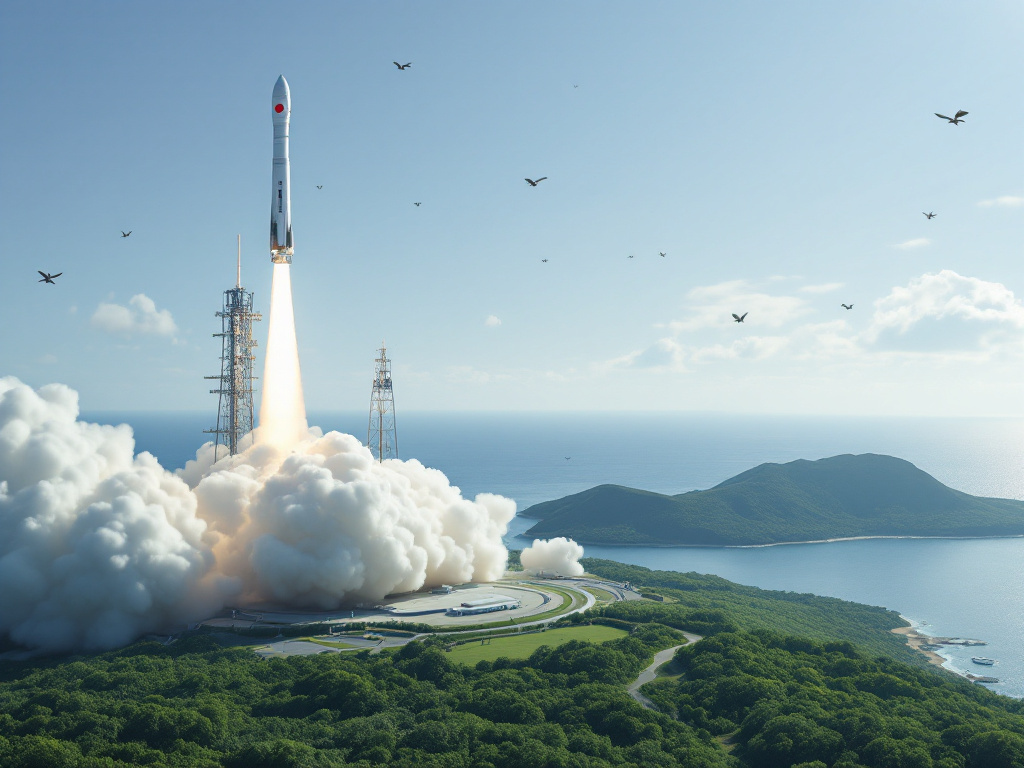
On 12 June 2026, Japan's H3 rocket resumed successful flights with Flight 6 from Tanegashima Space Center, featuring the debut of the low-cost "30 configuration" variant. This configuration uses three liquid-fuel LE-9 engines without solid rocket boosters. The rocket's second stage reached the targeted orbit, and six small satellites developed by universities and other organizations separated successfully. This launch follows previous failures in the H3 program and represents a key step in Japan's space access strategy.
On this page
Key Facts
- Launch Date: 12 June 2026
- Launch Site: Tanegashima Space Center, Kagoshima Prefecture, Japan
- Rocket and Configuration: H3 Launch Vehicle Flight 6, "30 configuration" with three LE-9 liquid-fuel engines and no solid rocket boosters
- Mission Outcome: Second stage reached targeted orbit; six university and organization-developed small satellites separated successfully
- Developers: Japan Aerospace Exploration Agency (JAXA) and Mitsubishi Heavy Industries
- Previous Failures: Most recent failure was Flight 8 in December 2025, caused by a satellite mount defect
- Program Goals: Six to eight H3 launches annually aiming for improved cost-effectiveness and international competitiveness
Background & Context
The H3 rocket is Japan's next-generation flagship launch vehicle, co-developed by JAXA and Mitsubishi Heavy Industries. It is designed to provide flexibility in configurations to cater to different payload sizes and cost targets. The "30 configuration" is the lightest H3 variant, utilizing three LE-9 liquid hydrogen engines on the first stage without solid rocket boosters, enabling reduced launch cost for smaller satellite payloads.
The program experienced setbacks including the December 2025 Flight 8 failure due to a defect in the satellite mount, but the June 2026 return-to-flight marks progress in establishing reliable space launch capabilities.
Why This Matters for Exams / Exam Relevance
Understanding the H3 rocket highlights Japan's advancements in space technology, including indigenous development of the LE-9 high-thrust liquid-fueled engine and cost-efficient launch vehicle design strategies. Key details such as launch dates, vehicle configurations, engine technology, and JAXA's collaboration with Mitsubishi Heavy Industries are commonly included in competitive exam questions related to Indian and global space programs, technology, and recent spaceflight events.
Points to Remember
- H3 Flight 6 successfully launched on 12 June 2026 from Tanegashima Space Center.
- "30 configuration" is a low-cost H3 variant with three LE-9 engines and no solid rocket boosters.
- The LE-9 engine is Japan’s domestically developed liquid hydrogen engine with thrust approximately 1.4 times that of the predecessor LE-7A engine.
- Previous H3 failures included Flight 8 in December 2025 due to satellite mount defects.
- JAXA and Mitsubishi Heavy Industries jointly develop the H3 launch vehicle aiming for 6 to 8 launches per year.
- The Tanegashima Space Center is Japan’s principal spaceport, located in Kagoshima Prefecture on Tanegashima Island.
- The mission deployed six small satellites developed by universities and other organizations.
Sources & Further Reading
| Document / Website | Link |
|---|---|
| Japan’s H3 rocket returns with low-cost variant | Open Japan’s H3 rocket returns with low-cost variant ↗www.gktoday.in |
| JAXA | H3 Launch Vehicle | Open JAXA | H3 Launch Vehicle ↗global.jaxa.jp |
| Tanegashima Space Center Launch Schedule | Open Tanegashima Space Center Launch Schedule ↗rocketlaunch.org |