
Russia Successfully Test-Launches Soyuz-5 Rocket Featuring Advanced Liquid-Fuel Engine
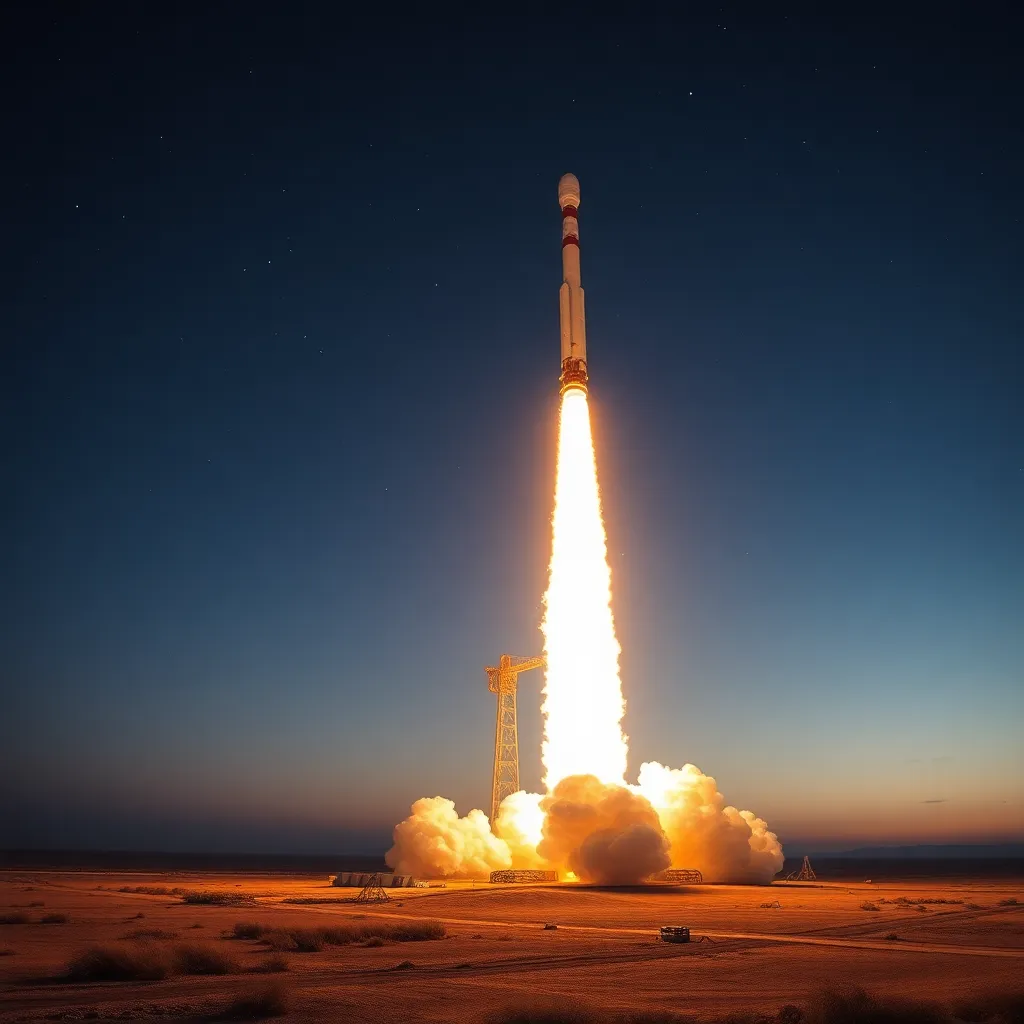
On April 30, 2026, Russia achieved a significant milestone by successfully test-launching the Soyuz-5 rocket from the Baikonur Cosmodrome in Kazakhstan. The Soyuz-5 is a next-generation medium-lift launch vehicle capable of carrying payloads up to 17 tonnes to low Earth orbit. Equipped with a powerful liquid-fuelled RD-171MV engine on the first stage and two RD-0124MS engines on the second stage, it represents a major modernization effort to replace older Soviet-era rockets such as the Zenit. This successful launch reinforces Russia’s strategic capabilities in space exploration and commercial satellite deployment amid growing global space competition.
On this page
Key Facts
- First successful test launch date: April 30, 2026
- Launch site: Baikonur Cosmodrome, Kazakhstan
- Payload capacity: Up to 17 tonnes to low Earth orbit (LEO)
- Rocket configuration: Initially two-stage, with an optional third stage (Blok DM-03) for geostationary missions
- Main engines: RD-171MV (first stage), two RD-0124MS engines (second stage)
- Developed by: Russian space agency Roscosmos and JSC SRC Progress under Project Feniks
Background & Context
The Soyuz-5 rocket, also known as Irtysh, is designed as a modern medium-lift launch vehicle to replace the older Zenit and Proton Medium rockets. Development began around 2017 to modernize Russia's launch capabilities and maintain competitiveness in global space markets. Its design benefits from technology derived from previous rockets like the Zenit and Soyuz-2 family, featuring advanced propulsion for increased thrust and efficiency. The rocket supports both government and commercial payload missions. Baikonur Cosmodrome, historically the launch site of major Soviet and Russian space missions, continues to play a critical role and is operated jointly with Kazakhstan.
Why This Matters for Exams / Exam Relevance
Understanding the Soyuz-5 rocket’s specifications, its role in Russia’s space program, and the significance of the Baikonur Cosmodrome are essential for exams focused on space technology, geopolitics, and science advancements. Key exam topics include rocket engine types, payload capacities, launch vehicle generations, international space cooperation, and launch site importance. Memorizing dates, capacities, and technical features is useful for multiple-choice and short-answer questions.
Points to Remember
- Soyuz-5 is Russia’s first newly developed launch vehicle since 2014.
- It is intended to replace Zenit rockets built previously in Ukraine, as well as Proton Medium rockets.
- The rocket offers 17,000 kg payload capacity to Low Earth Orbit and up to 5,000 kg to Geostationary Transfer Orbit with an optional third stage.
- First stage engine RD-171MV is among the world's most powerful liquid-fuelled engines.
- Baikonur Cosmodrome is the world's largest operational space launch facility, located in Kazakhstan and leased to Russia.
- The Baiterek joint project reflects Russia-Kazakhstan cooperation in the space sector.
- The inaugural successful test launch of Soyuz-5 occurred on April 30, 2026.
Sources & Further Reading
| Document / Website | Link |
|---|---|
| Russia tests Soyuz-5 rocket with powerful engine | Open Russia tests Soyuz-5 rocket with powerful engine ↗www.gktoday.in |
| Russia's new homegrown Soyuz 5 rocket aces debut launch | Space | Open Russia's new homegrown Soyuz 5 rocket aces debut launch | Space ↗www.space.com |
| Soyuz-5 Vehicle Overview | Open Soyuz-5 Vehicle Overview ↗rocketlaunch.org |
| Baikonur Cosmodrome Overview | Open Baikonur Cosmodrome Overview ↗rocketlaunch.org |
| Soyuz-5 (rocket) - Wikipedia | Open Soyuz-5 (rocket) - Wikipedia ↗en.wikipedia.org |
| Russia–Kazakhstan Baiterek Project | Open Russia–Kazakhstan Baiterek Project ↗en.wikipedia.org |
| Roscosmos Official Website | Open Roscosmos Official Website ↗www.roscosmos.ru |