
Japan's Hayabusa2 Spacecraft Conducts High-Speed Flyby of Asteroid Torifune (2001 CC21)
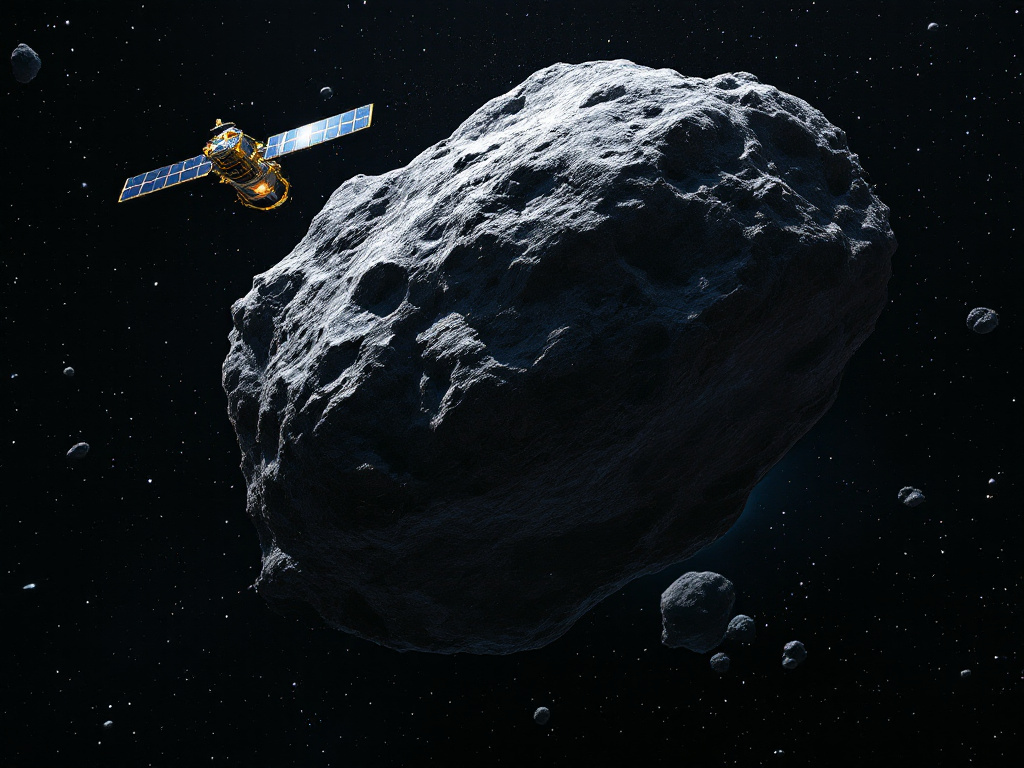
On 5 July 2026, Japan Aerospace Exploration Agency's (JAXA) Hayabusa2 spacecraft performed a high-speed flyby of asteroid Torifune (2001 CC21), flying approximately 800 meters from the asteroid's center at about 5 km/s. This extended mission operation, following the 2020 Ryugu sample-return success, gathered data on the asteroid's surface, structure, and temperature. The mission aims to advance planetary defence technologies through testing rapid reconnaissance and high-precision guidance for future asteroid hazard response missions.
On this page
Key Facts
- Date of Flyby: 5 July 2026
- Spacecraft: Hayabusa2, operated by Japan Aerospace Exploration Agency (JAXA)
- Asteroid Target: Torifune (also designated 2001 CC21)
- Estimated Diameter of Asteroid: Approximately 450 to 500 meters
- Flyby Distance: Approximately 800 meters from the asteroid's centre
- Relative Speed at Flyby: Approximately 5 kilometers per second
- Mission Status: Primary mission completed in 2020 with sample return from asteroid Ryugu; currently in extended mission phase
- Next Planned Target: Asteroid 1998 KY26, rendezvous expected in 2031
- Mission Purpose for Flyby: To conduct planetary defence research by performing rapid reconnaissance and testing high-precision guidance technologies for future asteroid hazard response missions
Background & Context
The Hayabusa2 spacecraft, developed and operated by JAXA, originally conducted a successful sample-return mission from the asteroid Ryugu, completing that primary mission in 2020. Following that, it embarked on an extended mission involving further asteroid encounters. On 5 July 2026, Hayabusa2 performed a high-speed flyby of asteroid Torifune (2001 CC21), a near-Earth object of about 450–500 meters diameter. The spacecraft passed at a close distance of approximately 800 meters from the asteroid’s center, moving at a relative speed of about 5 km/s. During the flyby, Hayabusa2 collected data on the asteroid’s surface, structure, and temperature. The spacecraft was confirmed to be in normal condition following the event.
This flyby was conducted as part of planetary defence research, which encompasses the detection, tracking, and potential deflection of near-Earth objects (NEOs) that could pose a hazard to Earth. The operation aimed to test rapid reconnaissance methods and high-precision guidance technology that will be crucial for future missions designed to respond to asteroid threats.
Why This Matters for Exams
This event underscores Japan's ongoing leadership and contributions in the field of asteroid exploration and planetary defence efforts. Knowledge of Hayabusa2’s mission timeline, objectives, and technology advancements is relevant for competitive exams focusing on space technology, interplanetary missions, and planetary defence frameworks globally. Important points include mission milestones (2020 Ryugu sample return, 2026 Torifune flyby, and planned 2031 1998 KY26 rendezvous), details on the asteroids involved, and the overarching significance of planetary defence research in safeguarding Earth.
Points to Remember
- Hayabusa2 completed its primary mission with the successful return of samples from asteroid Ryugu in 2020.
- On 5 July 2026, Hayabusa2 performed a close flyby (~800 m) of asteroid Torifune (2001 CC21) at about 5 km/s.
- The flyby contributed to planetary defence by testing technologies for rapid reconnaissance and high-precision navigation relevant to asteroid threat mitigation.
- Planetary defence involves detection, tracking, and methods to potentially deflect hazardous near-Earth objects.
- Hayabusa2’s extended mission includes a planned rendezvous with asteroid 1998 KY26 in 2031.
Sources & Further Reading
| Document / Website | Link |
|---|---|
| Hayabusa2 Performs Torifune Asteroid Flyby - GKToday | Open Hayabusa2 Performs Torifune Asteroid Flyby - GKToday ↗www.gktoday.in |
| JAXA Hayabusa2 Mission | Open JAXA Hayabusa2 Mission ↗global.jaxa.jp |
| Planetary Defense - NASA | Open Planetary Defense - NASA ↗www.nasa.gov |