
Microbial Communities Discovered Beneath Antarctica's Ross Ice Shelf
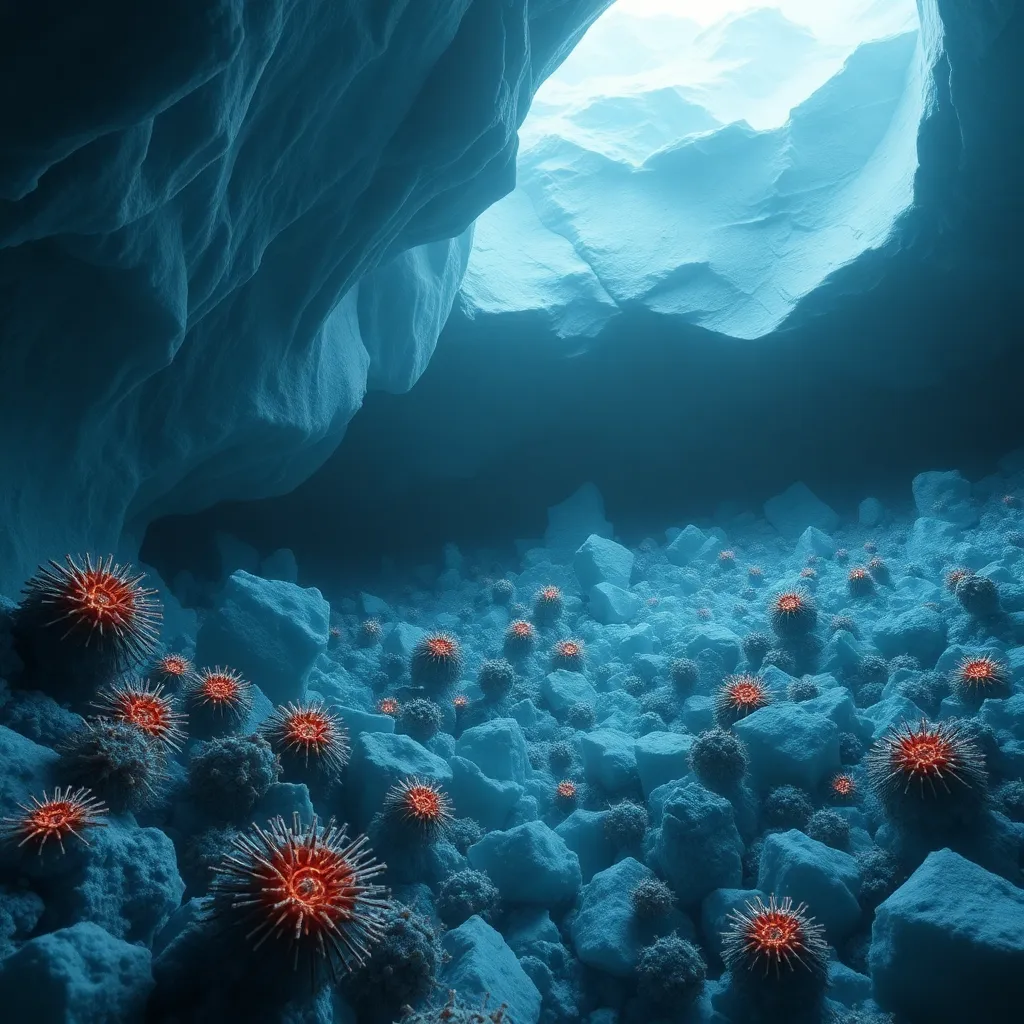
In a 2022 study published in Nature Communications, scientists discovered thriving microbial communities hundreds of meters beneath Antarctica's Ross Ice Shelf, the continent's largest ice shelf. This sub-ice environment is harsh, characterized by darkness, cold temperatures, and isolation from sunlight. The microbial ecosystem comprises aerobic lithoautotrophic archaea and bacteria, alongside heterotrophic microbes that break down organic carbon. These organisms derive energy through chemosynthesis by oxidizing ammonium, nitrite, and sulfur compounds, independent of sunlight. Metagenomic and metatranscriptomic analyses revealed the community's composition and metabolic activity. Additionally, viruses were detected that infect key chemolithoautotrophic microbes, influencing nutrient cycling and microbial population dynamics in this unique ecosystem. A follow-up 2024 study provided further functional description of these microbial communities in seawater beneath the shelf.
On this page
Key Facts
- The Ross Ice Shelf is the largest ice shelf in Antarctica, extending as a floating extension of the Antarctic ice sheet overlying a cavity of cold, dark seawater isolated from sunlight.
- Researchers have identified metabolically active microbial communities hundreds of meters beneath the Ross Ice Shelf. These include aerobic lithoautotrophic archaea and bacteria that oxidize inorganic compounds such as ammonium, nitrite, and sulfur for energy through chemosynthesis.
- Heterotrophic microbes that break down organic carbon are also present, contributing to nutrient recycling in this closed ecosystem.
- Metagenomics and metatranscriptomics techniques were employed to analyze microbial DNA and gene expression, enabling identification of community composition and metabolic functions in an environment where cultivation is difficult.
- Viruses infecting ammonium- and sulfur-oxidizing chemolithoautotrophs were detected; viral infection likely plays a significant role in regulating microbial populations and nutrient cycling under the ice.
- Ammonium oxidation rates in the sub-ice habitat are comparable to those measured in Antarctic ocean waters during winter, indicating active biogeochemical cycling.
Background & Context
The Ross Ice Shelf forms a vast floating extension of the Antarctic ice sheet off the continent's coast. Beneath this shelf is a cavity filled with seawater that is cold, dark, and nutrient-limited due to the lack of sunlight penetration and isolation from surface waters. Despite these extreme conditions, microbial life thrives by using chemical energy from the oxidation of inorganic compounds—known as chemosynthesis—instead of relying on photosynthesis. This discovery expands understanding of life in extreme environments and the diversity of Antarctic marine ecosystems.
Why This Matters for Exams / Exam Relevance
This topic is relevant to competitive exams in environmental science, biology, geography, and general studies. It highlights important concepts such as Antarctic geography, extreme environment ecosystems, microbial ecology, and biochemical energy pathways like chemosynthesis. Awareness of such research enhances understanding of Earth's biosphere diversity, extremophiles, and the role of viruses in ecosystem functioning, frequently appearing in advanced exam syllabi.
Points to Remember
- The Ross Ice Shelf is the largest ice shelf in Antarctica with an isolated, dark sub-ice cavity supporting unique ecosystems.
- Microbial communities there utilize chemosynthesis, obtaining energy by oxidizing ammonium, nitrite, and sulfur compounds instead of sunlight-driven photosynthesis.
- Metagenomic and metatranscriptomic methods revealed both microbial diversity and active metabolic pathways in this environment.
- Viruses infect key microbial players, influencing nutrient cycles and population control.
- Research findings published in 2022 and expanded in 2024 provide new insights into life in extreme Antarctic habitats.
Sources & Further Reading
| Document / Website | Link |
|---|---|
| Microbes found beneath Ross Ice Shelf | Open Microbes found beneath Ross Ice Shelf ↗www.gktoday.in |
| Phylogenetically and functionally diverse microorganisms reside under the Ross Ice Shelf - Nature Communications | Open Phylogenetically and functionally diverse microorganisms reside under the Ross Ice Shelf - Nature Communications ↗www.nature.com |
| Viruses under the Antarctic Ice Shelf are active and potentially involved in global nutrient cycles - PMC | Open Viruses under the Antarctic Ice Shelf are active and potentially involved in global nutrient cycles - PMC ↗pmc.ncbi.nlm.nih.gov |