
Microbial Life Discovery Two Metres Underground in Chile’s Atacama Desert
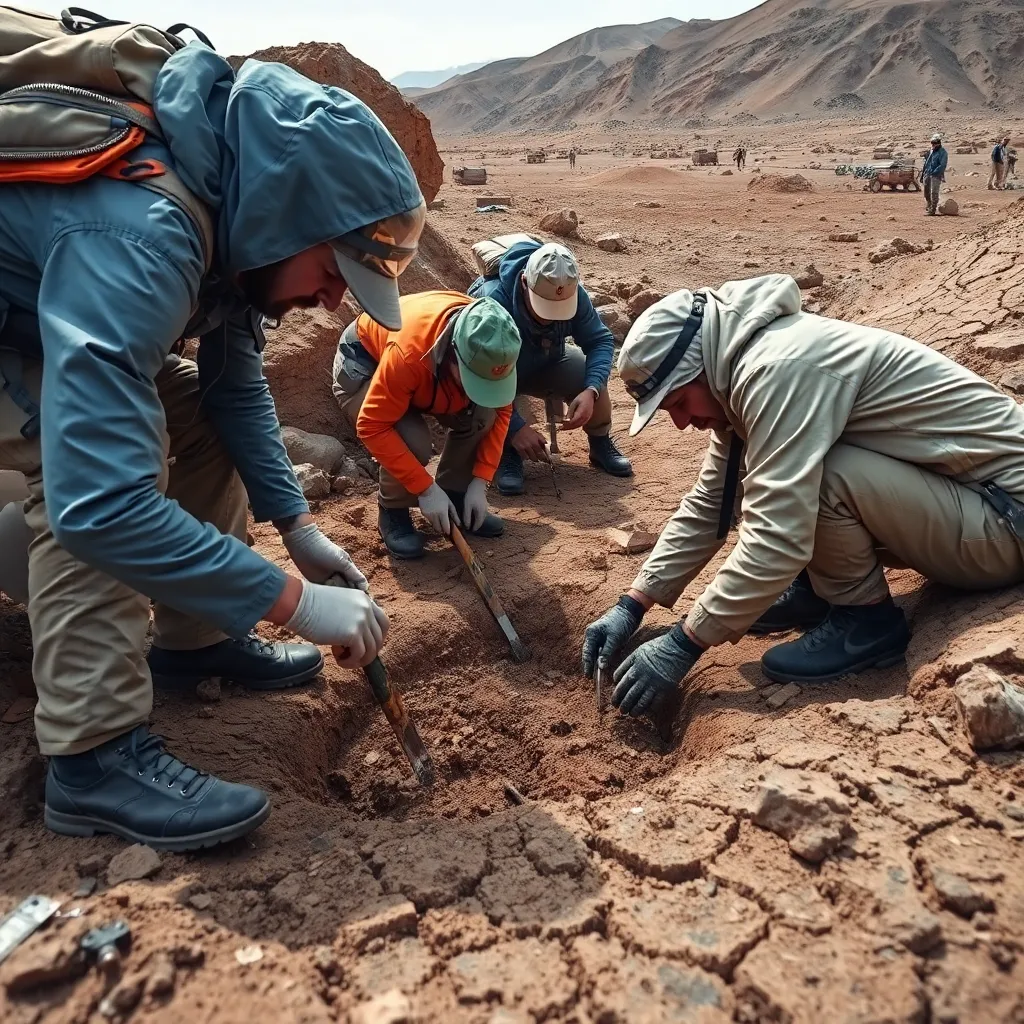
A significant discovery was made in the Atacama Desert, Chile, the driest hot desert on Earth, where a microbial ecosystem containing bacteria, archaea, and DNA was found two meters below the surface. The Atacama's extreme hyper-arid climate and high solar radiation make it a prime analogue for Martian conditions, explaining its importance in astrobiology research. Previous studies mainly identified microbial life within the top 30 centimeters of soil, but recent exploration extended this depth to at least 4 meters. This discovery enhances understanding of life's resilience under extreme conditions, with implications for the search for life on Mars.
On this page
Key Facts
- The Atacama Desert is located in northern Chile and is the driest hot desert on Earth.
- A microbial ecosystem including bacteria and archaea was found two metres underground.
- The desert's hyper-arid conditions, high solar radiation, and saline soils make it a prime terrestrial analogue for Mars.
- Earlier studies identified microbial life mainly within the top 30 cm of soil; more recent research shows life at least up to four meters below the surface in some locations.
- Astrobiology utilizes the Atacama Desert to study life's potential on Mars, given similar extreme environmental conditions.
Background & Context
The Atacama Desert, particularly regions like the Yungay Valley, is the driest and oldest desert on Earth, characterized by hyper-arid climate, intense solar radiation, and low organic content in the soil. These features create an environment closely resembling Martian surface conditions. Microbial life has been found beneath the surface, where soil moisture and temperature conditions differ from the surface layer, allowing some organisms to survive. The desert serves as an important natural laboratory for studying extremophiles and the limits of life, with implications for astrobiology and the search for life beyond Earth.
Why This Matters for Exams / Exam Relevance
Understanding the Atacama Desert’s environmental conditions and its role as a Mars analogue is relevant for topics in geography, environmental science, biology, and space studies in competitive exams. It illustrates real-world applications of microbial ecology, extremophile organisms, and astrobiology. Questions may focus on its location, climatic extremities, significance in Mars research, and discoveries related to subsurface life forms.
Points to Remember
- Atacama Desert is the driest hot desert, in northern Chile.
- Diverse microbial life including bacteria and archaea exists two meters beneath the surface.
- Previously, microbial life was known mostly up to 30 cm deep; now known up to 4 meters in some places.
- The desert’s conditions serve as a Mars analogue for astrobiology studies.
- Soil moisture, temperature, and salt content influence microbial distribution beneath surface layers.
Sources & Further Reading
| Document / Website | Link |
|---|---|
| Life found two metres underground in Atacama Desert | Open Life found two metres underground in Atacama Desert ↗www.gktoday.in |
| Aeolian transport of viable microbial life across the Atacama Desert, Chile: Implications for Mars | Open Aeolian transport of viable microbial life across the Atacama Desert, Chile: Implications for Mars ↗www.nature.com |
| The Atacama Desert in Northern Chile as an Analog Model of Mars | Open The Atacama Desert in Northern Chile as an Analog Model of Mars ↗www.frontiersin.org |