
PM Modi Unveils 'Sapta Dhara' Seven-Pillar Framework Towards Viksit Bharat by 2047
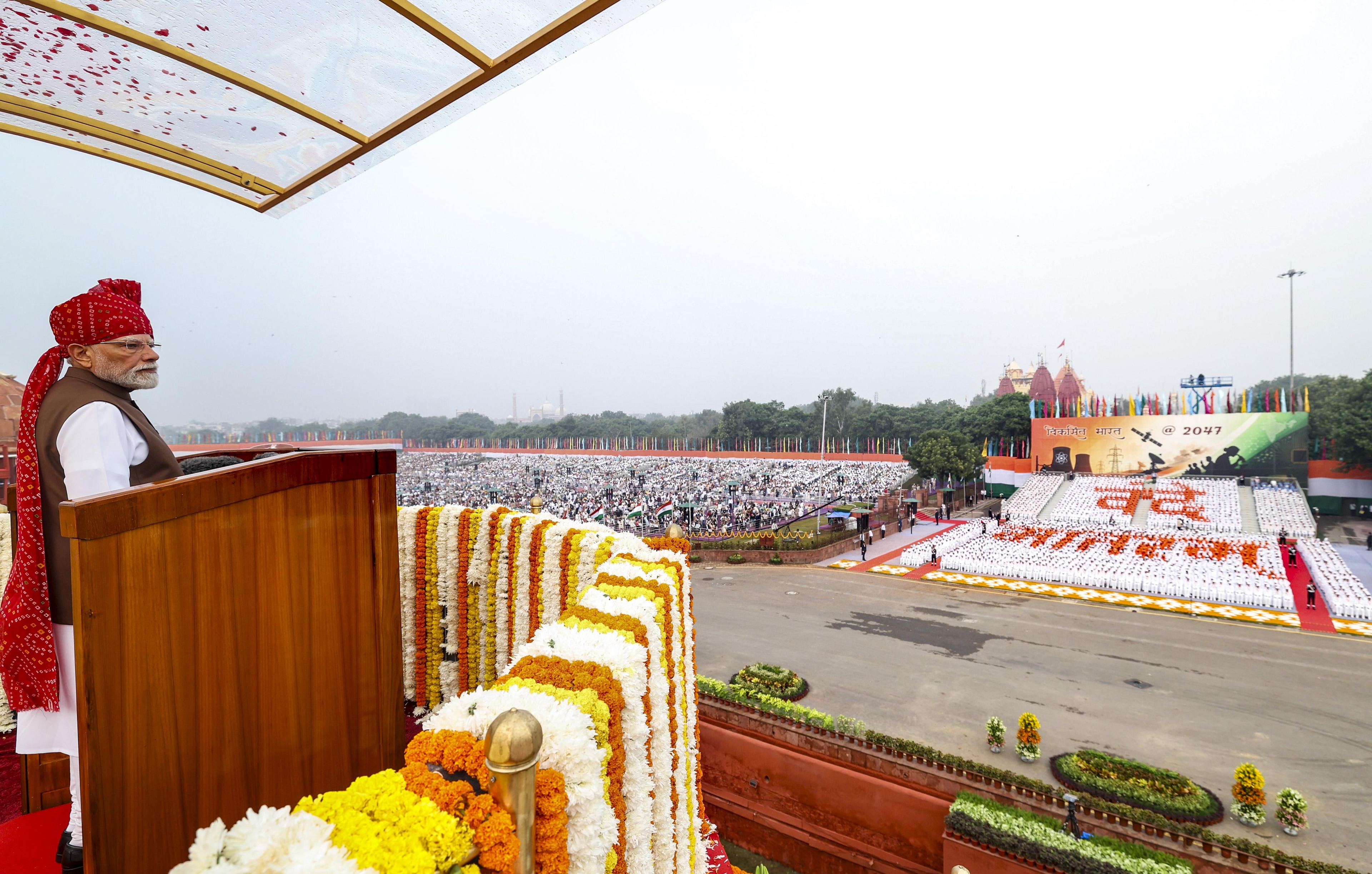
On 15 August 2026, Prime Minister Narendra Modi introduced the Sapta Dhara framework during the 80th Independence Day address at the Red Fort, setting a vision for Viksit Bharat (Developed India) by 2047. The framework comprises seven priority streams: manufacturing, agriculture and food processing, technology and innovation, Gati Shakti (infrastructure and logistics), self-reliance in defence, green and blue economy, and soft power. It aims to bolster economic growth, enhance technological skills—including training 1 crore youth in Artificial Intelligence within a year—and boost sustainable development in energy and marine sectors. This comprehensive plan links to India’s centenary independence year and integrates modern national development goals.
On this page
Key Facts
- Date and occasion: 15 August 2026 during the 80th Independence Day address at the Red Fort, New Delhi.
- Name: Sapta Dhara framework, also called Shakti Ki Saptadhara, meaning 'Seven Streams of Strength'.
- Objective: Achieve Viksit Bharat (Developed India) by 2047, the centenary year of India's Independence.
- Seven streams/pillars: manufacturing; agriculture and food processing; technology and innovation; Gati Shakti (integrated logistics and infrastructure); self-reliance in defence; green and blue economy; soft power.
- Manufacturing emphasis on cost (price competitiveness), quality (product standards), and scale (production capacity).
- Technology and innovation include a mission to train 1 crore youth in Artificial Intelligence within one year. AI refers to computer science enabling machines to perform tasks such as learning, pattern recognition, and language processing.
- Gati Shakti focuses on integrated connectivity, logistics planning, and project coordination across infrastructure.
- Defence stream focuses on self-reliance via domestic production of military equipment, platforms, and systems.
- Green economy promotes low-carbon, sustainable development; blue economy promotes sustainable use of ocean and marine resources (fisheries, ports, shipping, offshore energy).
- India plans to achieve 100 GW nuclear energy capacity by 2047, operating pressurised heavy water reactors and imported light water reactors. Five new nuclear reactors are scheduled to become operational in the next 6–7 years.
- Expansion of the domestic piped natural gas network: from 70 cities 12 years ago to over 700 cities currently, connecting around 1.75 crore households.
Background & Context
Introduced by Prime Minister Narendra Modi during the iconic Independence Day address, the Sapta Dhara framework articulates a multi-sectoral approach to national growth, aligned with India's ambitions for technological advancement, infrastructure modernization, energy sustainability, and cultural influence. It complements existing initiatives like 'Atmanirbhar Bharat' (self-reliant India) focusing on defence and manufacturing.
The framework’s launch on Independence Day underscores its symbolism—targeting significant national transformation by 2047, marking 100 years of India’s independence. It integrates modern concepts like the green and blue economies to emphasize environmental sustainability and coastal resource management, and recognizes soft power's role in global diplomacy and cultural outreach.
Why This Matters for Exams / Exam Relevance
The Sapta Dhara framework will be a relevant topic in general studies, current affairs, and economic development sections of competitive exams. Questions may evaluate knowledge on the framework's components, significance of Gati Shakti, definitions of green and blue economies, defence production policies, and the AI training mission. Awareness of the timeline and symbolic importance of 2047 as a target year is essential, as is understanding government efforts to expand energy infrastructure and foster self-reliance.
Points to Remember
- Announcement date and place: 15 August 2026, Red Fort, New Delhi.
- Name and meaning: Sapta Dhara (Seven Streams), also called Shakti Ki Saptadhara.
- Vision year: 2047, India’s 100th Independence anniversary.
- Seven streams: manufacturing; agriculture and food processing; technology and innovation; Gati Shakti; self-reliance in defence; green and blue economy; soft power.
- AI training goal: 1 crore youth in Artificial Intelligence within one year.
- Energy goals: 100 GW nuclear capacity by 2047; 5 new nuclear reactors to come online in 6–7 years.
- Natural gas network: growth from 70 to over 700 cities and connection of 1.75 crore households.
- Green economy: emphasis on low-carbon development.
- Blue economy: sustainable use of ocean and marine resources, including fisheries, ports, and offshore energy.
- Soft power: influence via culture, education, and diplomacy rather than military force.
Sources & Further Reading
| Document / Website | Link |
|---|---|
| PM Modi unveils Sapta Dhara framework for Viksit Bharat | Open PM Modi unveils Sapta Dhara framework for Viksit Bharat ↗www.gktoday.in |
| India’s Gati Shakti Initiatives | Open India’s Gati Shakti Initiatives ↗pib.gov.in |
| Artificial Intelligence Mission by Govt of India | Open Artificial Intelligence Mission by Govt of India ↗www.niti.gov.in |