
Sea Drones as Emerging Key Defence Technology in 2026
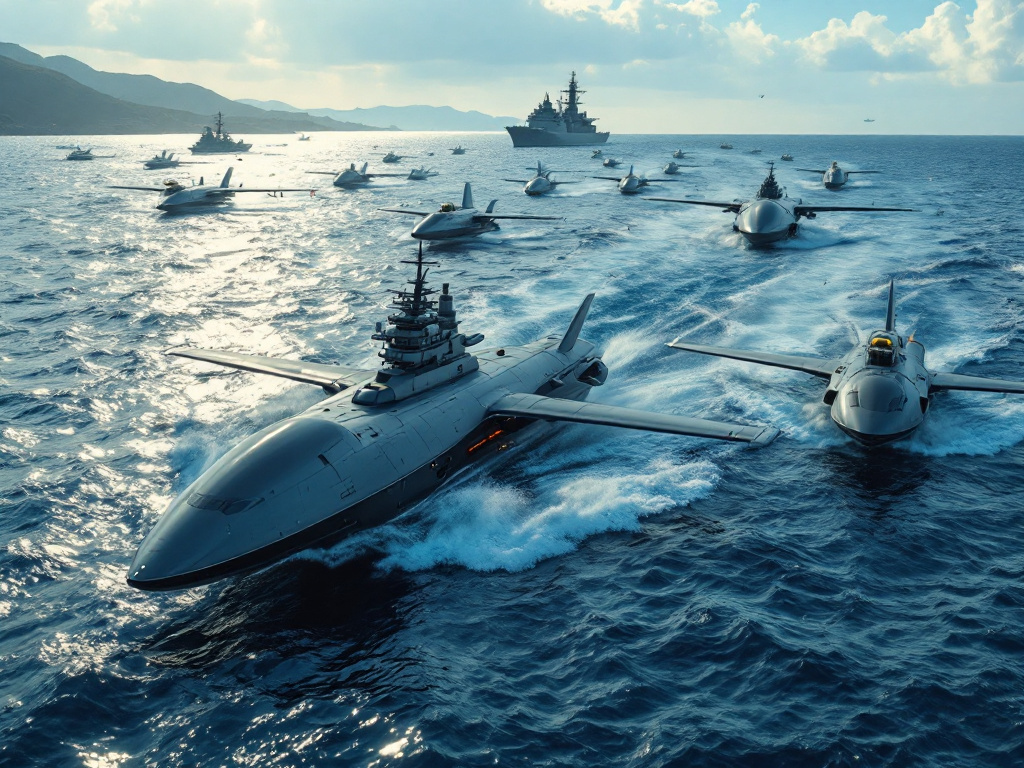
Sea drones, or unmanned maritime systems, have become significant in naval operations worldwide in 2026. These include unmanned surface vessels (USVs), uncrewed underwater vehicles (UUVs), and extra-large uncrewed underwater vehicles (XLUUVs). Notably, the US Navy's Task Force 59 actively deployed such drones in military, rescue, and logistic exercises in the Indo-Pacific and Middle East. The Ukrainian-developed Magura-class USVs have been tested for maritime strike, notably by US special forces in the Philippines. At the multinational RIMPAC 2026 exercise, autonomous surface vessels are showcased for multinational logistics and interoperability. The global maritime autonomous defense market is rapidly growing, with an estimated value of $3.8 billion in 2025, projected to reach $12.1 billion by 2034.
On this page
Key Facts
- Sea drones are unmanned naval platforms operating on the water surface or underwater without crews onboard.
- In June 2026, multiple countries deployed unmanned surface vessels (USVs), extra-large uncrewed underwater vehicles (XLUUVs), and autonomous drone boats in military exercises, logistics, and rescue operations across the Indo-Pacific and the Middle East.
- Types of sea drones include:
- Unmanned Surface Vessels (USVs): operate on the sea surface, equipped with sensors, communications, and weapons.
- Uncrewed Underwater Vehicles (UUVs): operate submerged and perform surveillance, strike missions, mine countermeasures, and logistics.
- Extra-Large UUVs (XLUUVs): larger underwater drones designed for long endurance and heavy payloads.
- The Ukrainian-developed Magura-class USVs were tested by U.S. special forces in the Philippines in June 2026, including a strike that sank a decommissioned target ship, demonstrating maritime strike capability.
- The U.S. Navy's Task Force 59 is a specialized unit focused on unmanned maritime operations in the Middle East, involved in rescue missions such as recovering crew members after an Apache crash off Oman.
- Exercise Salaknib 2026 saw the U.S. Army employing solar-powered drone boats in the Philippines to protect logistic cargo runs.
- Several Ocean Aero Triton USVs were transferred to the Philippines to monitor activity in the Philippine Exclusive Economic Zone (EEZ), which extends 200 nautical miles as per the United Nations Convention on the Law of the Sea.
- RIMPAC 2026, the world's largest multinational naval exercise held from 24 June to 31 July involving 31 nations, included demonstrations of autonomous surface vessels to enhance allied logistics and interoperability.
- The global autonomous maritime defense systems market was valued at approximately 3.8 billion USD in 2025, with projections estimating growth to 12.1 billion USD by 2034, driven by advances in AI-based autonomy and unmanned naval platforms.
Background & Context
The growing complexity of maritime security challenges and advances in artificial intelligence and robotics have accelerated the adoption of unmanned systems by navies worldwide. Sea drones offer persistent surveillance, cost-effective strike capabilities, logistic support, and reduced risks to personnel. The Indo-Pacific and Middle East regions remain key strategic theaters where these technologies are actively tested and deployed. Multinational exercises like RIMPAC serve to advance interoperability among allied navies and integrate autonomous platforms into combined operations.
Why This Matters for Exams / Exam Relevance
Knowledge of sea drones is increasingly relevant for competitive exams focusing on defense technology, international relations, and current affairs. Key topics include the types of unmanned maritime systems, notable military units like the U.S. Navy’s Task Force 59, and major multinational exercises such as RIMPAC. Awareness of the strategic implications of these technologies and their market growth aids in understanding contemporary naval warfare trends and geopolitical dynamics.
Points to Remember
- Sea drones comprise USVs, UUVs, and larger XLUUVs with diverse operational roles including surveillance, strike, and logistics.
- Magura-class USVs are Ukrainian-developed platforms actively tested for maritime strike roles with international cooperation.
- Task Force 59 is the U.S. Navy’s unit dedicated to unmanned maritime systems, active mainly in the Middle East.
- RIMPAC is the world's largest multinational naval exercise, hosted biennially in Hawaii to enhance maritime cooperation and technology integration.
- The Philippine EEZ extends 200 nautical miles from the baseline, within which USVs are deployed for monitoring and security.
- The autonomous maritime defense market shows rapid growth due to expanded use of unmanned naval platforms and AI-enabled autonomy.
Sources & Further Reading
| Document / Website | Link |
|---|---|
| Sea Drones Emerge As Key Defence Technology | Open Sea Drones Emerge As Key Defence Technology ↗www.gktoday.in |
| Task Force 59 Launches New Unmanned Task Group 59.1 - U.S. Navy | Open Task Force 59 Launches New Unmanned Task Group 59.1 - U.S. Navy ↗www.navy.mil |
| RIMPAC 2026 Kicks Off in Hawaii | Open RIMPAC 2026 Kicks Off in Hawaii ↗www.stripes.com |