
Sperm Whale Communication Shows Human-Like Language Patterns
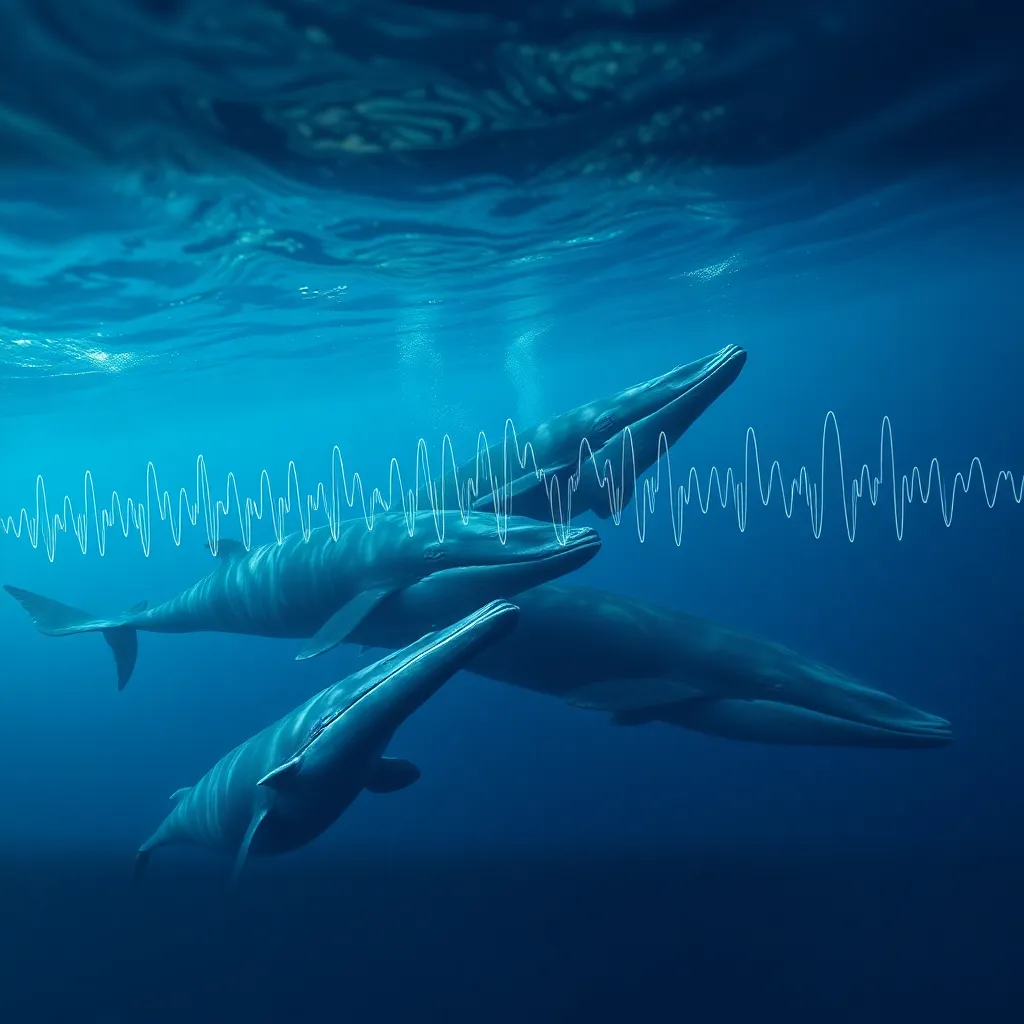
Recent scientific research led by Project CETI and MIT CSAIL has revealed that sperm whales communicate using complex vocalizations resembling human language structures. These vocalizations, known as codas, consist of sequences of clicks that exhibit phonetic-like patterns, including vowel-like elements, rhythm, tempo variation, ornamentation, and combinatorial structures. This challenges prior assumptions that complex communication is unique to humans and points to sophisticated social interactions and possible cultural transmission among sperm whales.
On this page
Key Facts
- Sperm whales communicate through click sequences called codas, produced in repeated patterns during social interactions, often at the ocean surface.
- Recent studies have identified a sperm whale 'phonetic alphabet,' including two types of vowel-like codas termed 'a-codas' and 'i-codas,' differentiated by their acoustic properties (formants).
- The whales modulate their codas with features such as rhythm (click timing), tempo (speed variations), ornamentation (extra clicks), and rubato (tempo modulation), similar to human speech patterns.
- Project CETI (Cetacean Translation Initiative) is an interdisciplinary nonprofit organization employing advanced machine learning, robotics, underwater microphones, aerial drones, and bio-logging acoustic tags to decode sperm whale communication.
- More than 9,000 codas from Caribbean sperm whales were analyzed, revealing structured, contextual, and combinatorial elements suggesting language-like complexity.
- This communication system shows remarkable parallelisms with human phonology and phonetics, suggesting independent evolutionary development of complex communication.
- Sperm whales have the largest brains among mammals, approximately six times larger than human brains, supporting advanced cognition.
Background & Context
Sperm whales (Physeter macrocephalus), the largest toothed predators on Earth, live in stable, matrilineal social groups where females and juveniles maintain long-term bonds. Communication is essential for coordinating social behaviors, hunting, and information exchange.
Historically, scientists recognized sperm whale vocalizations as patterned clicks but had limited understanding of their complexity. The codas were once likened to Morse code, lacking evidence of deeper linguistic structure.
Advancements in technology — including drone-based observation, synchronized underwater microphones, and machine learning algorithms — enabled Project CETI researchers to analyze click patterns in unprecedented detail. The project focuses on sperm whales near Dominica in the Eastern Caribbean and collaborates internationally.
Findings published between 2024 and 2026 in respected journals, such as Proceedings of the Royal Society B and Nature Communications, documented that sperm whales use a combinatorial system with phonological features akin to human vowels and speech prosody.
Why This Matters for Exams / Exam Relevance
This topic integrates disciplines such as biology, marine science, linguistics, artificial intelligence, and conservation, making it highly relevant for competitive exams covering environmental science, general studies, and contemporary scientific advancements.
Key areas of focus include understanding animal communication and cognition, interdisciplinary scientific research methods, the use of AI and robotics in biology, and the implications for species conservation policy.
Examiners may ask about Project CETI, the nature of sperm whale communication, and the significance of decoding animal languages as a frontier in modern science.
Points to Remember
- Codas: Patterns of clicks used by sperm whales for communication.
- Phonetic Alphabet: Discovery of 'a-codas' and 'i-codas' with distinct acoustic properties, analogous to vowels in human speech.
- Communication Parameters: Inclusion of rhythm, tempo, ornamentation, and rubato within codas.
- Project CETI: Cetacean Translation Initiative employing multidisciplinary techniques to decode whale language.
- Technology Used: Machine learning, synchronized acoustic arrays, aerial drones, swimming robots, and bio-logging tags (D-tags).
- Implications: Evidence of sophisticated, language-like communication suggests advanced cognition and culture in sperm whales, enhancing our understanding of animal intelligence and evolution.
- Largest Mammalian Brain: Sperm whale brains are approximately six times larger than human brains, facilitating complex social behaviors.
Sources & Further Reading
| Document / Website | Link |
|---|---|
| New scientific study on sperm whale communication — GKToday | Open New scientific study on sperm whale communication — GKToday ↗www.gktoday.in |
| Project CETI – Decoding Whale Communication | Open Project CETI – Decoding Whale Communication ↗www.projectceti.org |
| Exploring the mysterious alphabet of sperm whales – MIT News | Open Exploring the mysterious alphabet of sperm whales – MIT News ↗news.mit.edu |
| The phonology of sperm whale coda vowels – Proceedings B | Open The phonology of sperm whale coda vowels – Proceedings B ↗royalsocietypublishing.org |
| Sperm whales’ communication closely parallels human language – The Guardian | Open Sperm whales’ communication closely parallels human language – The Guardian ↗www.theguardian.com |
| AI decodes sperm whale language revealing a complex communication system – SciTechDaily | Open AI decodes sperm whale language revealing a complex communication system – SciTechDaily ↗scitechdaily.com |
| Sperm whales may make their own vowel sounds, similar to human language – Scientific American | Open Sperm whales may make their own vowel sounds, similar to human language – Scientific American ↗www.scientificamerican.com |