
Tamil Nadu Archaeology Uncovers Over 1,000 Artefacts at Vellalore
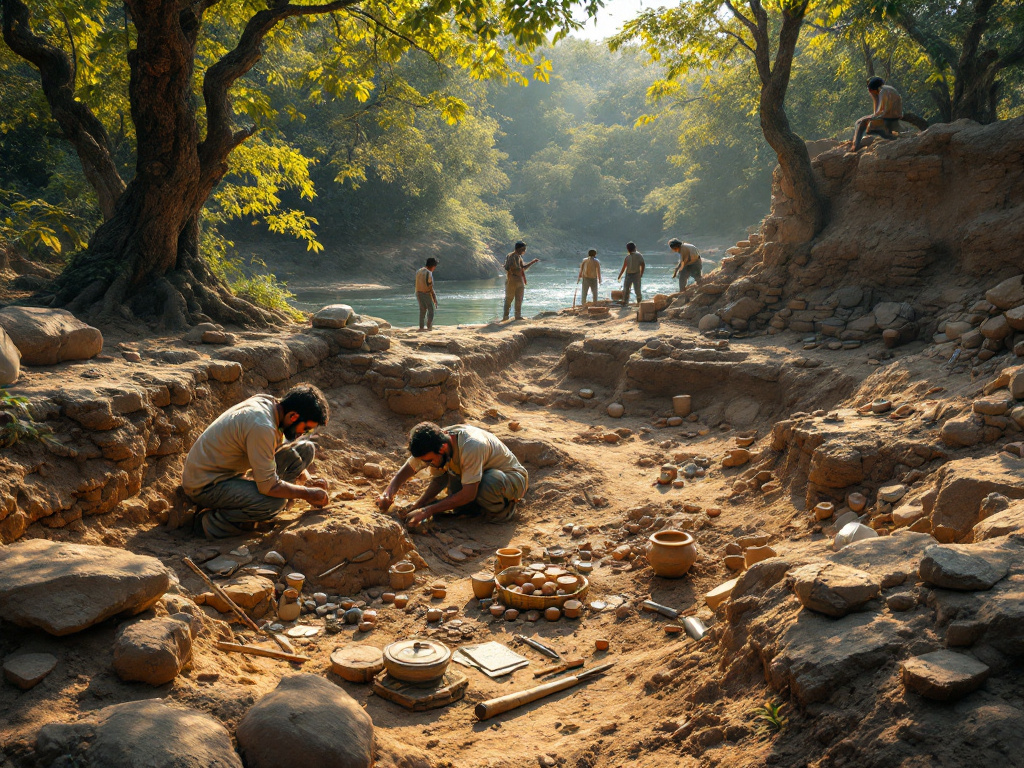
The Tamil Nadu State Department of Archaeology has excavated more than 1,000 artefacts at Vellalore along the Noyyal riverbed, reflecting a vast ancient settlement from the early historical period through the British era. Key finds include Roman copper coins, evidence of multiple crafts, and structural remains over 100 acres. The excavation, led by K. Suresh from April to October 2026, confirms Vellalore's historical significance as a trade centre linking Tamil Nadu's coastal routes.
On this page
Key Facts
- The Tamil Nadu State Department of Archaeology (TNSDA) unearthed more than 1,000 artefacts from the Noyyal riverbed at Vellalore, Coimbatore district.
- The artefacts span multiple periods including early historical (1st century BC to 3rd century AD), 5th, 6th, 8th, 10th, and 12th centuries AD, as well as the British period.
- The excavation covers around 100 acres and is conducted at four locations across three sites near the Theneeswarar Temple.
- Finds include Roman copper coins, household and craft items, ornaments, stone structures, water channels, floor materials, and a round pit with lime plaster.
- Evidence indicates bead-making, iron and steel production, weaving tools, shell ornament making, and pottery manufacturing activities.
- Excavations started on 1 April 2026 and are scheduled to continue until October 2026.
- The excavation is led by Director K. Suresh.
- Vellalore is identified as an ancient trade centre linked to routes connecting Tamil Nadu's western and eastern coasts.
Background & Context
Vellalore is located on the southern bank of the Noyyal river, a tributary within the Cauvery basin in Tamil Nadu. The Tamil Nadu State Department of Archaeology (TNSDA) is the state agency responsible for conducting archaeological research and excavations. The site shows evidence of sustained settlement and diverse craft activities over approximately two millennia. The presence of Roman copper coins highlights historic long-distance trade connections between Tamil Nadu and the Roman Empire. The range of artefacts spans from early historical times through medieval periods up to the British era, illustrating evolving socio-economic patterns in the region.
Why This Matters for Exams
This discovery enhances understanding of ancient Tamil Nadu’s trade networks, craft production, and settlement patterns. The artefacts provide datable evidence pertinent to early historical and medieval periods, including Indo-Roman trade links frequently covered in competitive exams. Key information such as the involvement of TNSDA, excavation dates (April - October 2026), key personnel (Director K. Suresh), site location (Vellalore, Coimbatore, near Theneeswarar Temple), and the variety of artefacts are important for students preparing for exams on Indian archaeology, history, and cultural heritage.
Points to Remember
- Over 1,000 artefacts were discovered at Vellalore spanning roughly 100 acres.
- The findings span a timeline from approximately 1st century BC through the British period.
- Roman copper coins underline the existence of trade relations between Tamil Nadu and the Roman Empire.
- Evidence reflects multiple craft and industrial activities: bead-making, iron and steel making, weaving, shell ornament craft, and pottery.
- Excavation led by K. Suresh commenced in April 2026 and is expected to conclude by October 2026.
- Vellalore is a notable ancient trade hub situated on the Noyyal river, a tributary of the Cauvery basin.
Sources & Further Reading
| Document / Website | Link |
|---|---|
| TNSDA uncovers over 1000 artefacts at Vellalore | Open TNSDA uncovers over 1000 artefacts at Vellalore ↗www.gktoday.in |
| Indo-Roman Trade and Archaeology | Open Indo-Roman Trade and Archaeology ↗www.ancient.eu |