
Tamil Nadu Launches Third Phase of Underwater Archaeological Exploration off Poompuhar Coast
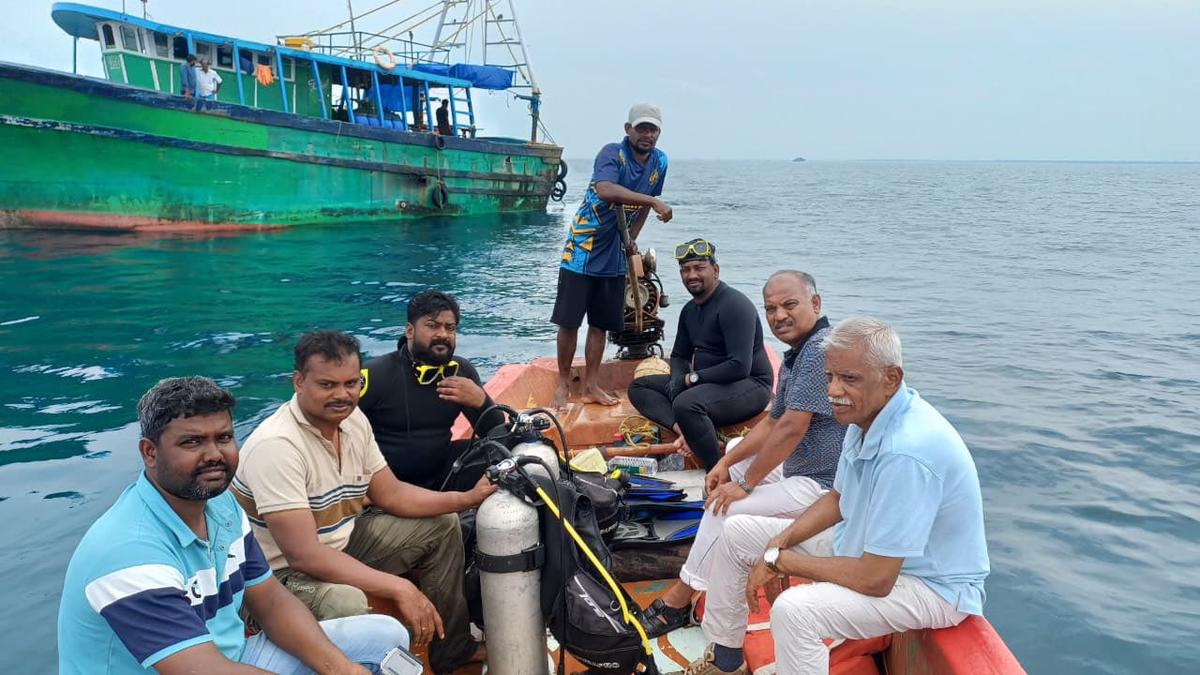
On 6 September 2026, the Tamil Nadu State Department of Archaeology (TNSDA) initiated the third phase of underwater archaeological exploration off the coast of Poompuhar, the ancient Sangam-era port city located in Mayiladuthurai district. Conducted in collaboration with the Indian Maritime University, the project focuses on mapping and excavating submerged remains spanning about 250 square kilometres, at depths from 2 to 60 metres. The 20-day survey uses advanced marine survey equipment including side-scan sonar, echosounders, and sub-bottom profilers. This phase follows previous preliminary and diving explorations begun in 2025, supported by a government allocation of ₹7 crore for land and underwater archaeology in Tamil Nadu.
On this page
Key Facts
- On 6 September 2026, Tamil Nadu State Department of Archaeology (TNSDA) launched the third phase of underwater archaeological exploration off Poompuhar coast in Mayiladuthurai district.
- Collaboration with Indian Maritime University ensures academic and technical expertise in the project.
- The survey targets an underwater area of approximately 250 square kilometres, around 2 kilometres offshore, at depths between 2 and 60 metres.
- The deep-sea exploration is scheduled for 20 days, ending on 23 September 2026.
- Marine survey instruments employed include side-scan sonar, echosounders, and sub-bottom profilers to detect seabed anomalies and buried structures.
- A 25-member team, including up to 10 professional divers and archaeologists, conducts the operations, guided by marine research consultant Prof. K. Rajan and TNSDA Joint Director Dr. Yatish Kumar.
- Previous phases started with preliminary studies in February 2025, followed by first and second phases of diving surveys in September 2025 and March 2026 respectively.
- The Union Ministry of Culture has allocated ₹7 crore for land and underwater archaeological excavations in Tamil Nadu, covering ongoing projects including this exploration.
Background & Context
Poompuhar, historically Kaveripoompattinam, was a flourishing port city during the Sangam period (approximately 3rd century BCE to 3rd century CE) located at the mouth of the Kaveri River on the Coromandel Coast. This ancient urban centre served as a major maritime trading hub connecting India with Sri Lanka, Southeast Asia, and the wider world, mentioned extensively in Tamil Sangam literature including narratives in the Silappatikaram and Manimekalai.
Over centuries, geological changes, sea level rise, and erosion led to partial submergence of the city under the Bay of Bengal. Underwater archaeological surveys aim to scientifically verify the historical and literary accounts by locating and studying submerged cultural remains such as port structures, wharves, shipwrecks, anchors, and artifacts.
The Tamil Nadu initiative employs advanced marine archaeology techniques and multidisciplinary collaborations to enhance understanding of early Tamil maritime history and conserve underwater heritage.
Why This Matters for Exams
Understanding the Poompuhar underwater exploration helps in grasping the significance of Sangam-era urban and maritime history, a common topic in Indian history and culture sections of various competitive exams. With increasing emphasis on scientific methods in archaeology, knowledge of technologies such as side-scan sonar and sub-bottom profilers is relevant to questions on modern archaeological practice.
The project also exemplifies government efforts in heritage conservation, legal frameworks, and collaborative scholarship, themes important for general studies papers in exams like UPSC and state public service commissions.
Points to Remember
- Poompuhar = Kaveripoompattinam, major ancient port city during Sangam period (3rd century BCE – 3rd century CE).
- TNSDA initiated third phase of underwater archaeological exploration on 6 September 2026, following earlier phases in 2025 and early 2026.
- Collaboration with Indian Maritime University provides marine research and diving expertise.
- Survey area extends about 250 sq km, 2 km offshore, depths 2–60 metres.
- Survey duration approximately 20 days (6 - 23 September 2026).
- Key instruments: side-scan sonar, echosounder, sub-bottom profiler (standard marine archaeology tools).
- Team: 25 members including professional divers, archaeologists; led by Prof. K. Rajan and Dr. Yatish Kumar.
- Government funding: ₹7 crore sanctioned for related land and underwater archaeology in Tamil Nadu.
- Significance: Validating Sangam-era maritime trade, understanding coastal urbanization, and preserving heritage submerged due to ancient environmental changes.
Practice MCQs
Question 1
- Where is the third phase of underwater archaeological exploration launched by Tamil Nadu State Department of Archaeology conducted in 2026?
- Madurai
- Chennai
- Poompuhar
- Rameswaram
Answer: Poompuhar
Question 2
- Which institution collaborates with Tamil Nadu State Department of Archaeology in the Poompuhar underwater survey?
- Indian Institute of Technology
- Indian Maritime University
- National Institute of Oceanography
- Archaeological Survey of India
Answer: Indian Maritime University
Question 3
- Which instrument is NOT used in the underwater exploration at Poompuhar?
- Side-scan sonar
- Sub-bottom profiler
- Echosounder
- Ground penetrating radar
Answer: Ground penetrating radar (Not specified as used; standard marine archaeology uses sonar and profilers)
Sources & Further Reading
| Document / Website | Link |
|---|---|
| Tamil Nadu Launches Third Phase of Poompuhar Underwater Exploration – GKToday | Open Tamil Nadu Launches Third Phase of Poompuhar Underwater Exploration – GKToday ↗www.gktoday.in |
| Poompuhar Port: Ancient Sangam-Era Maritime Heritage | Open Poompuhar Port: Ancient Sangam-Era Maritime Heritage ↗www.studyiq.com |
| Ocean Exploration Technology: Maritime Archaeology - NOAA Ocean Exploration | Open Ocean Exploration Technology: Maritime Archaeology - NOAA Ocean Exploration ↗oceanexplorer.noaa.gov |