
Proposal to Expand Lok Sabha Seats from 543 to 850 to Implement Women's Reservation
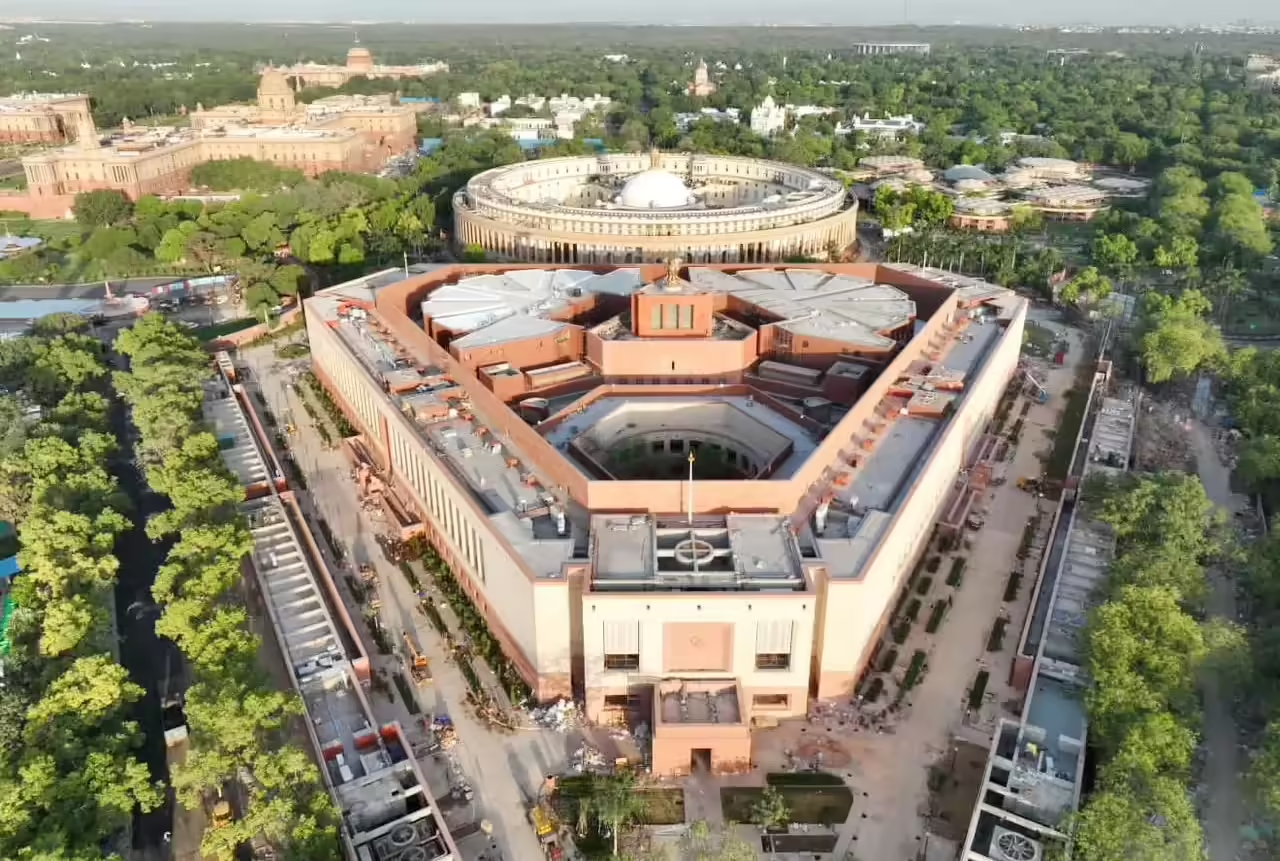
The Union government has proposed increasing the Lok Sabha's strength from 543 to 850 seats. This move aims to facilitate the implementation of the 33% women reservation in Parliament and state assemblies through a fresh delimitation exercise based on the 2011 Census. The proposed distribution is 815 seats for states and 35 for Union Territories, targeted for the 2029 general elections. The expansion is linked with constitutional amendments and requires political consensus amid opposition concerns regarding the timing and use of census data.
On this page
Key Facts
The government proposes increasing Lok Sabha seats from 543 to 850 members.
Under the proposal, 815 seats will be allocated to states and 35 seats to Union Territories.
The increase aims to implement the long-pending Women's Reservation Bill that mandates 33% reservation for women in the Lok Sabha and state assemblies.
An updated delimitation exercise based on the 2011 Census will redraw constituency boundaries and reallocate seats among states.
The changes are expected to be implemented from the 2029 general elections onwards.
Article 81 of the Indian Constitution governs the composition of the Lok Sabha.
The last delimitation exercise was conducted in 2002 based on the 2001 Census.
Constitutional amendment requires a two-thirds majority in Parliament and ratification by at least half of the states.
Background & Context
Currently, the Lok Sabha has 543 elected members. The proposal to increase the strength to 850 aims to better reflect India's population growth and demographic changes. The expansion is linked with implementing the women's reservation law to provide 33% seats for women. Redrawing constituency boundaries through delimitation is essential to accommodate changes in seat allocation and ensure proper representation. However, opposition parties such as Aam Aadmi Party (AAP), Dravida Munnetra Kazhagam (DMK), and Rashtriya Janata Dal (RJD) have raised objections over using outdated 2011 Census data for delimitation instead of the more recent 2021 Census, which has not yet been released officially. Political negotiations and consensus are critical for passing the related constitutional amendments.
Why This Matters for Exams / Exam Relevance
This proposal is highly relevant for exams focused on Indian polity, governance, and constitutional law. Key topics include the composition and expansion of the Lok Sabha, women's reservation laws, delimitation exercises, and constitutional amendment processes. Understanding the political and social implications of seat expansion and reservation policies is crucial for comprehensive exam preparation, highlighting current developments in Indian democracy.
Points to Remember
The Lok Sabha currently has 543 seats; the proposal is to increase it to 850.
Seats to be distributed as 815 for states and 35 for Union Territories.
Women’s reservation mandates 33% of seats reserved for women in Parliament and state assemblies.
Delimitation based on 2011 Census data will reorganize constituencies and seat allocation.
Implementation is targeted for the 2029 general elections.
Opposition parties have raised concerns about using outdated census data and timing of the delimitation exercise.
Constitutional amendment requires a special majority and state ratification.
Sources & Further Reading
| Document / Website | Link |
|---|---|
| Lok Sabha Expansion Proposal - GKToday | Open Lok Sabha Expansion Proposal - GKToday ↗www.gktoday.in |
| Lok Sabha strength to rise from 543 to 850 - India Today | Open Lok Sabha strength to rise from 543 to 850 - India Today ↗www.indiatoday.in |
| For 33% quota for women before next parliamentary polls, Lok Sabha seats to be increased - The Hindu | Open For 33% quota for women before next parliamentary polls, Lok Sabha seats to be increased - The Hindu ↗www.thehindu.com |