
Union Cabinet Approves Multitracking Railway Projects Across 19 Districts
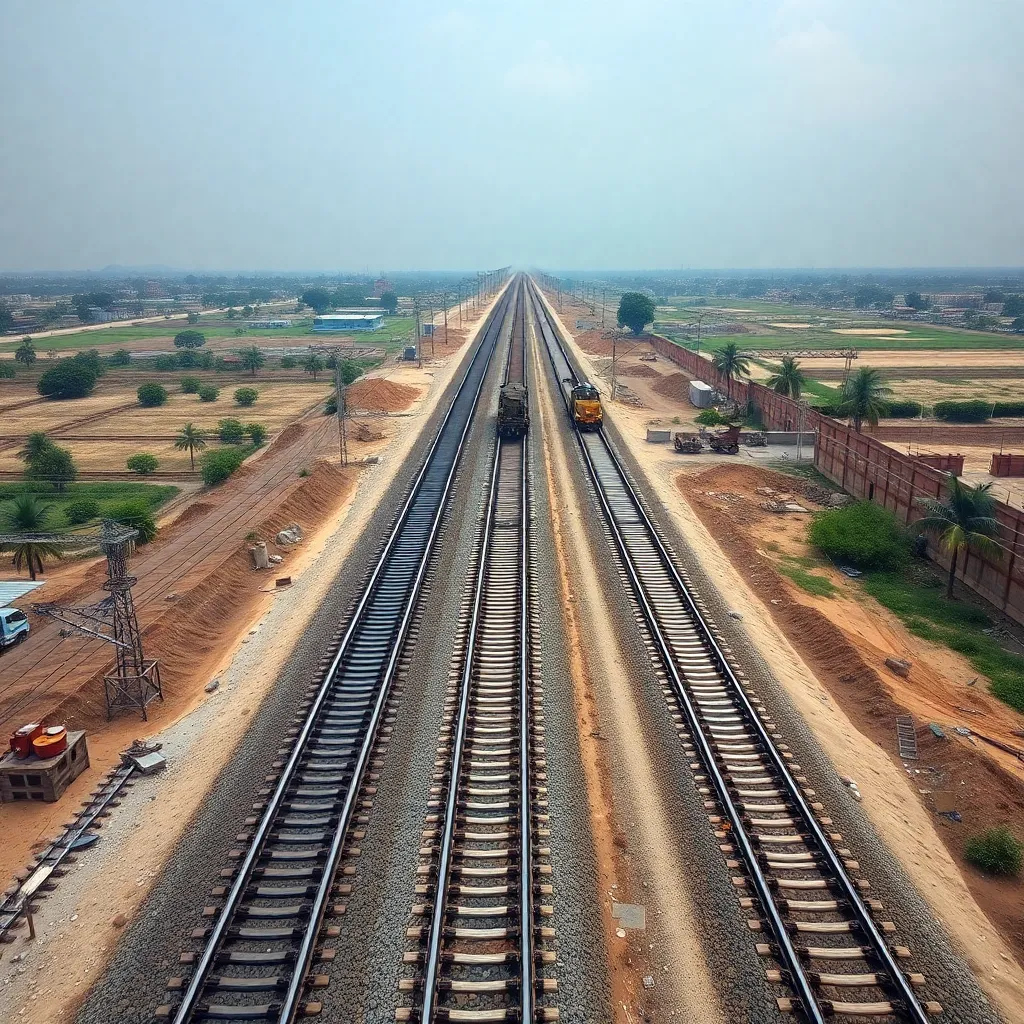
The Union Cabinet approved major railway multitracking projects covering 19 districts to expand network capacity and reduce congestion on busy routes. These projects aim to build additional railway lines on existing corridors, enhancing freight and passenger transportation efficiency. Key projects include track expansions in Madhya Pradesh, Rajasthan, Uttar Pradesh, Karnataka, Andhra Pradesh, and Telangana, collectively adding approximately 901 km to the Indian Railways network. Scheduled for completion by 2030-31, the initiatives will improve connectivity for over 4,000 villages, boost operational efficiency, and support PM Modi’s vision of a developed and self-reliant India.
On this page
Key Facts
- The Union Cabinet approved three major railway multitracking projects in May 2026.
- These projects span 19 districts across Madhya Pradesh, Rajasthan, Uttar Pradesh, Karnataka, Andhra Pradesh, and Telangana.
- They will add approximately 901 kilometers to the Indian Railways network.
- The total estimated cost is about Rs 23,437 crore.
- Projects include the Nagda-Mathura 3rd and 4th Lines, Guntakal-Wadi 3rd and 4th Lines, and Burhwal-Sitapur 3rd and 4th Lines.
- These enhancements will improve connectivity to around 4,161 villages with an approximate population of 83 lakh.
- The projects are scheduled for completion by 2030-31 under the PM-Gati Shakti National Master Plan.
Background & Context
Railway multitracking involves adding additional railway lines to existing routes to increase capacity, ease congestion, and improve operational efficiency by enabling segregation of fast and slow train traffic. Indian Railways, one of the world’s largest rail networks under single administration, uses multitracking primarily on saturated routes facing heavy traffic and operational constraints. The approved projects form part of the PM-Gati Shakti National Master Plan, which focuses on multi-modal connectivity and integrated infrastructure development across India.
Why This Matters for Exams / Exam Relevance
These projects provide insight into India’s strategies to upgrade critical infrastructure to meet growing transportation demands, especially in freight and passenger sectors. They illustrate the government’s approach to large-scale infrastructure development and budget allocation processes through the Union Cabinet. The details of districts covered, line expansions, associated costs, and population benefiting are pertinent for questions related to economic development, transportation infrastructure, public policy, and governance. Furthermore, understanding the PM-Gati Shakti Plan contextualizes India’s integrated planning efforts for infrastructure augmentation.
Points to Remember
- Multitracking adds one or more railway lines on existing routes to increase capacity and train frequency.
- The recent Cabinet approval covers three projects adding about 901 km across 19 districts in six states.
- Key route expansions include Nagda-Mathura (3rd & 4th line), Guntakal-Wadi (3rd & 4th line), and Burhwal-Sitapur (3rd & 4th line).
- Estimated cost of these projects is approximately Rs 23,437 crore.
- Enhanced connectivity is expected to reach around 4,161 villages with a combined population of about 83 lakh.
- The projects target completion by 2030-31 and align with the PM-Gati Shakti National Master Plan.
Sources & Further Reading
| Document / Website | Link |
|---|---|
| Cabinet approves three multitracking projects covering 19 districts across states - Hindustan Times | Open Cabinet approves three multitracking projects covering 19 districts across states - Hindustan Times ↗www.hindustantimes.com |
| Cabinet Approves Railway Multitracking Projects - GKToday | Open Cabinet Approves Railway Multitracking Projects - GKToday ↗www.gktoday.in |
| Rs 9,072 crore rail boost: Union Cabinet clears three multitracking projects across four states - The Economic Times | Open Rs 9,072 crore rail boost: Union Cabinet clears three multitracking projects across four states - The Economic Times ↗economictimes.indiatimes.com |
| Cabinet approves four multitracking projects to enhance Indian Railways capacity - DD News | Open Cabinet approves four multitracking projects to enhance Indian Railways capacity - DD News ↗ddnews.gov.in |