
US Expands Production of Patriot and THAAD Interceptors to Boost Missile Defense
On 3 August 2026, the United States Department of Defense signed framework agreements with Northrop Grumman and Lockheed Martin aimed at significantly increasing production capacity for Patriot Advanced Capability-3 Missile Segment Enhancement (PAC-3 MSE) and Terminal High Altitude Area Defense (THAAD) interceptors. The production increases are intended to replenish depleted missile inventories following recent conflicts involving Iran and Ukraine. The total procurement goal is nearly 14,000 interceptors, highlighting the US’s strategic push to strengthen missile defense capabilities.
On this page
Key Facts
- On 3 August 2026, the US Department of Defense entered framework agreements with Northrop Grumman and Lockheed Martin to expand production of missile interceptors.
- The agreements aim to triple the production capacity of Patriot Advanced Capability-3 (PAC-3) Missile Segment Enhancement (MSE) interceptors and quadruple production capacity of THAAD interceptors.
- Patriot is a US surface-to-air missile system designed primarily for air and missile defense; PAC-3 MSE is an upgraded Patriot interceptor produced by Lockheed Martin.
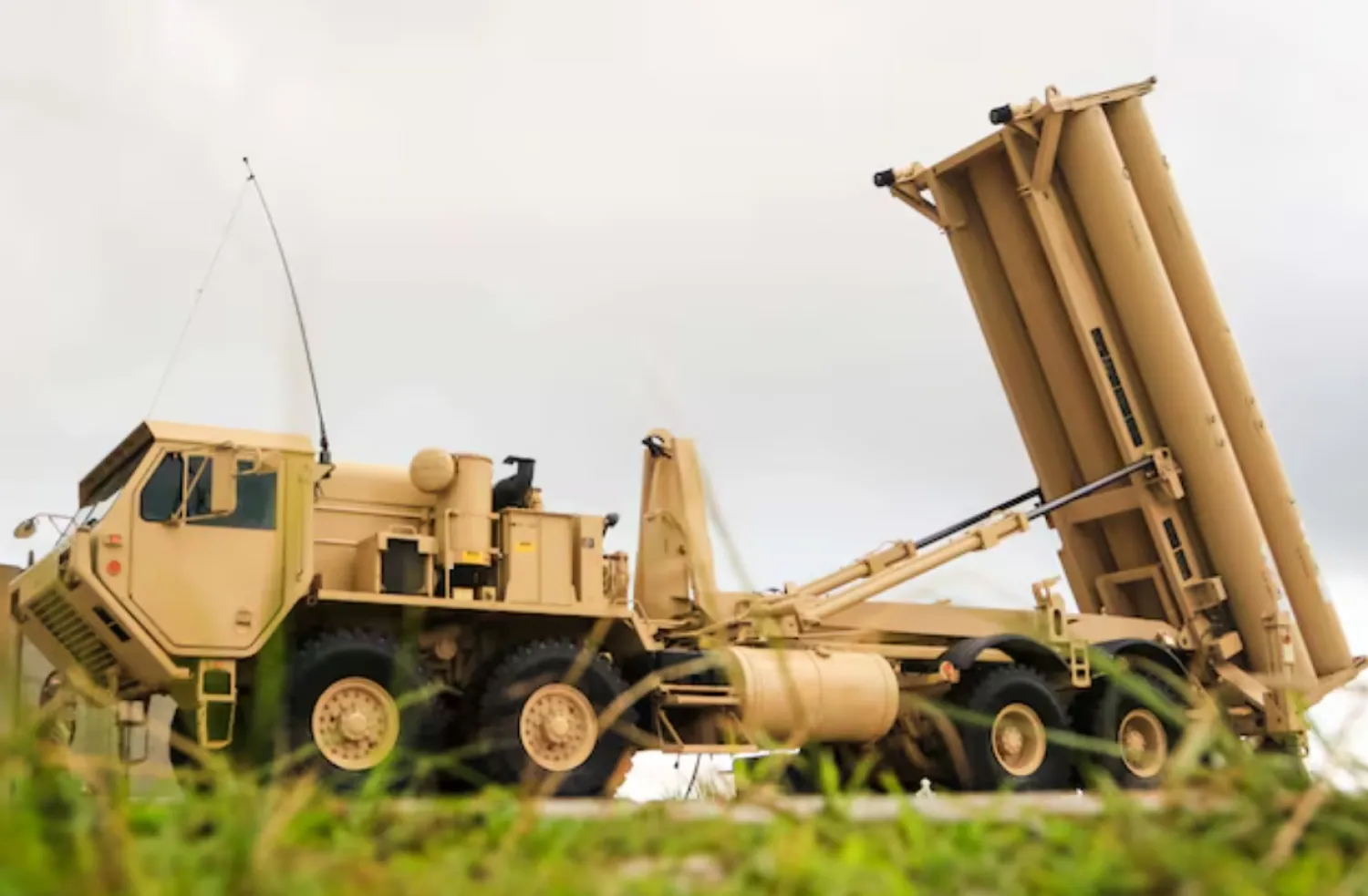
- THAAD (Terminal High Altitude Area Defense) is a US missile defense system developed to intercept short-, medium-, and intermediate-range ballistic missiles during their terminal flight phase.
- Northrop Grumman’s contracts under these agreements exceed $3 billion, comprising over $2 billion for Patriot components and $1 billion for THAAD components.
- Northrop Grumman will act as a second source for Patriot solid rocket motors and will expand manufacturing of THAAD structural parts including mid-body shells, muzzle covers, and rail car assemblies.
- The long-term procurement target is nearly 14,000 Patriot and THAAD interceptors combined.
- In July 2026, the US Army awarded Lockheed Martin a contract potentially worth up to $58.6 billion for Patriot interceptor missiles for fiscal years 2026 through 2032.
- Lockheed Martin broke ground on a Munitions Acceleration Center in Camden, Arkansas, in January 2026 to support production of THAAD, PAC-3, and other munitions.
- Ukraine and Raytheon agreed on a joint production arrangement for Patriot missiles on 23 July 2026.
- “Patriot” stands for "Phased Array Tracking Radar to Intercept on Target"; “THAAD” stands for "Terminal High Altitude Area Defense".
Background & Context
The Patriot missile system is a well-established US ground-based air defense system designed for intercepting aircraft and incoming missiles. Its PAC-3 MSE variant is an enhanced interceptor with improved range and lethality, primarily manufactured by Lockheed Martin.
THAAD is another US missile defense system aimed at intercepting ballistic missiles at high altitudes during the terminal phase of their trajectory. Both Patriot and THAAD systems form integral components of US and allied missile defense networks.
The impetus for accelerating production follows significant consumption of US missile interceptor inventories due to conflicts involving Iran and Ukraine. It is estimated that about two-thirds of pre-conflict Patriot interceptors and roughly half of THAAD interceptors have been expended, prompting a need to rearm and augment missile defense capabilities.
The partnerships with Northrop Grumman and Lockheed Martin, coupled with large-scale contracts and infrastructure investments like the Munitions Acceleration Center, showcase the strategic priority placed on missile defense readiness in the face of emerging global security threats.
Why This Matters for Exams / Exam Relevance
This development is significant for students and aspirants preparing for competitive exams covering international relations, defense technology, and US foreign and military policy. It provides contemporary context on:
- Missile defense technologies (Patriot PAC-3 MSE and THAAD systems).
- Role of key US defense contractors (Lockheed Martin and Northrop Grumman) in strategic production and procurement.
- Geopolitical influences affecting defense production—specifically, impacts of conflicts involving Iran and Ukraine on US missile inventories and military strategy.
- Large-scale defense contracts and industrial base expansion initiatives in the US.
Understanding timelines, system capabilities, contract values, and industry roles can help answer questions related to contemporary defense affairs and international security challenges.
Points to Remember
- Agreement Date: 3 August 2026
- Key US Defense Contractors: Lockheed Martin (primary Patriot PAC-3 MSE producer), Northrop Grumman (second source for Patriot solid rocket motors and THAAD structural components)
- Missile Systems: Patriot (PAC-3 MSE upgrade) and THAAD
- Production Goals: Triple PAC-3 MSE production; quadruple THAAD production
- Contract Values: Northrop Grumman agreements over $3 billion; Lockheed Martin contract up to $58.6 billion (Patriot interceptors, 2026-2032)
- Infrastructure Investment: Lockheed Martin's Munitions Acceleration Center in Camden, Arkansas (started January 2026)
- Geopolitical Context: Inventory depletion due to Iran and Ukraine conflicts
- Additional Partnerships: Ukraine and Raytheon’s joint Patriot missile production agreement (23 July 2026)
- System Acronyms: “Patriot” stands for "Phased Array Tracking Radar to Intercept on Target"; “THAAD” stands for "Terminal High Altitude Area Defense"
Sources & Further Reading
| Document / Website | Link |
|---|---|
| US boosts Patriot and THAAD interceptor production - GKToday | Open US boosts Patriot and THAAD interceptor production - GKToday ↗www.gktoday.in |
| THAAD Missile Defense System - Missile Threat | Open THAAD Missile Defense System - Missile Threat ↗missilethreat.csis.org |
| Patriot Missile System - US Army Fact File | Open Patriot Missile System - US Army Fact File ↗www.army.mil |