
Lok Sabha Article 81: Composition and Seat Allocation
Article 81 sets out the composition of the Lok Sabha and the principles of representation. Learn how seat allocation differs from delimitation and how Article 82 relates to it.
On this page
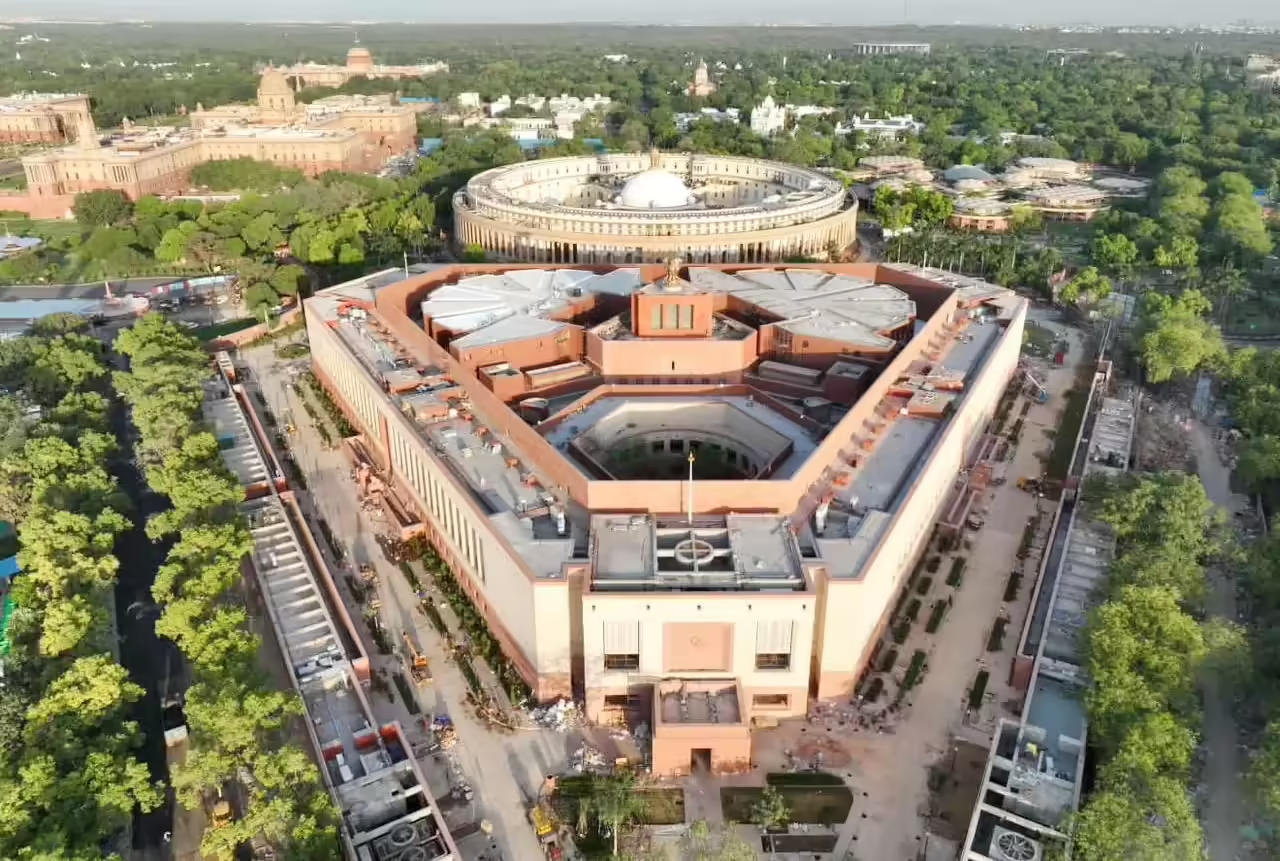
What does Article 81 cover?
Article 81 deals with the composition of the Lok Sabha, also called the House of the People. The constitutional text linked below provides for up to 530 representatives of States and up to 20 representatives of Union Territories. These are constitutional limits, not a statement of the number of currently elected members.
Lok Sabha seat allocation under Article 81
State representatives are chosen by direct election from territorial constituencies. Article 81 seeks, as far as practicable, a consistent relationship between population and representation. Union Territory representation follows the manner prescribed by Parliament.
Seat allocation and delimitation are different
Seat allocation concerns how many seats a State receives. Delimitation concerns constituency boundaries within a State. In the cited constitutional text, the transitional rule uses 1971 population figures for allocation between States and 2001 figures for division into constituencies, until publication of the relevant figures from the first census taken after 2026. The year 2026 alone does not automatically redraw constituencies.
Article 81 and Article 82
Article 81 sets out composition and representation. Article 82 addresses readjustment after a census through the authority and procedure Parliament provides by law. Read the two provisions together when revising parliamentary representation.
Points to remember for exams
- Lok Sabha is the House of the People.
- Distinguish a constitutional ceiling from the current strength of the House.
- Do not confuse allocation of seats between States with constituency boundaries within them.
- Check the official constitutional text and subsequent amendments for questions about current rules.
Continue your preparation
Sources & Further Reading
| Document / Website | Link |
|---|---|
| Article 81 - Composition of the House of the People (Lok Sabha) | Open Article 81 - Composition of the House of the People (Lok Sabha) ↗www.gktoday.in |
| Constitution of India: Articles 81 and 82 (Legislative Department) | Open Constitution of India: Articles 81 and 82 (Legislative Department) ↗www.legislative.gov.in |