
How to Analyse Mock Test Mistakes: A Simple Error-Log Method for Competitive Exam Revision
Analyse a mock by sorting every question into four buckets, logging each wrong or panic-skipped question with its cause and a one-line fix, then auditing your time. Then turn the recurring patterns into a short plan for next week.
On this page
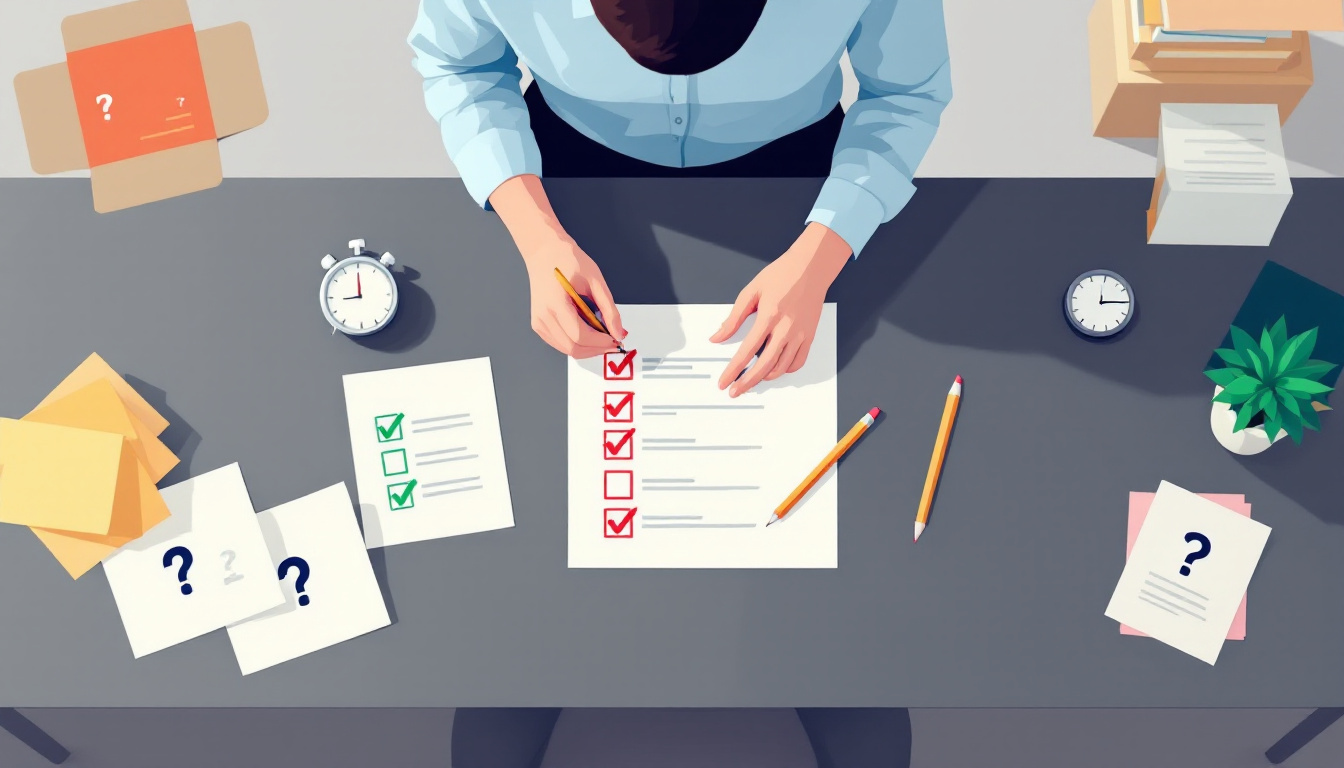
To analyse a mock test, sort every question by outcome, write each lost question into one running error log with a single cause and a one-line fix, check where your time went, and pick three or four fixes for the coming week. Do this on the day of the mock, while you still remember why you chose each answer.
The method below is a general study technique, not an official rule of any exam body. It is adapted from editorial guidance published by a JEE Main and NEET preparation platform. The evidence does not show it was tested on SSC, banking, railway, state PSC or other exams, and it does not describe their marking schemes. Treat it as a flexible routine and check each exam's official notification for rules on marking, sections and timing.
Why checking the score is not enough
A score tells you roughly where you stand. It does not tell you why marks were lost. Two habits waste most of a mock:
- Looking at the score and moving on.
- Reading every solution passively, including questions you already got right.
Both treat all wrong answers as one problem. A topic you never learned needs a different remedy from a question you misread in a hurry. Sort the losses by cause first, because the cause decides the fix.
Raw scores also move with paper difficulty, so one up-or-down swing says little. The more useful signal is the pattern underneath: which topics and which kinds of slips keep returning.
The three-pass post-mortem
The source suggests budgeting about ninety minutes for a full-length paper, split into three passes that each ask one question. The time is a working estimate. A clean paper may need less, and a messy one with many half-attempts may need more. The three-pass structure matters more than the clock.
Pass 1: Sort every question into one of four buckets
This pass is only about getting an honest picture. Do not relearn anything yet.
- Correct and confident: Leave these alone.
- Correct but lucky or slow: You guessed, or it took far too long. Flag these as near-misses, because the score sheet hides them.
- Wrong: Every question where you lost marks.
- Skipped: Decide whether it was a sensible skip (genuinely too hard or too long) or a panic skip (you could have attempted it).
Pass 2: Build the error log
Take only the wrong and panic-skipped questions and write one line for each in a single running log. Record four things: the topic, the correct approach, the specific reason you went wrong, and a one-line fix. Keep it in one notebook or document and do not restart it for each mock. Its value comes from repetition, because after a few mocks the same topics and the same kinds of slip start to recur.
Here is an illustrative layout. These entries are invented examples, not drawn from any exam paper.
| Topic | Correct approach | Why I lost the mark | Fix |
|---|---|---|---|
| Percentage and ratio problems | Convert to a common base before comparing | Concept gap: never practised base-conversion questions | Revise the method, then solve 10 fresh questions this week |
| Reading comprehension | Answer what the passage supports, not what seems true | Question misread: missed the word "except" | Underline the ask before looking at the options |
| Data interpretation | Estimate first, then calculate only if needed | Time pressure: spent too long on one set | Set a fixed time limit per set and move on when it ends |
Pass 3: Audit your time
This pass ignores right and wrong and asks only where the time went. Use your platform's per-question or per-section timing if it has one. Otherwise estimate from memory while it is fresh. Look for two leaks:
- Time sinks: A single question that took far longer than it deserved and may have cost you easier ones later. Decide in advance when you will stop and move on.
- Section imbalance: Compare the time each section took with the marks it carries. If most of your time went to the section where you scored worst, your time is flowing to your weakness instead of protecting your strengths.
You can also use mocks to test your attempt order. If you keep running out of time before a strong section, try attempting it earlier in the next mock and compare. Check first that the exam's rules allow free movement between sections, since some exams restrict this.
The four causes of a wrong answer, and what fixes each
When you fill the "why" column, force the reason into one of four causes. Each one calls for a different remedy.
| Cause | What it looks like | Fix | Where to fix it |
|---|---|---|---|
| Concept gap | You did not know the idea or standard method | Go back to your textbook or notes, relearn it, then practise fresh questions on that topic | In study, before the next mock |
| Process slip | You understood it but made a sign, arithmetic, unit or skipped-step error | Write out steps you usually do mentally and watch for your most frequent slip | Mostly during the next mock |
| Time pressure | You could have solved it with more time, or never reached it | Practise time-boxing and deciding quickly what to skip | During the next mock |
| Question misread | You solved something other than what was asked | Re-read or underline the exact ask before committing | During the next mock |
Be honest here. Calling a concept gap a "silly mistake" feels less threatening, but it means you apply the wrong remedy and keep losing the same marks. Taking more mocks will not fix a concept gap. It needs study.
Turn the log into next week's plan
An error log only helps if it changes what you do next. Keep the plan short, because a twenty-item list tends to get abandoned. Choose the three or four issues that cost the most marks and give each a specific action:
- Concept gaps: Schedule a revision block this week, followed by targeted practice on that exact topic.
- Process slips: Turn your most frequent slip into a one-line rule to read before the next mock, such as "check the sign" or "write the unit".
- Time and misread errors: Set a move-on limit per question and an underline-the-ask habit, and practise both in the next mock.
Skipped questions and negative marking
The source notes that JEE Main and NEET have negative marking, so a blind wrong guess costs the mark you forgo and the penalty on top. That is why it separates smart skips from panic skips. Do not assume the same penalty applies elsewhere. Marking schemes differ between exams and can change, so check the current official notification for your exam before deciding how aggressively to guess.
Track patterns across mocks, not just scores
One mock is a snapshot, and several mocks show a trend. Reread your log every few mocks and look for two things:
- Topics that keep reappearing. A topic that shows up in three consecutive logs is an unaddressed weakness and needs a dedicated study block, not another round of general revision.
- Error types that return after you thought you had fixed them.
Also watch whether marks lost to avoidable errors (process slips, misreads, panic skips) are shrinking. That can be a steadier signal than the headline score, which swings with paper difficulty. Consider an error fixed only when it stops appearing across several mocks, not when you first write a fix beside it. Reviewing the log before each new mock helps you apply recent fixes under exam conditions.
Quick checklist
- Start the same day as the mock.
- Sort every question into the four outcome buckets and flag lucky correct answers.
- Log each wrong or panic-skipped question with topic, correct approach, one cause and a one-line fix.
- Look for time sinks and sections that took more time than their marks justified.
- Pick three or four fixes and schedule them.
- Reread the log before the next mock.
Frequently asked questions
How long should mock analysis take?
The source suggests about ninety minutes for a full-length paper as a working budget. Spend less on a clean paper and more on a messy one. Following the three passes matters more than hitting the exact time.
Should I worry if one mock score drops?
Not necessarily, because paper difficulty varies. Check whether avoidable errors are falling and whether the same topics keep appearing in your log.
Does this method apply to every exam?
The error-log idea is general, but the supporting guidance is written for JEE Main and NEET. It does not give exam-specific rules for other tests, so check official notices for marking, timing and section rules.
Sources & Further Reading
| Document / Website | Link |
|---|---|
| How to Analyse a Mock Test — The Post-Mortem That Moves Rank | exam.fit | Open How to Analyse a Mock Test — The Post-Mortem That Moves Rank | exam.fit ↗exam.fit |
| Reproductions supplied by EDRS are the best that can be made | Open Reproductions supplied by EDRS are the best that can be made ↗files.eric.ed.gov |
| Jee Main Exam Pattern | Open Jee Main Exam Pattern ↗byjus.com |