
18 Monuments Delisted from Centrally Protected Sites List by ASI in 2024
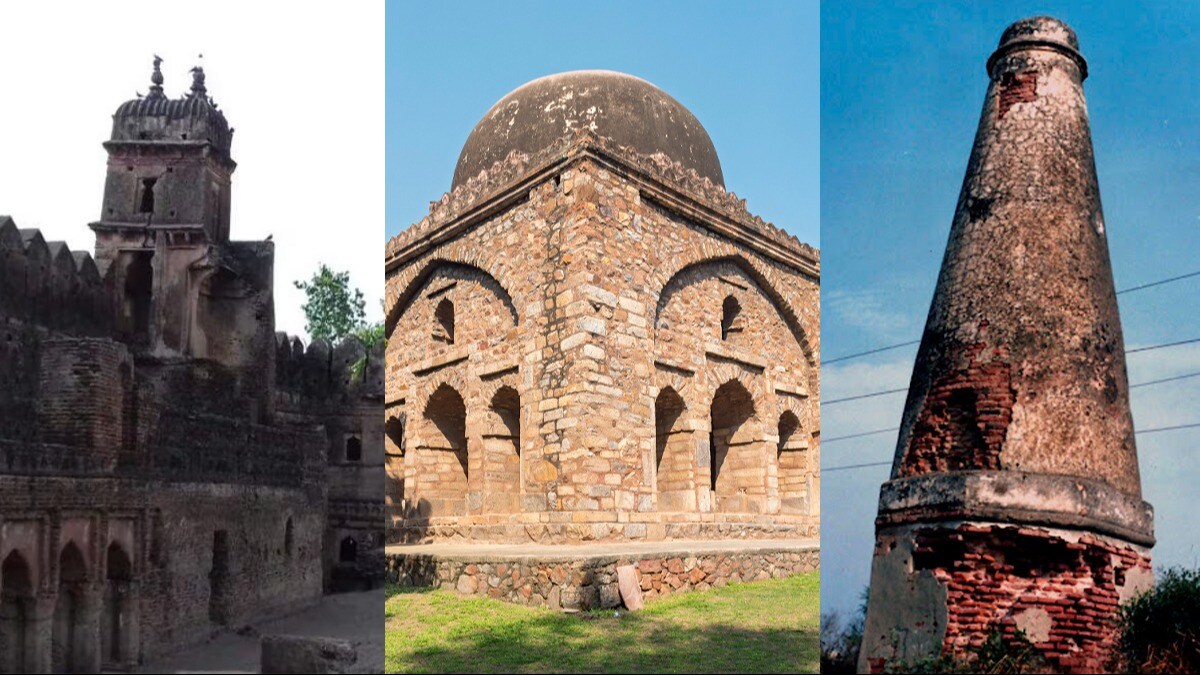
In March 2024, the Government of India officially delisted 18 monuments from the list of centrally protected sites under the Ancient Monuments and Archaeological Sites and Remains (AMASR) Act, 1958. Following this, the Archaeological Survey of India (ASI) now maintains 3,688 centrally protected monuments and sites. Notable delisted monuments include the Nicholson Statue in Delhi and Kos Minars in Haryana, among others. This delisting is carried out under Section 35 of the AMASR Act, which permits removal of monuments that cease to be of national importance.
On this page
Key Facts
- On 8 March 2024, the Central Government initiated the delisting of 18 monuments from the list of centrally protected sites under the AMASR Act, 1958 via a gazette notification.
- The Archaeological Survey of India (ASI), functioning under the Ministry of Culture, now oversees and maintains 3,688 centrally protected monuments and sites across India after these delistings.
- Section 35 of the AMASR Act, 1958 provides the legal mechanism for delisting monuments that no longer hold national importance.
- Examples of delisted monuments include the Nicholson Statue and Bara Khamba Cemetery in Delhi; Kos Minar No. 13 in Gurugram; Kos Minar in Shahabad, Haryana; Gunner Burkill’s tomb in Jhansi; Telia Nala Buddhist ruins in Varanasi; and a historically significant banyan grove in Ghazipur, Uttar Pradesh.
- Delisting ends the statutory responsibility of ASI for the conservation, protection, and maintenance of these sites.
- Up to June 2026, India has also retrieved 662 historical artefacts from foreign countries, including 589 from the United States, though this is somewhat tangential to the delimitation issue.
Background & Context
The Ancient Monuments and Archaeological Sites and Remains (AMASR) Act, 1958 is the primary legislation governing the protection of monuments and archaeological sites of national importance in India. The Archaeological Survey of India (ASI), under the Ministry of Culture, is tasked with their conservation and upkeep. According to Section 35 of the AMASR Act, monuments that cease to be of national importance can be officially removed (delisted) from this protected category. This ensures the list reflects current assessments of national heritage significance, allowing resource prioritization and updated heritage management.
Why This Matters for Exams
The delisting of monuments under the AMASR Act is an important example of heritage management and legal procedures in India. Competitive exams may test candidates on heritage laws, functions of the ASI, and recent developments in cultural heritage protection. Understanding the AMASR Act, particularly Section 35, the roles of the Ministry of Culture and the ASI, and notable examples of monuments (like the Nicholson Statue and Kos Minars) is essential for exam preparation.
Points to Remember
- The ASI functions under the Ministry of Culture, India.
- The AMASR Act, 1958 governs the protection of ancient monuments and archaeological sites of national importance.
- Section 35 of the AMASR Act authorizes the delisting of monuments that are no longer nationally important.
- The Central Government delisted 18 monuments on 8 March 2024 via a gazette notification.
- After delisting, the ASI manages 3,688 centrally protected monuments and sites.
- Important delisted monuments include Nicholson Statue (Delhi), Bara Khamba Cemetery (Delhi), Kos Minar No. 13 (Gurugram), Gunner Burkill’s tomb (Jhansi), Telia Nala Buddhist ruins (Varanasi), and a significant banyan grove (Ghazipur, Uttar Pradesh).
Sources & Further Reading
| Document / Website | Link |
|---|---|
| 18 Monuments Delisted from Protected Sites List - GKToday | Open 18 Monuments Delisted from Protected Sites List - GKToday ↗www.gktoday.in |
| Ancient Monuments and Archaeological Sites and Remains Act, 1958 | Open Ancient Monuments and Archaeological Sites and Remains Act, 1958 ↗asi.nic.in |
| Role of Archaeological Survey of India | Open Role of Archaeological Survey of India ↗asi.nic.in |