
Discovery of Celtic Princely Grave near Bad Camberg, Germany
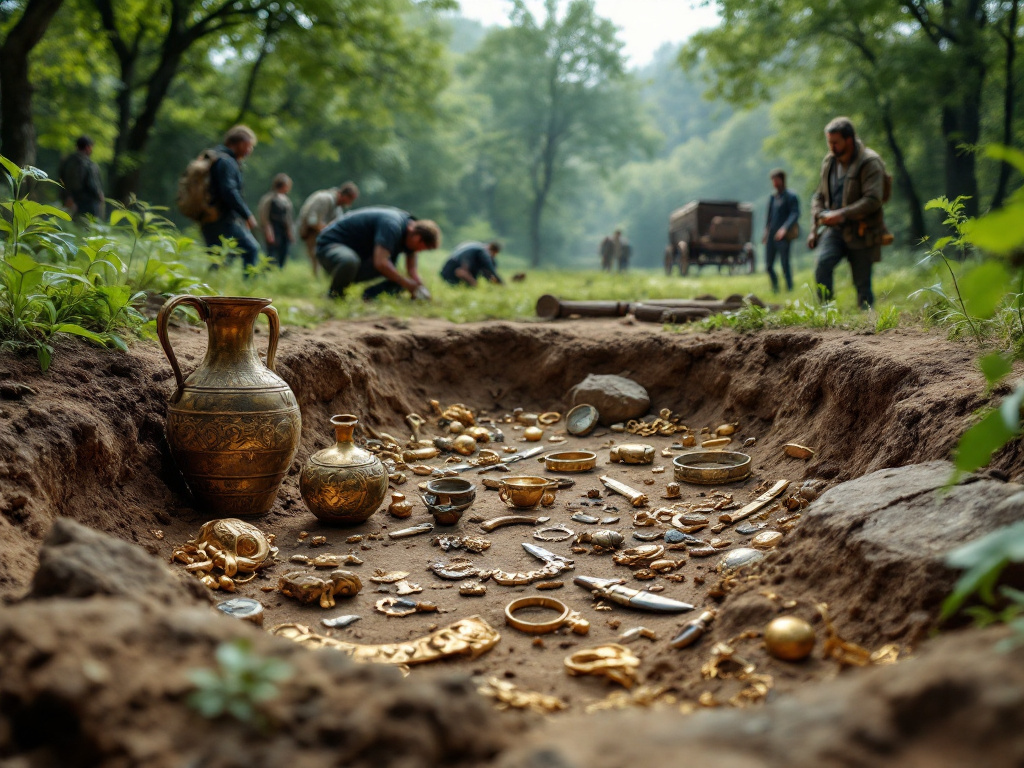
Archaeologists uncovered a rare Celtic princely burial near Bad Camberg, Hesse, Germany, dating to the early La Tène period around the mid-first millennium BCE. The grave contained elite artifacts including gold jewelry, weapon fragments, and a bronze jug imported from ancient Etruria (modern Tuscany, Italy). Notably, traces of a two-wheeled wagon were found, a rare feature in Hesse Celtic burials. This find sheds light on the presence of local Celtic elites in the Taunus region and offers insights into Iron Age European society.
On this page
Key Facts
- Location: Near Bad Camberg, Hesse, Germany.
- Dating: Early La Tène period, approximately mid-first millennium BCE.
- Grave goods: Several gold rings (one weighing about 5 ounces), weapon fragments including iron spearhead remains, a bronze jug imported from Etruria (central Italy), and metal components of a two-wheeled wagon (wheel hub fittings, axle caps, and iron tire rims).
- Preservation: Wooden parts of the wagon had decayed; metal fittings survived. Sections of burial soil were removed as intact blocks for laboratory X-ray and CT scan investigations revealing further hidden objects.
- Significance: One of very few Celtic wagon burials found in Hesse, demonstrating the existence of a local Celtic elite in the Taunus region.
- Discovery context: Found during construction-related excavation work for a solar park, marking a first known Celtic princely grave discovery during such activity in Hesse.
Background & Context
The La Tène period (circa 450–50 BCE) represents the later Iron Age phase of Celtic Europe, characterized by distinctive material culture named after the Swiss La Tène site. Princely graves are elite burials associated with high-status individuals, often containing luxurious items such as imported vessels, gold ornaments, weapons, and occasionally wagons.
Celtic society was organized into decentralized tribal groups, united linguistically and culturally but without overarching rulers. Druids held religious and judicial authority within tribes. The inclusion of wagons in burials is a distinguishing feature of some elite graves and may reflect social status, ceremonial functions, or beliefs concerning the afterlife.
Wagons found in such burials often show signs of wear from use in life, and their presence is linked to ceremonial grandeur rather than practical transport of the deceased. Both male and female burials have contained wagons, indicating their role transcended gender.
Why This Matters for Exams / Exam Relevance
This discovery contributes important knowledge related to Iron Age European archaeology, Celtic cultures, and social hierarchies. Competitive exams on ancient history often include topics on Celtic society, La Tène culture, and burial practices. Recognizing the features of princely graves—including wagon burials, imported luxurious items like Etruscan bronze jugs, and gold jewelry—is valuable for understanding ancient European cultural developments and material culture.
Points to Remember
- The Bad Camberg grave dates to the early La Tène period, mid-first millennium BCE.
- Contains rare Celtic wagon burial evidence in Hesse, a region with only about three known such burials.
- Grave goods feature several gold rings, weapon fragments, and a bronze jug imported from Etruria (ancient Italy).
- Wagon remains are primarily metal fittings; the wooden parts have decayed.
- The buried individual's high status is shown by the quality and quantity of grave goods.
- The find was uncovered during solar park construction, showcasing how modern development can reveal significant archaeological sites.
Sources & Further Reading
| Document / Website | Link |
|---|---|
| Celtic Princes Grave found near Bad Camberg | Open Celtic Princes Grave found near Bad Camberg ↗www.gktoday.in |
| Archaeological sensation: Iron Age Celtic grave discovered in Hesse | Open Archaeological sensation: Iron Age Celtic grave discovered in Hesse ↗www.euronews.com |
| Iron Age "Celts": Wagons | Open Iron Age "Celts": Wagons ↗www.laits.utexas.edu |
| A Unique Symbol Of Power (?) The wooden staves from princely grave 1, barrow 1, from the Glauberg in Hesse, the attempt of an interpretation. | Open A Unique Symbol Of Power (?) The wooden staves from princely grave 1, barrow 1, from the Glauberg in Hesse, the attempt of an interpretation. ↗www.academia.edu |