
China Selects Pakistani Astronauts for Tiangong Space Station Mission
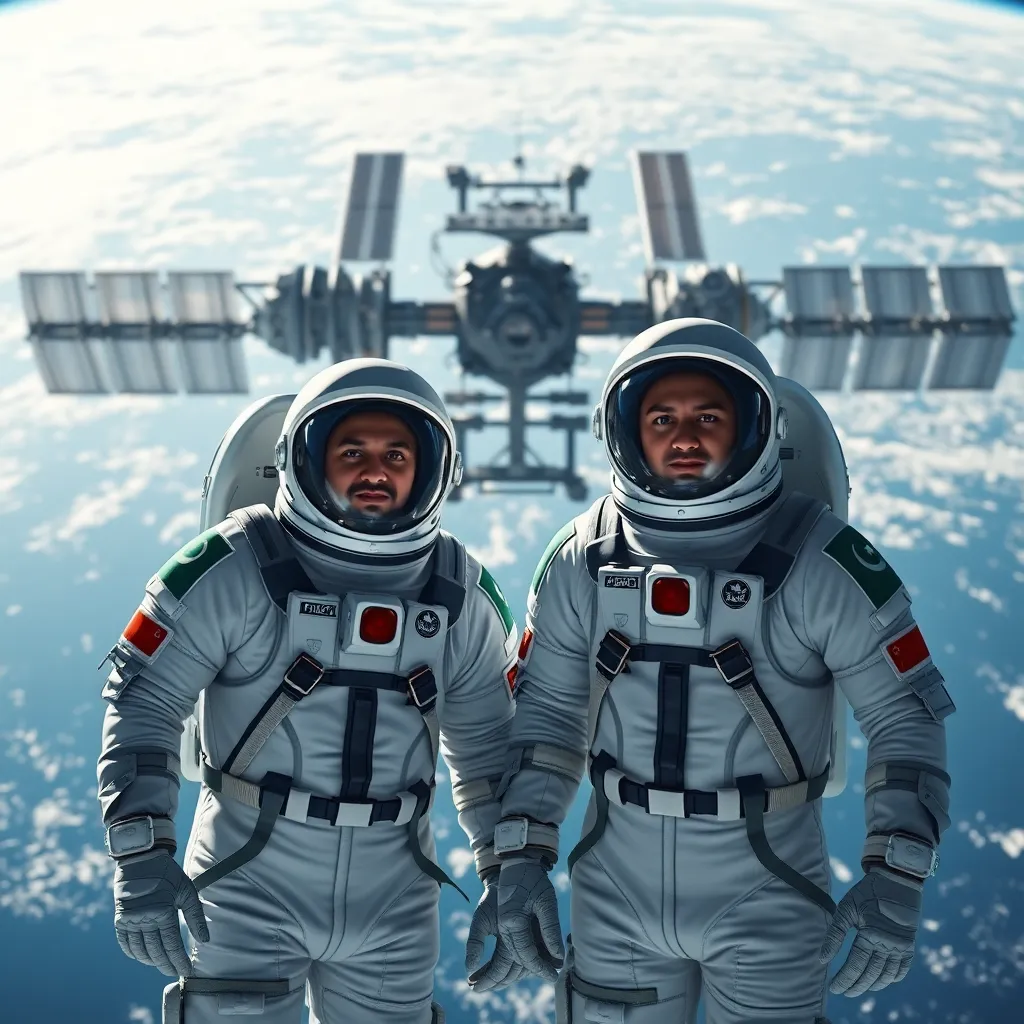
In a historic development, China has selected two Pakistani astronauts, Muhammad Zeeshan Ali and Khurram Daud, as candidates to undergo advanced training for a mission to its Tiangong space station. This marks the first time China is training foreign astronauts for its manned space program. After completing rigorous training, one candidate will be selected as a payload specialist for a short-duration mission aboard Tiangong, potentially becoming the first foreign astronaut on the Chinese space station and the first Pakistani to enter Earth’s orbit. This initiative follows a 2025 bilateral cooperation agreement between the China Manned Space Agency and Pakistan’s SUPARCO, symbolizing growing technological collaboration and international participation in China's expanding space efforts.
On this page
Key Facts
- Two Pakistani astronauts selected: Muhammad Zeeshan Ali and Khurram Daud.
- One will be chosen as payload specialist for a short-duration mission to China's Tiangong space station.
- Astronaut training is being conducted in China under the China Manned Space Agency (CMSA).
- A bilateral cooperation agreement was signed in February 2025 between CMSA and Pakistan’s Space and Upper Atmosphere Research Commission (SUPARCO).
- Tiangong is China's modular, permanently crewed space station operational since 2022.
- This mission would mark the first time a foreign astronaut visits Tiangong and the first Pakistani travels to orbital space.
- Payload specialists focus on conducting scientific experiments and technology testing aboard the space station.
Background & Context
China has been developing its manned space program with increasing emphasis on international collaboration. The Tiangong space station serves as the platform for such cooperation, offering opportunities for scientific and technological exchanges with partner countries. Pakistan, through its national space agency SUPARCO, has partnered with China, formalizing their collaboration with the 2025 agreement which includes astronaut selection, training, and joint missions. The selection of Pakistani astronaut candidates and their training in China exemplifies the 'all-weather strategic cooperative partnership' between the two countries, extending beyond traditional sectors into space technology.
Why This Matters for Exams / Exam Relevance
This event is significant for aspirants preparing for exams covering current affairs, international relations, and science and technology. It highlights China's efforts to open its space program to international participants, Pakistan's ascendancy in human spaceflight, and key dates and organizational collaborations pertinent to bilateral space cooperation in South Asia. Understanding payload specialist roles, the importance of Tiangong as a strategic modular space station, and the milestones in Sino-Pak cooperation are valuable knowledge points for comprehensive exam preparation.
Points to Remember
- Names of Pakistani astronaut candidates: Muhammad Zeeshan Ali and Khurram Daud.
- Payload specialist duties encompass scientific experiments and technology demonstrations aboard the station.
- Tiangong space station modules were launched between 2021 and 2022, with permanent crewed missions ongoing.
- A formal agreement for space cooperation and astronaut training was signed in February 2025 between CMSA and SUPARCO.
- This mission marks Pakistan's first venture into human spaceflight.
- China’s manned space program is the third after Russia and the US to independently launch humans to space.
- The training and missions utilize Shenzhou spacecraft and Long March 2F rockets launched from the Jiuquan Satellite Launch Center.
Sources & Further Reading
| Document / Website | Link |
|---|---|
| China selects Pakistani astronauts for Tiangong mission | Open China selects Pakistani astronauts for Tiangong mission ↗www.gktoday.in |
| Astronaut from Pakistan will be 1st international visitor to China's Tiangong space station | Space | Open Astronaut from Pakistan will be 1st international visitor to China's Tiangong space station | Space ↗www.space.com |
| Two Pakistani astronauts to train for China's space station missions (Xinhua) | Open Two Pakistani astronauts to train for China's space station missions (Xinhua) ↗english.news.cn |
| China and Pakistan sign agreement on astronaut training for Tiangong | Open China and Pakistan sign agreement on astronaut training for Tiangong ↗independent-pakistan.com |
| Tiangong space station - Wikipedia | Open Tiangong space station - Wikipedia ↗en.wikipedia.org |
| China's space station to welcome 1st ever foreign astronaut | Open China's space station to welcome 1st ever foreign astronaut ↗www.globalsecurity.org |