
China Harvests First Batch of Rice Grown in Space
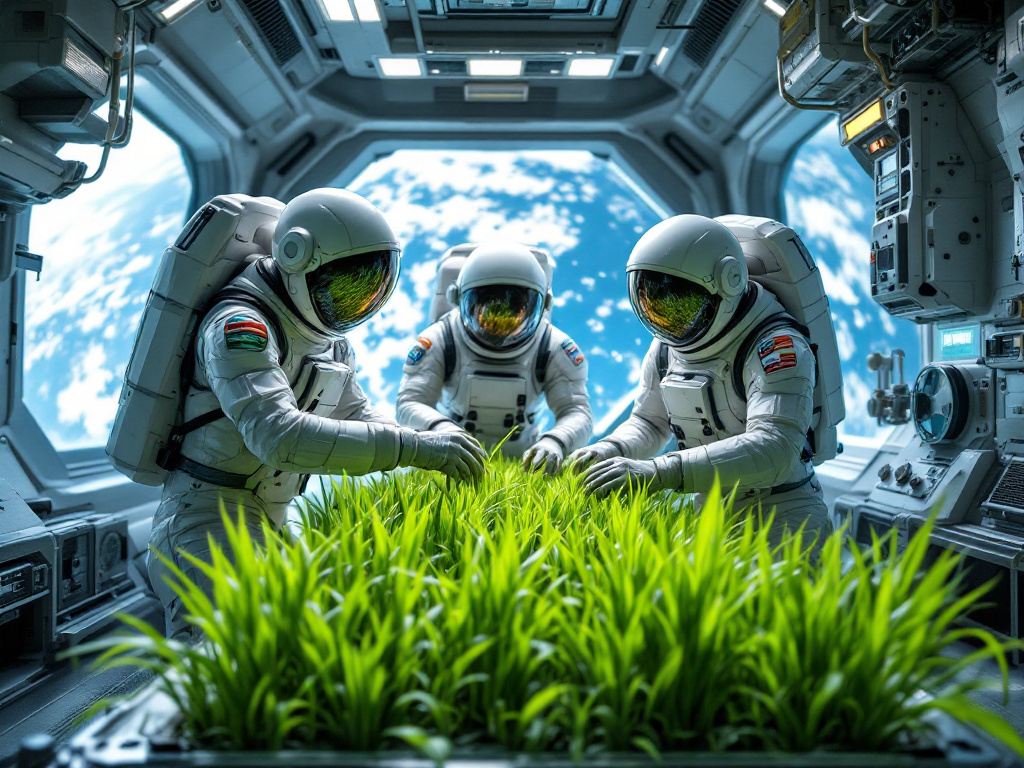
On 5 August 2026, Chinese astronauts aboard the Tiangong space station harvested the first batch of rice grown in orbit as part of the Shenzhou-23 mission launched on 24 May 2026. The experiment aims to study the effects of prolonged microgravity on two generations of japonica rice, including genetic stability, plant growth, and seed reproduction, using both conventional sexual reproduction and ratooning methods. Results will aid future space farming efforts for lunar and Mars missions.
On this page
Key Facts
- Date of harvest: 5 August 2026
- Mission: Shenzhou-23 (launched 24 May 2026)
- Space station: Tiangong (China's modular space station in low Earth orbit)
- Astronauts involved: Zhu Yangzhu, Zhang Zhiyuan, Lai Ka-ying
- Crop grown: Japonica rice, two types of seeds — ordinary seeds unexposed to space and "space lineage" seeds descended from rice grown aboard Tiangong in 2022 and bred on Earth for three generations
- Purpose of experiment: Achieve continuous cultivation of two consecutive generations of rice in microgravity orbit; study effects of prolonged microgravity on genetic stability, plant development, and seed reproduction
- Methods used: Conventional sexual reproduction (seed-to-seed) and ratooning (new shoots growing from remaining roots after harvest)
- Experiment components: Four cultivation units utilized
- Return of samples: Rice grains, stems, and leaves returned to Earth for scientific analysis
Background & Context
The Tiangong space station serves as China's platform for long-duration human spaceflight and biological experiments in low Earth orbit. Earlier, in 2022, China successfully completed a full life-cycle rice cultivation experiment in space aboard Tiangong, producing 59 space-grown seeds that were returned to Earth for study. Building on this, the Shenzhou-23 mission in 2026 attempts to cultivate two continuous generations of japonica rice to better understand plant biology and adaptation under microgravity conditions. These scientific insights are critical to developing sustainable food production systems for future deep-space missions such as those to the Moon and Mars.
Why This Matters for Exams / Exam Relevance
This development exemplifies China's expanding capabilities in space science and technology, specifically in bioregenerative life-support research. Exam questions may include key details such as the role and structure of the Tiangong space station, the Shenzhou missions, the significance of microgravity in biological experiments, the types of rice used, and agricultural techniques like ratooning in space. Such topics are important for current affairs, science, and technology sections in various competitive exams, including those in Bengali language settings.
Points to Remember
- Tiangong is China's modular space station operating in low Earth orbit, hosting long-duration human missions and biological experiments.
- The Shenzhou-23 mission launched on 24 May 2026, and the rice harvest occurred on 5 August 2026.
- Japonica rice was chosen for the experiment, using two seed types to study generational effects in space.
- The experiment utilizes two reproduction methods: seed-to-seed sexual reproduction and ratooning, where new shoots grow from remaining roots after harvest.
- Astronauts Zhu Yangzhu, Zhang Zhiyuan, and Lai Ka-ying conducted the in-orbit harvest and sample management.
- Microgravity — a condition of very low apparent weight in orbit — affects plant genetic stability, development, and reproduction, which the experiment aims to elucidate.
- These studies support the goal of developing sustainable food production technology for future Moon and Mars missions.
Sources & Further Reading
| Document / Website | Link |
|---|---|
| China Harvests First Rice Crop Grown in Space - GKToday | Open China Harvests First Rice Crop Grown in Space - GKToday ↗www.gktoday.in |
| China’s Space Station and Its Scientific Missions | Open China’s Space Station and Its Scientific Missions ↗www.space.com |
| Microgravity Effects on Plant Growth: A Review | Open Microgravity Effects on Plant Growth: A Review ↗www.sciencedirect.com |