
Shenzhou-21 Mission: Chinese Astronauts Return After Record 210-Day Spaceflight
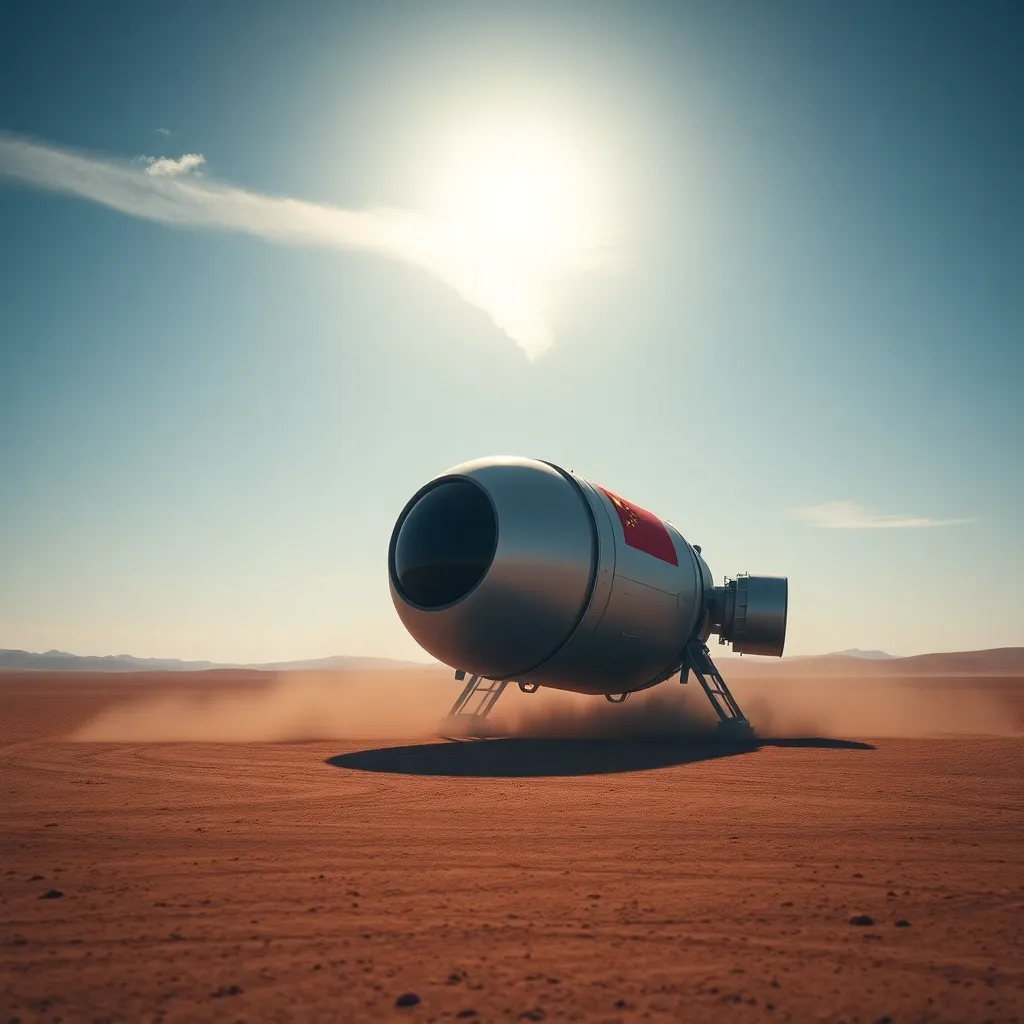
On 29 May 2026, the Shenzhou-21 crew, comprising Zhang Lu, Wu Fei, and Zhang Hongzhang, safely returned to Earth after spending a record 210 days aboard China's Tiangong space station. The astronauts conducted three spacewalks and carried out several scientific experiments in microgravity. Their return took place at the Dongfeng landing site in Inner Mongolia, northern China. This mission set a new duration record for Chinese human spaceflight, demonstrating China’s growing capabilities in long-term space habitation and research.
On this page
Key Facts
- The Shenzhou-21 mission crew consisted of three astronauts: Commander Zhang Lu, Wu Fei, and Zhang Hongzhang.
- They returned to Earth on 29 May 2026 after 210 days in orbit, setting the record for the longest Chinese crewed spaceflight to date.
- Their landing occurred at the Dongfeng landing site in the Inner Mongolia Autonomous Region of northern China.
- The return used the Shenzhou-22 spacecraft because the original Shenzhou-21 spacecraft was repurposed: the Shenzhou-21 spacecraft was used by the previous crew (Shenzhou-20) to return to Earth on 14 November 2025 after sustaining damage, likely from space debris.
- During the mission, the astronauts conducted three extravehicular activities (spacewalks) and carried out a number of scientific experiments in microgravity fundamental physics and space life sciences.
Background & Context
The Shenzhou programme is China’s human spaceflight initiative, with Tiangong as the nation’s modular space station designed to support long-duration crewed missions and scientific research. The Shenzhou-21 mission launched on 31 October 2025 to replace the Shenzhou-20 crew on Tiangong. The Shenzhou-21 crew remained aboard Tiangong until the arrival of Shenzhou-22, which served as their return vehicle after damage to the original Shenzhou-21 capsule forced a change in mission logistics. This mission is part of China's ongoing efforts to establish a sustained human presence in low Earth orbit with its own space station program.
Why This Matters for Exams
The Shenzhou-21 mission exemplifies China’s advances in human spaceflight technology and its emergence as a key player in space station operations. Its record-breaking mission duration, the management of spacecraft replacement due to debris damage, and the execution of complex extravehicular activities enhance China's reputation in space exploration. Recognizing these details is important for current affairs, science and technology, and international relations sections in competitive exams.
Points to Remember
- Shenzhou-21 set the Chinese record for the longest crewed mission at 210 days.
- Zhang Lu is notable for holding the record for the most spacewalks by a Chinese astronaut, with seven in total, including the three on this mission.
- The returning crew used Shenzhou-22 to come back to Earth due to the original capsule’s space debris damage.
- The Dongfeng landing site in Inner Mongolia was the location of their safe return on 29 May 2026.
- The Tiangong space station supports long-duration missions, scientific experiments, and has modular design for expansion.
Sources & Further Reading
| Document / Website | Link |
|---|---|
| Three Chinese astronauts return after seven-month mission | Open Three Chinese astronauts return after seven-month mission ↗www.gktoday.in |
| Shenzhou 21 – Wikipedia | Open Shenzhou 21 – Wikipedia ↗en.wikipedia.org |
| Tiangong Space Station - eoPortal | Open Tiangong Space Station - eoPortal ↗www.eoportal.org |