
Delhi Government Approves PARIVARTAN Scheme for Vehicle Renewal
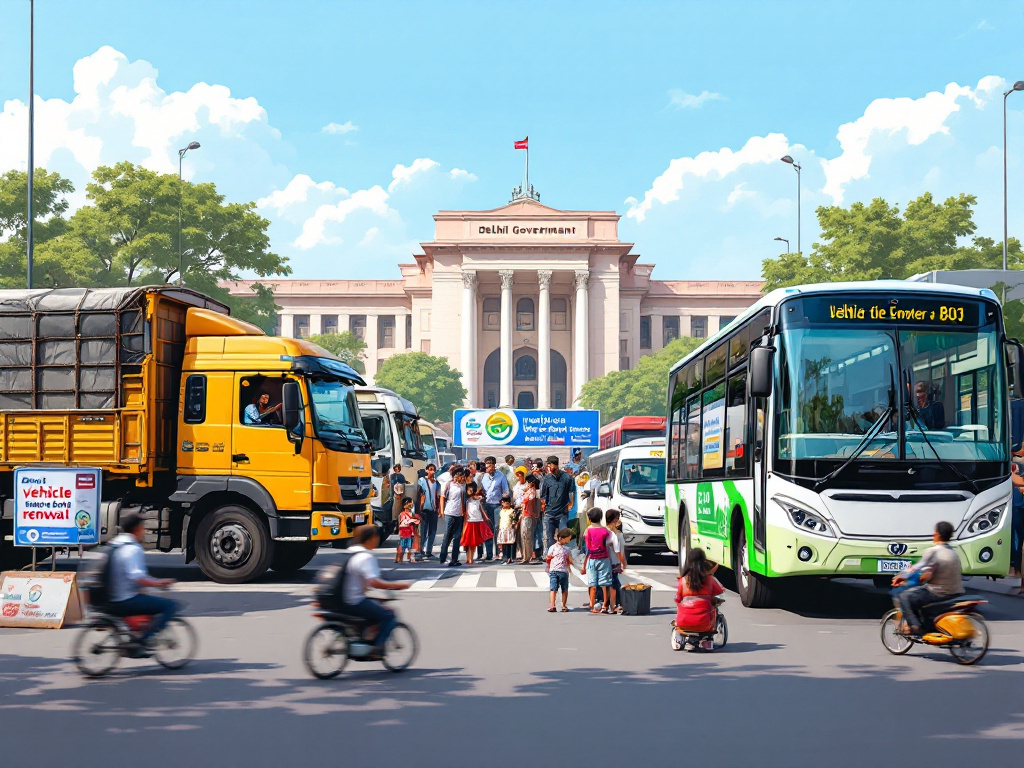
On 20 July 2026, the Delhi Government approved the PARIVARTAN scheme, a Centre-backed vehicle scrappage and replacement programme targeting commercial BS-IV or older vehicles in the Delhi-NCR region. With a total outlay of Rs. 9,585 crore, including Rs. 5,041 crore support from the Central Government, the scheme aims to reduce transport air pollution by incentivizing the replacement of old commercial vehicles with cleaner BS-VI or electric alternatives. Key incentives include a 10-year 100% motor vehicle tax exemption, registration fee waivers, interest subsidies, and OEM discounts. The scheme will benefit approximately 2.07 lakh truck and bus owners and is linked with the Delhi EV Policy 2026 and administered by the Ministry of Road Transport and Highways and National Capital Region Planning Board.
On this page
Key Facts
- Approval Dates: Delhi Government approved PARIVARTAN on 20 July 2026; Union Cabinet approval was given on 3 June 2026.
- Scheme Outlay: Total outlay is Rs. 9,585 crore, with Central Government support amounting to Rs. 5,041 crore.
- Operational Guidelines: Approved by the Ministry of Housing and Urban Affairs on 16 July 2026.
- Vehicles Covered: BS-IV or older Light Goods Vehicles, Medium Goods Vehicles, Heavy Goods Vehicles, and buses operating within the Delhi-NCR region.
- Incentives: 100% exemption on motor vehicle tax for 10 years; full waiver of registration fees; 5% interest subsidy; 8% original equipment manufacturer (OEM) discount; relief from outstanding road tax and fitness penalty liabilities.
- Beneficiaries: Approximately 2.07 lakh truck and bus owners in Delhi-NCR are expected to benefit.
- Implementation and Funding: Implemented by the Ministry of Road Transport and Highways; funded by the National Capital Region Planning Board.
- Policy Linkages: Scheme is linked with the Delhi EV Policy 2026.
Background & Context
The Delhi-NCR region suffers from severe air pollution, a substantial part of which arises from transport emissions. Bharat Stage emission standards (BS-IV and BS-VI) represent emission control norms for vehicles in India, with BS-VI being the latest and stricter standard introduced nationally. The PARIVARTAN scheme aims to accelerate renewal and incentivisation of commercial vehicle fleets by facilitating scrapping of older, more polluting vehicles and supporting the purchase of cleaner BS-VI or electric vehicles.
This initiative is a crucial part of India's broader effort to improve air quality and sustainable urban transport infrastructure, providing fiscal incentives to encourage compliance and active transition toward cleaner vehicle technologies in a major metropolitan area.
Why This Matters for Exams
Understanding PARIVARTAN is important for competitive examinations focused on environmental policies, urban development strategies, and contemporary government schemes related to pollution control. The scheme provides real-world examples of policy frameworks designed to tackle vehicular pollution at the city/region level and demonstrates coordination between central and state governments and various ministries.
Key areas of relevance include India’s emission standards regime, fiscal instruments for environmental management, and the role of regional authorities like the National Capital Region Planning Board.
Points to Remember
- Definition: PARIVARTAN stands for Programme for Accelerated Renewal and Incentivisation of Vehicle Assets for Reducing Transport Air Pollution and Network Emissions.
- Scope: Covers commercial BS-IV or older Light, Medium, Heavy Goods Vehicles, and buses in Delhi-NCR.
- Core Incentives: 10-year 100% exemption from motor vehicle tax; complete waiver of registration fees; 5% interest subsidy; and an 8% OEM discount for new vehicles purchased during the scheme.
- Administrative Structure: The Ministry of Road Transport and Highways is the implementing agency; National Capital Region Planning Board provides funding support.
- Environmental Significance: Supports the phasing out of older, polluting vehicles thereby contributing to improved air quality.
- Integration with Policies: Linked with Delhi EV Policy 2026 to promote electric vehicles and sustainable urban transport solutions.
Sources & Further Reading
| Document / Website | Link |
|---|---|
| Delhi Approves PARIVARTAN Scheme for Vehicle Renewal | Open Delhi Approves PARIVARTAN Scheme for Vehicle Renewal ↗www.gktoday.in |
| Bharat Stage Emission Standards Explained | Open Bharat Stage Emission Standards Explained ↗www.india.gov.in |
| Delhi EV Policy 2026 | Open Delhi EV Policy 2026 ↗delhi.gov.in |