
Discovery of Russula griseopurpurata: A New Mushroom Species in Meghalaya, India
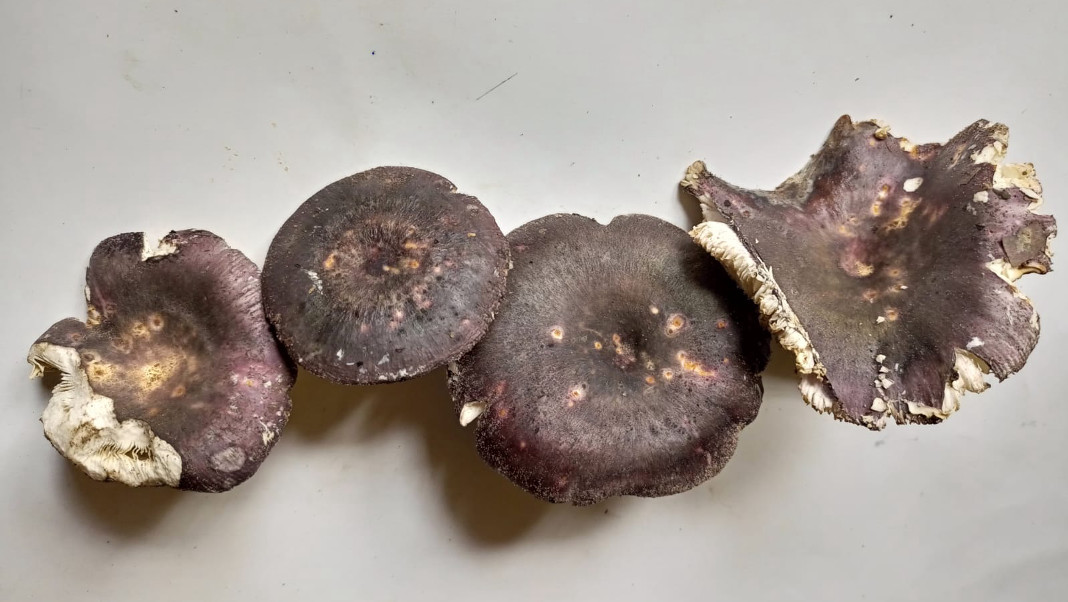
Russula griseopurpurata is a newly identified mushroom species belonging to the genus Russula, described by researchers from Gauhati University and published in the scientific journal Phytotaxa on 5 August 2026. The species was discovered in Jirang, Ri Bhoi district of Meghalaya, India, beneath a sal tree (Shorea robusta) at 320 meters elevation. Identification relied on morphological characters along with molecular data from ITS DNA sequencing and phylogenetic analysis. While some Russula species are edible, the edibility of Russula griseopurpurata remains unconfirmed.
On this page
Key Facts
- Species Name: Russula griseopurpurata
- Genus: Russula (approx. 2,000 species worldwide)
- Publication: Published in Phytotaxa on 5 August 2026
- Research Institution: Gauhati University, India
- Collection Date and Location: 22 July 2022, Jirang, Ri Bhoi district, Meghalaya
- Habitat: Under sal tree (Shorea robusta) at 320 meters elevation
- Identification Methods: Morphological features combined with ITS DNA sequencing and phylogenetic analysis
- Morphological Features: Greyish-purple cap showing cracking with age, gills with forkings near the stalk
- Holotype Specimen: Collection number GUBH 20331; ITS sequence accession PQ432811
- Edibility: Not yet established
Background & Context
Russula is a large genus of agaric fungi characterized by brittle flesh and often brightly coloured caps, with about 2,000 described species globally. Many Russula species are ectomycorrhizal and have ecological importance. Identification and taxonomic classification in fungi increasingly use molecular methods such as ITS DNA sequencing, which targets the Internal Transcribed Spacer region of fungal ribosomal DNA, a standard barcode region for fungal species identification. The discovery of Russula griseopurpurata in Meghalaya contributes to the understanding of fungal biodiversity in India.
Why This Matters for Exams / Exam Relevance
For competitive examinations, knowledge of recent biodiversity discoveries, especially new species described from India, is important. Understanding key taxonomic concepts such as holotype specimens, molecular identification techniques (like ITS sequencing), and ecological associations (e.g., growing under Shorea robusta) can be tested. This discovery underscores advances in fungal taxonomy and molecular biology applied in Indian biodiversity research.
Points to Remember
- Russula griseopurpurata was described and published in a reputed scientific journal (Phytotaxa) in 2026.
- Its holotype was collected from Meghalaya at an elevation of 320 m under a sal tree.
- ITS DNA sequencing and phylogenetic analysis were essential to delineate this new species.
- The genus Russula includes about 2,000 species worldwide, many identifiable by brittle flesh and coloured caps.
- Edibility of this species is unknown and caution should be exercised.
- Holotype specimen collection number is GUBH 20331, with ITS accession PQ432811.
- Sal tree (Shorea robusta) is an important native Indian tree species.
Sources & Further Reading
| Document / Website | Link |
|---|---|
| Russula griseopurpurata New Mushroom Species Found in Meghalaya | Open Russula griseopurpurata New Mushroom Species Found in Meghalaya ↗www.gktoday.in |
| Russula griseopurpurata, a novel taxon of Russula subsect. Cyanoxanthinae (Russulaceae) from India | Phytotaxa | Open Russula griseopurpurata, a novel taxon of Russula subsect. Cyanoxanthinae (Russulaceae) from India | Phytotaxa ↗phytotaxa.mapress.com |
| Fungal ITS Sequencing - CD Genomics | Open Fungal ITS Sequencing - CD Genomics ↗www.cd-genomics.com |
| Type Specimens and Holotype Importance - Purdue University | Open Type Specimens and Holotype Importance - Purdue University ↗ag.purdue.edu |